New Landowner Finds a Neighbor’s Culvert Draining Across the Property — Then the County Says It Was Never Approved
Photo credit: Fix it homestead
A new landowner can expect a few surprises after buying rural property.
Maybe an old fence line is not exactly where they thought it was. Maybe the driveway needs more gravel. Maybe the pasture holds water longer than expected after a storm.
But one new landowner found something more frustrating than an ordinary country-property headache.
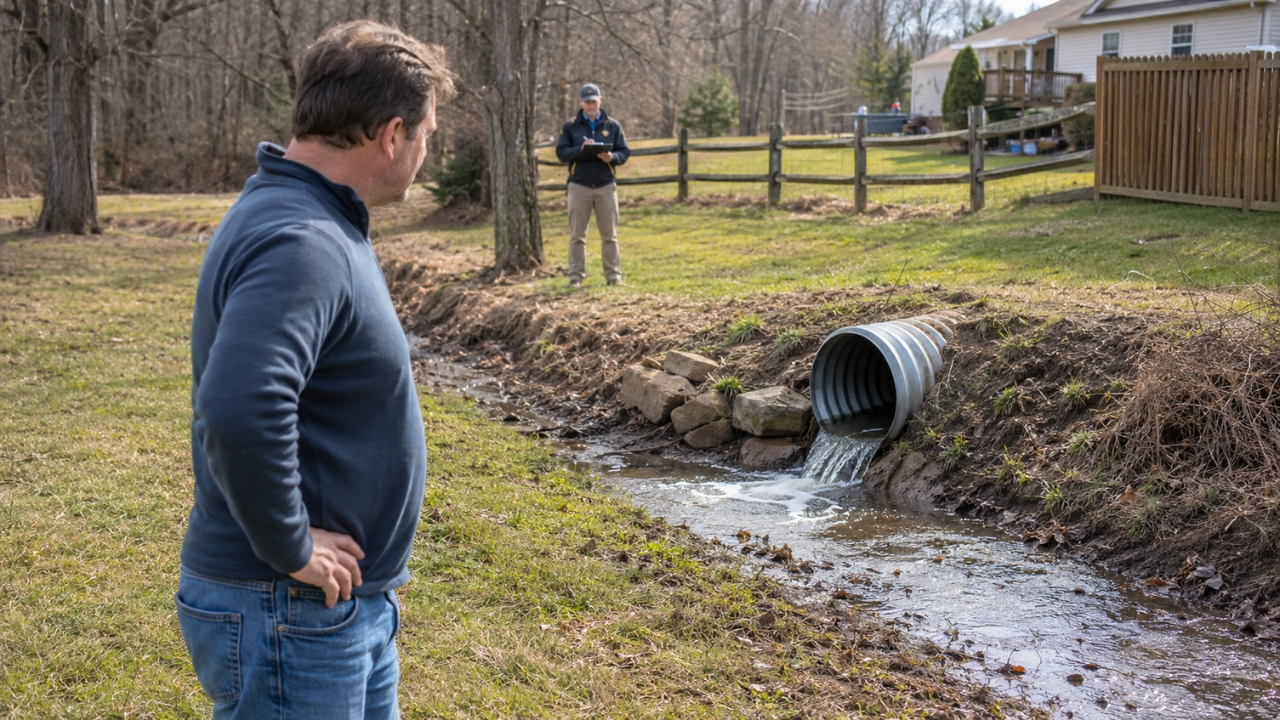
They discovered a neighbor’s culvert was draining water across their land.
At first, it may have looked like one of those old rural arrangements that had been there forever. Water moved through the culvert, crossed the property, and disappeared somewhere downhill. Maybe previous owners had tolerated it. Maybe nobody had asked too many questions.
Then the landowner checked into it.
According to the county, the culvert had never been approved.
That changed the entire situation.
The drainage problem was not just natural runoff
Water already creates enough conflict between neighbors.
Rain falls, land slopes, ditches fill, and low spots flood. In rural areas, it can be hard to tell what is natural drainage and what has been changed by people trying to protect their own property.
But a culvert is not just rainwater finding its way downhill.
A culvert collects and directs water. It can concentrate runoff, move it under a road or driveway, and send it out with more force than ordinary sheet flow. If it is installed badly or aimed in the wrong direction, it can turn one person’s drainage solution into another person’s erosion problem.
That was what made this discovery so aggravating for the new landowner.
They were not simply dealing with rain. They were dealing with infrastructure that appeared to send water across their property.
And if the county was right that the culvert had never been approved, the question became even bigger: why was it there at all?
The culvert may have been treated as normal for years
Rural properties often come with old decisions buried in the landscape.
A ditch gets dug. A culvert gets placed. A driveway gets built. A low area gets redirected. Years pass, properties change hands, and eventually nobody remembers who approved what.
The person benefiting from the setup may assume it is legitimate simply because it has been there for so long.
But “it has always been there” does not automatically make a drainage structure legal.
That was the landowner’s problem.
If the culvert was moving water onto their property without approval, then the issue was not just annoying. It could involve county rules, drainage regulations, erosion, road safety, property damage, and future liability.
The landowner now had to figure out whether they had inherited someone else’s unapproved drainage problem.
The county’s answer made the neighbor’s position weaker
Before the county got involved, the neighbor might have brushed the complaint aside.
They could say the water had always drained that way. They could say the culvert was necessary. They could say the previous owner never complained. They could argue that moving it would be too expensive or that the landowner was making a big deal out of normal runoff.
But once the county said the culvert was never approved, the argument changed.
Now the issue was not just whether the neighbor liked the setup.
It was whether the culvert should have been installed there in the first place.
That kind of confirmation can matter because it gives the landowner something stronger than a personal complaint. It gives them an outside authority saying the drainage structure may not have gone through the proper process.
And in property disputes, outside confirmation can make a huge difference.
The damage could continue with every storm
A poorly placed culvert does not cause trouble only once.
Every heavy rain can make the problem worse.
Water moving across a property can wash out soil, cut channels through a pasture, flood low areas, damage fences, undermine driveways, kill grass, spread debris, and push water toward barns, sheds, crawlspaces, or foundations.
Even if the damage starts small, repeated runoff can reshape land over time.
That is why the new landowner could not ignore it.
If the culvert stayed in place, every storm could become another round of damage. And if the landowner ever wanted to build, fence, plant, grade, or sell the property, the unapproved drainage path could become a major problem.
A soggy spot in a field is one thing.
An unapproved culvert sending a neighbor’s water across the land is another.
The previous owner question mattered too
Once the landowner learned the culvert was not approved, they likely had to wonder what the previous owner knew.
Was the drainage issue disclosed during the sale? Did the seller know the neighbor’s culvert was crossing or affecting the property? Had there been previous complaints? Had the county ever been contacted before? Were there old emails, repair records, or survey notes showing the problem existed?
Those questions matter because a new owner may feel blindsided.
If the culvert was visible, maybe the seller assumed the buyer had noticed it. But if the effect of the culvert was not obvious until heavy rain, the buyer may not have understood what they were inheriting.
That is the frustrating part of rural property.
Some problems are only visible in the right weather.
Commenters focused on documentation and not touching it blindly
In situations like this, people usually warn landowners to document everything before taking action.
Photos of the culvert, videos of water moving during storms, dates, rainfall amounts, erosion, muddy areas, and county responses could all matter. If the county says the culvert was never approved, the landowner would want that in writing.
Commenters also tend to warn against blocking or removing drainage structures without guidance. Even if the culvert is unauthorized, changing drainage suddenly can create new problems, especially if water backs up onto a road, driveway, or another property.
The better path is usually to work through the county, confirm the property boundaries, and get clear instructions about who is responsible for correcting the issue.
The real issue was being forced to live with someone else’s drainage decision
What made this situation so frustrating was the imbalance.
The neighbor had a culvert that appeared to benefit their property. The water crossed the new landowner’s property. The county said the setup was never approved. And yet the landowner was the one left dealing with the consequences.
That is exactly why drainage fights get so heated.
One person’s fix can become another person’s damage.
For the new landowner, the culvert was not just a pipe in a ditch. It was a sign that someone else may have altered how water moved across the land without going through the proper process.
And once the county said it was never approved, the landowner had a much stronger question to ask:
Why should their property keep absorbing water from a drainage system that may not have been allowed there in the first place?
Like Fix It Homestead’s content? Be sure to follow us.