New Landowner Finds the Neighbor Built a Shed Five Feet Onto the Property With No Permit — Then the Neighbor Says Tearing It Down Now Would Be a “Waste of Materials”
Photo credit: AI-generated image created using ChatGPT. Illustrative only.
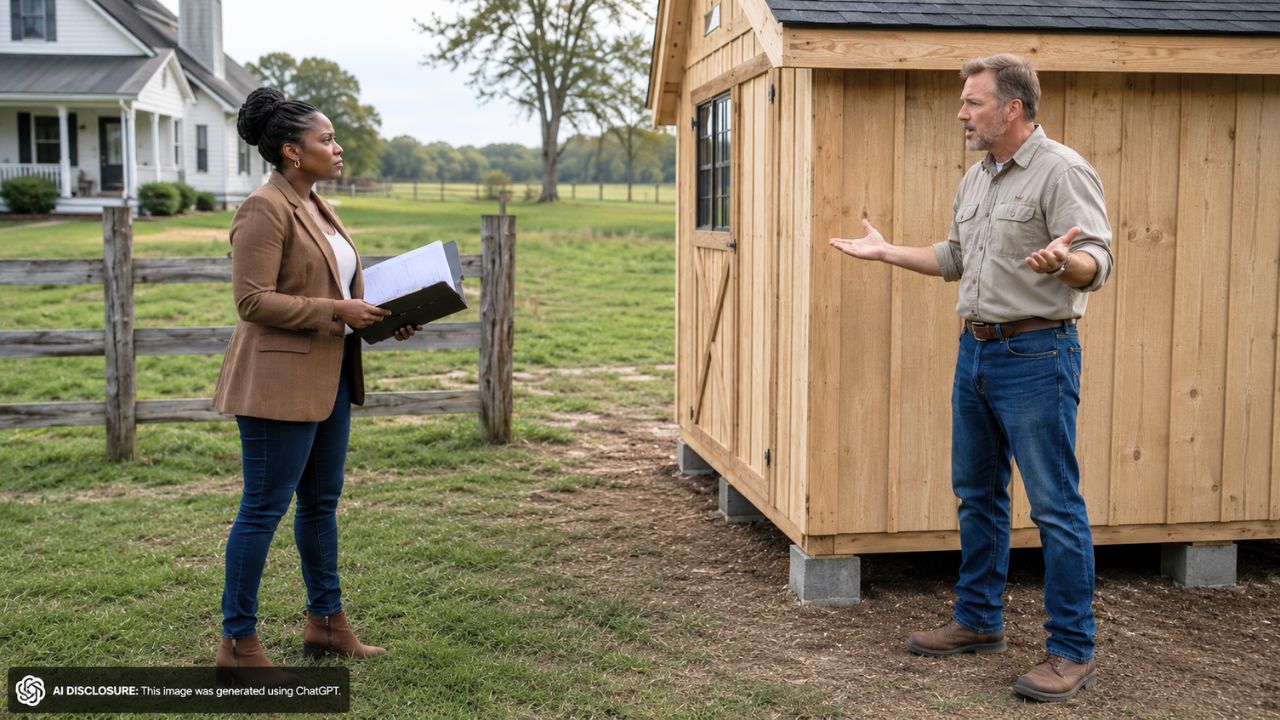
You don’t expect the first big surprise in a new stretch of homeownership to be a building that wasn’t there yesterday. But that’s exactly what one homeowner walked out to find: a full-size shed sitting so close to the back fence it felt like it had landed in his lap.
In the original post, he describes stepping onto the back deck after his youngest daughter mentioned the neighbors had put up a shed “right up against the back fence.” What he saw was a roughly 10-by-15 structure parked about a foot off his fence line—close enough to change the view, the feel, and the future resale stress all at once.
The shed showed up like it was always meant to be there
The layout of the properties made it easy to notice anything new. The two backyards meet, with a six-foot fence and trees on either side providing decent screening even in winter. That screening worked until it didn’t—because a shed doesn’t blend in like shrubs.
From the homeowner’s deck, the new build was “in our face,” a big visual change in what used to be a private-feeling backyard. And it wasn’t just ugly. It looked wrong on placement alone, like someone had built first and planned later.
He contacted the neighbor directly, hoping there was a reasonable explanation. The neighbor said he’d come over to talk, and when he did, the homeowner went straight to the practical issue: the shed appeared to be right on the property line, and the homeowner believed it was supposed to be set back about 10 feet.
What started as a view problem turned into a property-line problem
If you’ve ever lived next to someone long enough, you know the difference between “annoying” and “dangerous.” This wasn’t about noise or paint colors. It was about where one person’s land ends and the other person’s begins—because that line is where fences get built, trees get cut, and future buyers start asking questions.
The homeowner asked the neighbor to move it back. Not to be petty, but to get it out of the line of sight and to keep the placement from becoming a headache later if the house was ever sold and a survey flagged the issue.
The neighbor’s explanation was that his yard had a slope and a drainage ditch, and that this was the only spot the shed could go. In other words: it’s staying where it is because moving it would be inconvenient.
That’s a common moment in neighbor disputes. One person sees a preventable problem; the other sees sunk cost and effort. And once a structure is up, everyone starts calculating what it would cost to undo it.
The “easy fix” wasn’t moving the shed—it was buying the mistake
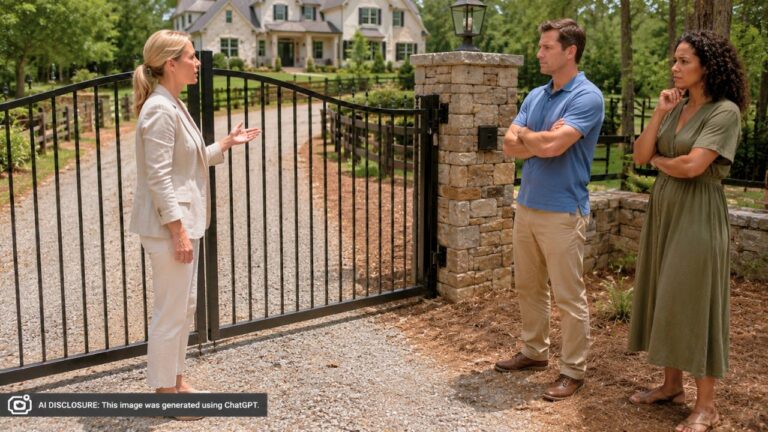
Instead of offering to relocate the shed, the neighbor floated a different solution: buying a piece of the homeowner’s property to “make it right.” This is the part where a lot of homeowners feel trapped, because you can’t unsee a structure that close to your fence, and you also don’t want to sign away land casually.
The neighbor’s offer was $900. To him, it was probably a quick patch: pay a little, smooth it over, keep the shed where it sits. To the homeowner, it read like a lowball price tag on a problem he didn’t create.
That’s when the homeowner’s wife entered the conversation—and the tone changed. She already thought the neighbor was a problem, and she didn’t negotiate like someone who felt grateful to be included.
Her counter was blunt: the price for the land would be $2,200, because that’s what the refrigerator she wanted cost. If he didn’t like that, she said she could call zoning enforcement and force the issue, which could mean being ordered to move it anyway or getting fined. And she added another hard line: the neighbor would pay for the survey and the filing for the property line adjustment.
When zoning enforcement becomes leverage, everyone pays attention
A lot of property disputes live in the gray area until someone mentions paperwork. The homeowner’s wife didn’t just talk about being upset—she talked about what happens when you bring the placement into the world of permits, setbacks, and enforcement.
The neighbor had built close enough to raise setback questions, and the homeowner believed it was supposed to be 10 feet back. Whether it was five feet on, one foot off, or right on the line, it had crossed into the zone where a survey could turn a backyard argument into a legal and financial mess.
She also insisted the neighbor pay for the work needed to formalize any change. That matters because “just selling a strip of land” isn’t a handshake deal. You’re talking about surveying costs, filings, and the kind of documentation that follows a property for decades.
The final result was simple and expensive in the most specific way: the neighbor bought the piece of land for $2,200, and the homeowner’s wife got her new refrigerator.
People fixated on one question: was it a bargain or a boundary win?
After the story got attention, the homeowner added an update responding to one of the predictable reactions: that he sold land too cheaply. People see square footage and assume there’s a clear “market rate,” especially if they’re imagining prime, flat, buildable land.
His argument was that the area sold wasn’t some golden patch of yard—it was tied up in slope and similar limitations. He pointed to a nearby building lot for sale with steep slope in the back, similar usable area, and used that as a rough comparison. Based on that local reference, he estimated the square footage he sold would be worth about $528, while he sold it for $2,200.
In other words, from his perspective, it wasn’t a loss. It was a premium price paid to avoid enforcement pressure and to keep the shed where the neighbor wanted it in the first place.
And that’s what makes this kind of dispute so sticky: the “value” isn’t just the land. It’s the ability to use your yard without staring at someone else’s structure, and the ability to sell your home without explaining why a neighbor’s shed is practically leaning over your fence line.
The homeowner walked away with a brand-new appliance and a formal adjustment instead of a prolonged fight. But the story also reads like a warning label on backyard projects: once a building goes up in the wrong spot, the fix isn’t lumber and nails—it’s leverage, paperwork, and whatever it costs to make the mistake disappear without making your neighbor a lifelong enemy.