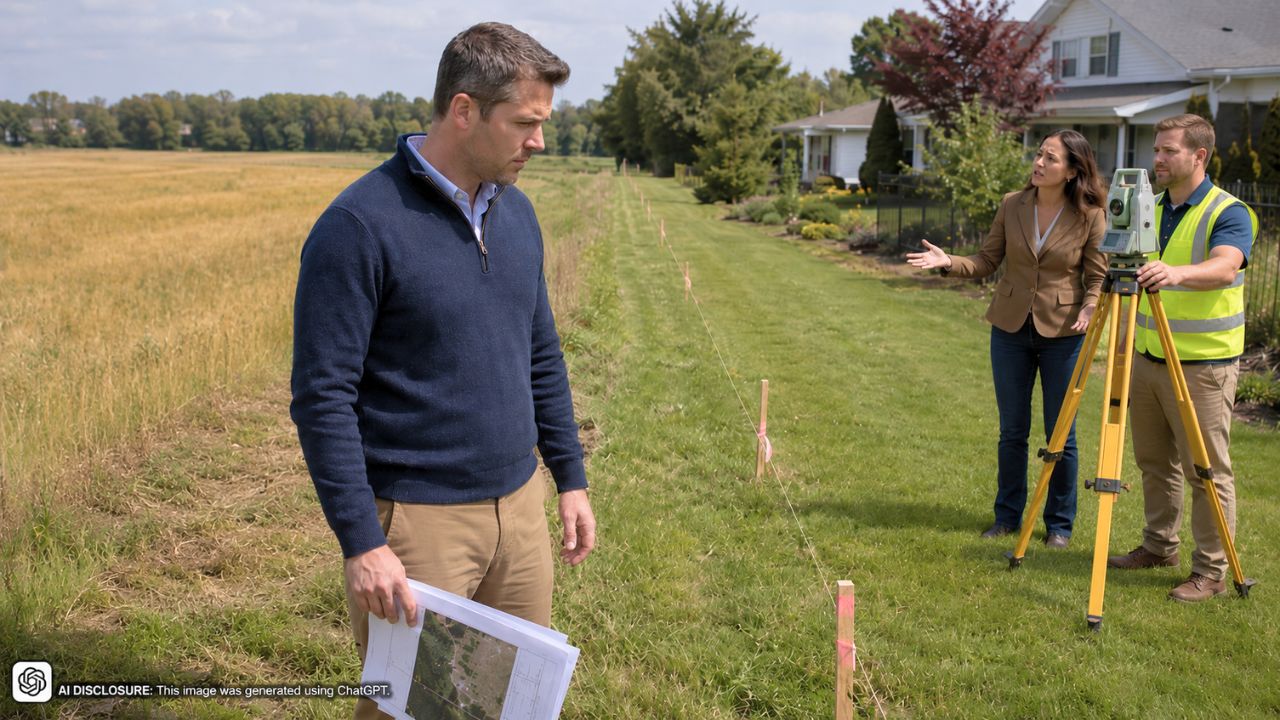
New Landowner Hires a Surveyor Who Finds the Neighbor Has Mowed and Maintained a Quarter-Acre Strip of the Property for Over Twenty Years — Then the Neighbor’s Attorney Says the Statute of Limitations Entitles Them to Keep It
Photo credit: AI-generated image created using ChatGPT. Illustrative only.
It starts out like one of those harmless neighbor routines: somebody runs their mower a little wide, keeps an edge trimmed, and everyone enjoys a clean-looking boundary. But it hits different after you buy the place, pay for a survey, and learn that the “nice maintained strip” isn’t theirs at all.
That’s the mess one landowner was staring down after realizing a neighbor had been mowing and caring for a chunk of land for decades, then hearing through an attorney that a time limit might let the neighbor keep it. In the discussion, an expert answered the question homeowners dread: if a neighbor mows part of your land for years, can they eventually claim it?
The survey line changed the whole mood
On a lot of properties, especially where yards blur into tree lines or open grass, the “line” isn’t a fence—it’s just habit. One side mows. The other side doesn’t. Over time, that routine starts to feel like ownership, even if nobody ever said it out loud.
The problem is that new ownership has a way of resetting expectations. A new landowner doesn’t have the old handshake understandings. They have paperwork, a deed, and usually a reason for wanting to know exactly what they bought—whether it’s a future fence, a garden, a driveway plan, or just not wanting a surprise later.
And once a surveyor puts stakes in the ground, a “friendly mowing favor” can turn into a hard conversation fast.
“They’ve taken care of it for 20+ years” is where it gets scary
The fear behind the neighbor’s attorney talk is a concept people throw around at backyard BBQs like it’s automatic: adverse possession. The neighbor maintains it long enough, the story goes, and boom—they own it.
But the expert response in the source material draws a line between what feels unfair and what is actually recognized by courts. In Ohio, the critical timeframe discussed was 21 years, and even that doesn’t mean a neighbor wins just because they did yardwork.
What matters is whether the use of the land is the kind of occupation that alerts the true owner that the neighbor is asserting an “adverse or hostile claim” to it. That’s a very different vibe than “I’ve just been mowing this because it looks nicer.”
Mowing alone usually isn’t the slam dunk people think it is
The expert’s core point was blunt: merely mowing a portion of your lawn does not suffice to claim adverse possession, particularly if it has been less than 21 years.
That’s a huge reality check for homeowners who assume any long-term maintenance equals a land grab. Mowing is easy to explain as neighborly upkeep, convenience (it’s right there when the mower passes), or simply preference. It’s not the same as building a fence, putting up a shed, running utilities, or blocking the real owner from using the strip.
The other key detail is permission. If the use happened with express or implied permission from the true owner, adverse possession can’t be established. So if the previous owner ever treated it like “sure, go ahead and mow that,” it undercuts the idea that the neighbor’s use was hostile.
This is where new buyers get trapped: they don’t know what the last owner said, what was implied by years of silence, or whether the neighbor has been telling themselves a story that doesn’t match the legal requirements.
A simple letter can change the legal posture overnight
The most practical “fix” offered wasn’t a fence fight or a screaming match over survey flags. It was paperwork—specifically, sending a certified mail letter.
The expert suggested acknowledging that the neighbor has permission to continue mowing that section, while clearly stating the owner is not giving up any rights to the land under any circumstances.
It’s such a homeowner move: calm, documented, and designed to stop the problem from growing. That letter does two things at once. It keeps the peace by not demanding they stop mowing tomorrow, and it also cuts off the argument that the mowing was hostile and without permission.
And certified mail matters because it creates a record that the neighbor received it. This isn’t about “winning an argument,” it’s about being able to prove what was communicated when memories start getting selective.
Homeowner reactions: document first, then decide how hard to push
Even without a giant comment section attached, you can already guess what seasoned homeowners focus on when they hear a story like this. Not vibes. Proof.
People who’ve lived through boundary issues tend to think in terms of surveys, dated photos, property descriptions, and written communication. They also know that escalation can cost real money: attorney letters, updated surveys, fence installations, and the kind of neighbor relationship damage that makes every future project—trees, drainage, shared driveways—ten times harder.
There’s also a practical safety angle lurking underneath. When someone else treats part of your land like theirs, they may start making decisions on it: trimming trees, moving rocks, parking equipment, letting pets roam. If an injury or damage happens on that strip, you don’t want to be untangling liability while also arguing about who “owns” it in spirit.
So the common instinct is: lock down the facts, keep communication clean, and avoid doing anything in anger that creates a new problem (like tearing out landscaping or tossing up a fence in the wrong spot).
The weirdest part: the grass looks the same either way
This kind of dispute is exhausting because, visually, it can be so small. A quarter-acre strip might just look like… lawn. But in land terms, it’s value, access, and control. It can change where you’re allowed to build, where you can place outbuildings, how you manage drainage, or what a future buyer thinks they’re getting.
And for the neighbor, it can feel like something’s being “taken,” even if it was never theirs on paper. That emotional certainty—built up over two decades of mowing—can harden into entitlement the moment a new owner tries to assert the boundary.
In the end, the fix isn’t dramatic. It’s the unglamorous homeowner toolkit: a survey, clear written permission (if you’re okay with the mowing continuing), and a refusal to let long-term habit quietly rewrite your deed. The grass might not care where the line is, but the next project you plan probably will.