New Landowner With Deeded Access to Six Acres on a Mountaintop Finds the Road Blocked by a Neighbor’s Parked Car — Then He Refuses to Move It
Photo credit: AI-generated image created using ChatGPT. Illustrative only.
The ink was barely dry on a new land purchase in the North Carolina mountains when the biggest problem wasn’t the steep grade or the rough terrain—it was a parked car sitting dead-center in the only way in. The new owner had just closed on about six acres at the very top of a mountain, reachable by a single private road that ties into a public road, and they say their deed includes legal access up that road.
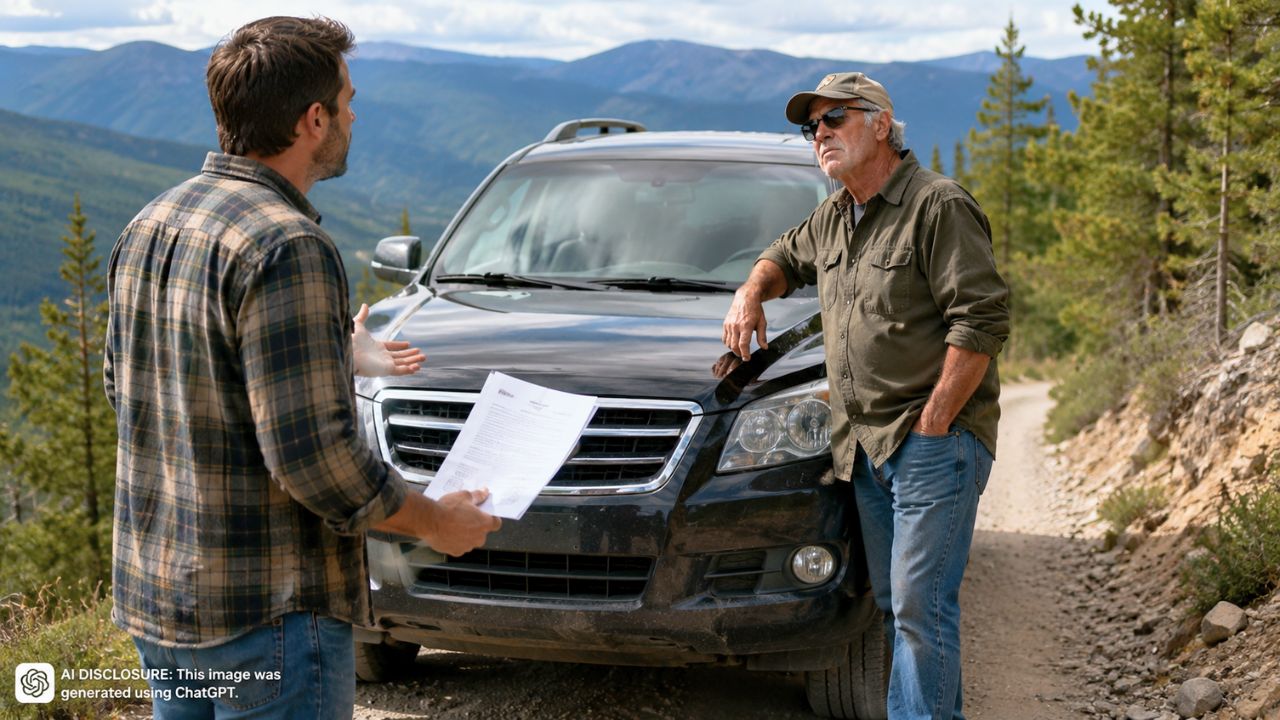
But when they tried to get up to their own property, they found the road physically blocked by the neighbor who lives closest to the bottom. In the original post, the landowner described the neighbor’s car as parked at a bottleneck so tight “a bicycle couldn’t get past,” turning a deeded right into a practical dead end.
The dream property came with one non-negotiable feature: one road
Six acres on a mountaintop sounds like the kind of place you buy to get away from people. But mountaintop parcels often come with a catch: access is everything, and “everything” might mean one narrow road cut into the side of a mountain decades ago.
That’s what this buyer says they’re dealing with. The road runs from the public road all the way to the top, and it’s the only route to their parcel. According to the post, everything around the road belongs to the neighbor until you get to the top where the new owner’s land begins.
In other words, the driveway is shared in reality, even if the deed spells out legal access. That arrangement can work fine—right up until someone decides the road belongs to them in practice.
A bad road turned into a personal workaround—and then a blockade
The neighbor’s explanation, at least on its face, isn’t hard to understand. The new owner says the road is “in miserable shape” to the point their side-by-side wouldn’t be able to get up there. If it’s that rough, it’s easy to imagine a regular car bottoming out, sliding, or just not making it.
So the neighbor parks and walks the rest of the way. Rural folks do that sometimes: leave the vehicle where the grade or ruts stop being friendly, then hike in.
The issue is where the neighbor parks. The new owner says the car isn’t off to the side or in a wider spot—it’s right in the middle of the road at the tightest point. They even noted that if the neighbor parked about 20 feet lower, there would be grass where the car could pull off and still allow passage.
Instead, the parked car turns the only access road into a gate. No key, no code, no chain—just a vehicle positioned so nothing gets through.
Trying to fix the road made the standoff worse
What makes this feel especially maddening is that the new landowner isn’t describing a plan to fight about the road. They’re describing a plan to improve it.
They wrote that they’ve gotten “a few quotes from road companies to come out and fix the road,” which would make the drive easier for everyone—including the neighbor who currently chooses to park and walk. Fix the road, and the neighbor could simply park at his house again.
But the owner says the neighbor “acts like he’s not home so he won’t have to move his car.” That detail pushes the story from “miscommunication” into something that feels intentional. If a contractor can’t get equipment up the road because of the parked car, the improvement plan can’t even begin.
And when access is blocked, it’s not just an inconvenience. It affects everything: getting building materials up the mountain, bringing in equipment, hauling water tanks, bringing out downed trees, even simple things like walking the property lines without turning it into an all-day hike.
When the access is deeded, the stakes get real fast
The new owner’s question was simple: do they have any legal right to have the neighbor’s car removed?
That question carries a lot of weight in rural property life. Deeded access typically isn’t a “nice if available” feature—it’s what makes the land usable. If you can’t reach it, you can’t improve it, insure it properly, or maintain it. It can even impact emergency access, like getting a vehicle up for medical help or wildfire response.
At the same time, calling a tow truck on a neighbor up a mountain is the kind of move that can turn a cold relationship into a long-running feud. And because the road is private and the surrounding land is owned by the neighbor until the top, the new owner is staring at a practical question: even if you’re right on paper, how do you enforce it without escalating into something uglier?
That’s the pressure point in so many easement disputes. The paperwork says one thing. The day-to-day reality says something else.
Reactions leaned hard toward documentation and enforcement
Even without a full comment thread included, the underlying theme of these kinds of property-access disputes is predictable: people push the landowner to get organized before making a move.
In a case like this, readers often focus on proving the right to pass, proving the obstruction, and keeping every interaction as clean as possible. A deeded access right is only as useful as your ability to show exactly where it runs and what it allows. And when the blockage is a vehicle, it’s the kind of thing that can be photographed repeatedly, with dates and times, showing a consistent pattern rather than a one-off.
There’s also the practical reality that contractors won’t schedule work if they think they’ll show up and be unable to reach the site. Quotes are one thing; getting the road fixed is another. The new owner is already at the stage of lining up road companies, which suggests they’re trying to solve the root problem, not just win an argument.
But they can’t even start that “fix it” phase until the physical choke point is cleared. That’s why people tend to urge a formal approach quickly—because every delay costs time, seasonal access, and potentially higher road repair bills if erosion gets worse.
A mountaintop purchase is supposed to feel freeing—not fenced in by a bumper
What’s striking here is how small the blocker is compared to the size of the land. Six acres on top of a mountain, and the whole thing is effectively controlled by one parked car in one narrow spot.
The new owner isn’t describing a desire to bulldoze a new route or pick a fight over property boundaries. They’re trying to repair a miserable road and make the access workable for both sides. Yet the neighbor’s parking choice—and the refusal to move—turns every plan into a standoff.
In rural living, access roads are lifelines. When they become bargaining chips, even a quiet mountaintop can feel cramped. And until the obstruction stops being normal, “owning” land at the top of the world can feel like standing at the bottom, staring up at a road you’re not allowed to use.
Like Fix It Homestead’s content? Be sure to follow us.