New Rural Landowner Finds the Neighbor Has Been Crossing the Property With Farm Equipment for Years — Then the Attorney Says No Easement Exists on Record
Photo credit: AI-generated image created using ChatGPT. Illustrative only.
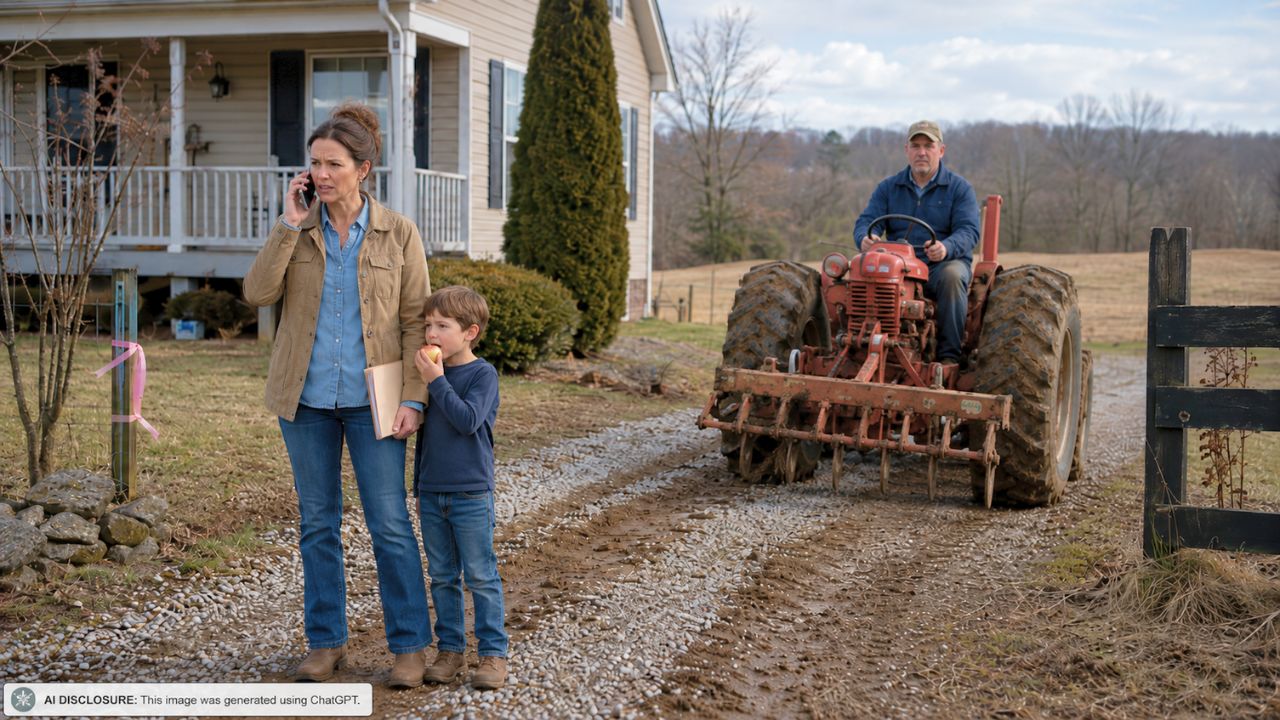
It started as an odd little convenience other people seemed to think they were entitled to. A new rural homeowner in Tennessee noticed neighbors from the far side of the adjacent vacant lot using their driveway “a lot” to reach the area behind the house—driving through like it was a public road, day and night.
In the original post, the homeowner laid out the kind of property-line headache that feels uniquely country: a shared-looking driveway, a vacant parcel, and a neighbor who insists there’s a right to cross—even after an attorney review suggested there’s no easement on record.
The driveway looked shared, until the wear and tear showed up
The setup is simple on paper. One driveway leads to two properties: the homeowner’s place and the lot next door, which has been vacant for the entire year they’ve lived there. But the traffic wasn’t coming from the vacant lot’s owner. It was coming from the neighbor on the other side of that vacant parcel, cutting across to get behind the homes.
At first, the homeowner did what a lot of people do when something feels off but not yet “serious”: they watched, waited, and tried not to overreact. Then the damage and disruption got harder to ignore. The vehicles weren’t creeping through once in a while—they were “tearing” up and down the drive at all hours, and the driveway needed maintenance.
So the homeowner tried the most practical, low-drama lever they had. They started parking out in the driveway, not to pick a fight, but to force a conversation. It worked. The neighbor came knocking, asking what the deal was.
A handshake deal turned into one-sided maintenance
When confronted, the homeowner didn’t go straight to threats. They explained they didn’t believe there was an easement—“with any of the properties”—and offered a compromise anyway: contribute to gravel and maintenance, agree to a curfew, and the driveway could be shared.
The neighbor agreed. For a moment, it looked like the kind of rural solution that keeps everyone out of court and on speaking terms.
But time did what time does. A year passed and, according to the homeowner, there was “absolutely no effort” from the neighbor to help maintain the driveway. When the gravel finally got bought and spread, it was done on the homeowner’s dime. And the traffic—and the attitude—didn’t improve enough to justify it.
Eventually the homeowner told them to stop using the driveway. The next step on the table was a fence at the end of their property line, wrapping around the driveway to block access for good.
The paperwork didn’t match the neighbor’s confidence
The neighbor’s argument was that an easement existed through the vacant property next door. The homeowner checked their own closing paperwork and pointed to language stating there was a shared driveway with the vacant property, and that a sharing agreement would be needed if that property became inhabited.
That wording matters because it hints at something narrower than what the neighbor was doing. A shared driveway between two parcels is one thing. Using someone else’s driveway as a regular access lane to another area—especially with heavy trucks—is another.
The homeowner’s bigger worry was straightforward: if they blocked access, would they be the one “getting in trouble” despite feeling like the driveway was theirs to control? It’s the kind of fear that keeps people tolerating bad behavior longer than they should—because the last thing a new landowner wants is to accidentally step into a legal mess.
Then came another detail that made the whole thing feel less like “neighbor convenience” and more like outright misuse: the homeowner said the neighbors were using the vacant lot’s backyard as a junkyard for old cars and car parts. That explained the traffic, and it raised the stakes.
The vacant property had a twist no one expected
Trying to figure out who, exactly, had rights to what, the homeowner looked up the vacant property assessment. That’s when they hit a bizarre snag: the listed owner had been dead since 2014.
Suddenly, the argument about permission got even murkier. If the owner is deceased, who is authorizing anyone to use the land? Who would even notice if the backyard is being treated like a storage yard? And if there was ever an easement, where would it show up now?
The homeowner began chasing that paper trail. They contacted the trustee’s office and learned property taxes were paid the previous year but not yet for the current year. The owner name still matched the deceased woman, and the office couldn’t say who was paying.
The homeowner even found the deceased owner’s daughter on social media and debated whether it would be appropriate to reach out and say, essentially: people are using your mother’s property like a dump, and they’re using my driveway to do it.
Calls to officials turned “maybe” into “trespassing”
When the homeowner called the planning commission, they hit another common rural wall: they weren’t within city limits, so there wasn’t much the staffer could do from a regulatory angle.
Still, the homeowner described the call as surprisingly helpful. The staffer reportedly told them the neighbor was “100% trespassing” and could even see the junkyard area from satellite view. The advice was blunt: take it to the sheriff’s office.
But the homeowner didn’t rush out to escalate without protection. They planned to wait until security cameras arrived, both for personal safety and so they’d have clear documentation if law enforcement got involved. It’s a small detail, but it shows the reality of living next to someone who already ignores boundaries: you don’t want the first hard “no” to happen when no one is watching.
Then the story took another turn—one that feels almost like a dare. The homeowner reported the neighbor had brought in an excavator and was digging a path from their property to the vacant property, apparently trying to create a new access route.
People focused on proof, boundaries, and not getting cornered
Even without a comment thread included, the homeowner’s own updates show where practical minds tend to go in property disputes like this: documentation first, confrontation second. If someone is claiming rights they can’t prove, the burden shifts to you to protect your land without putting yourself at risk.
That’s why the camera plan matters. The same goes for tracking down tax records and ownership details, and calling officials who can at least point you toward the right enforcement route. When a neighbor is bold enough to run heavy vehicles through your drive without contributing a dime—and then doubles down with excavation equipment—polite verbal requests often stop working.
There’s also the unspoken worry hovering over everything: driveways aren’t just gravel and inconvenience. They’re property value, liability, emergency access, and a daily quality-of-life issue. Let it go on long enough and it starts feeling “normal,” which is exactly how you end up inheriting someone else’s bad habits as if they’re your responsibility.
By the end of the updates, the homeowner was still in the thick of it—waiting on cameras, weighing a fence, chasing ownership details, and staring at fresh digging on the neighboring land. Rural living is supposed to come with space and quiet. Sometimes it comes with an excavator next door and a driveway that everybody wants, but nobody wants to pay for.
Like Fix It Homestead’s content? Be sure to follow us.