New Landowner Finds the Neighbors Have Been Using a Road Through the Property With No Easement on Record — Then the Neighbors Say They Have a “Right of Way by Custom”
Photo credit: AI-generated image created using ChatGPT. Illustrative only.
Buying rural land comes with a certain expectation: space, quiet, and the feeling that what’s inside the lines on the deed is finally yours. For one new landowner in Lake County, Colorado, that honeymoon ended fast when they realized the “neighbor’s driveway” was actually a strip of their newly purchased property.
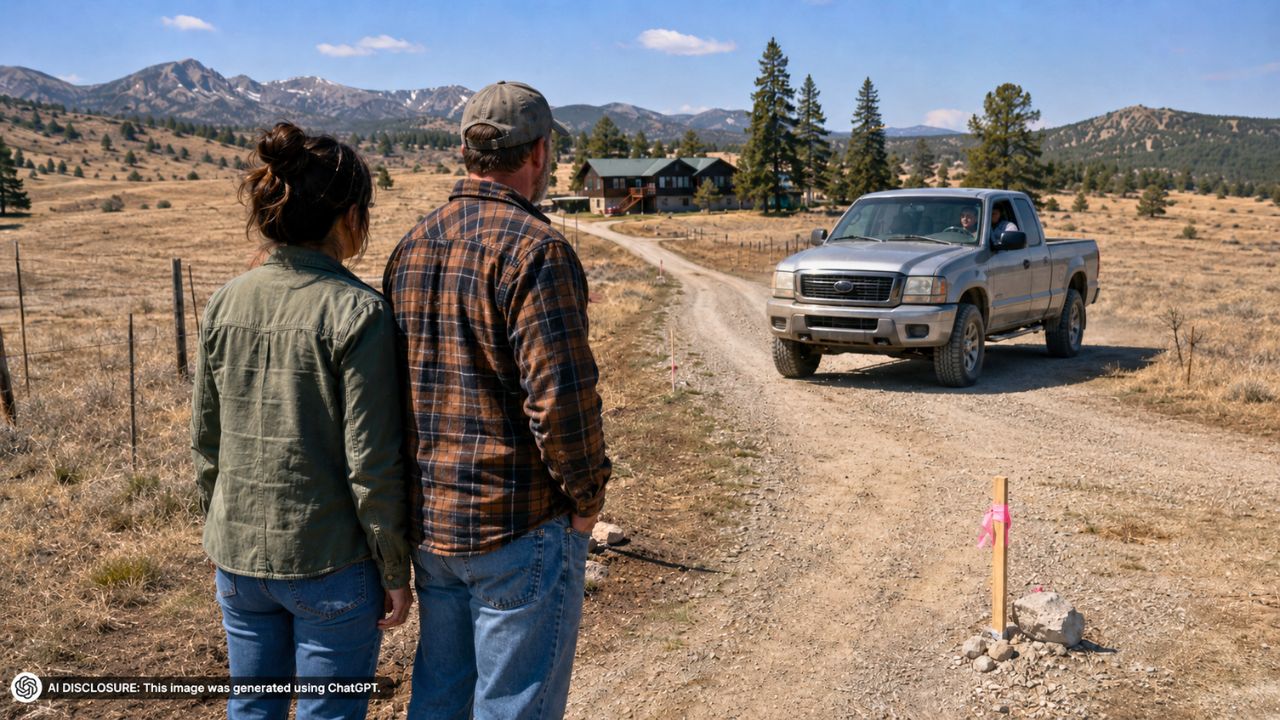
In the original post, the homeowner describes a neighbor who is “literally surrounded by our land” and uses the owner’s land to drive to their home. The new owner bought the property in March and, trying to get clarity, hired a surveyor—only to learn the neighbor’s parcel didn’t even have pins to define its borders.
It wasn’t a fence dispute—it was the only way in and out
This wasn’t about a few feet of lawn or a shed placed over the line. The access route mattered because it functioned like a driveway: vehicles crossing the new owner’s land to reach the neighbor’s house.
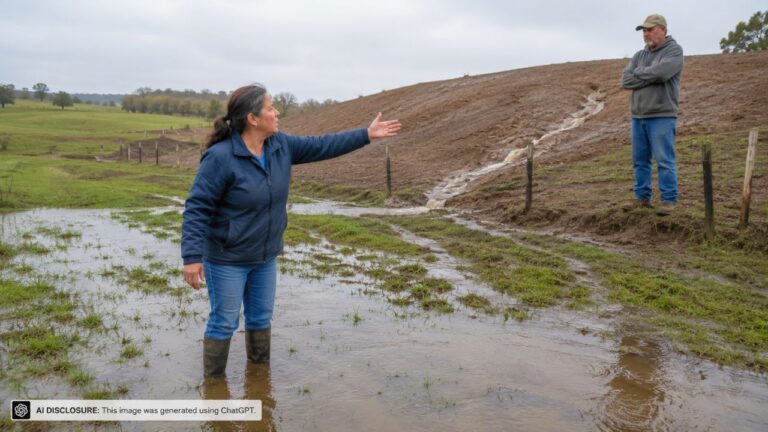
That changes the temperature immediately. When a neighbor’s daily access depends on a path across your property, it’s not just an annoyance—it’s leverage. It’s also wear and tear: ruts, dust, erosion, and the possibility of someone getting hurt while using a route that, on paper, may not even exist.
The homeowner’s description makes it sound like the neighbor’s place is landlocked by their parcel, which is one of those real-world arrangements that can exist for decades without anybody looking closely at the paperwork—right up until the land changes hands.
The survey made things messier, not clearer
After noticing the regular drive-through traffic, the new owner brought in a surveyor. That’s usually the moment when everything snaps into focus: pins located, corners marked, lines painted. Instead, they got the kind of answer that keeps property owners up at night.
The surveyor reportedly said the neighbor’s land had no pins to define its borders, so he wasn’t exactly sure where that land sat “within ours.” In other words, the neighbor isn’t just using a strip of land without an easement on record—there’s uncertainty about where the neighbor’s property begins and ends at all.
That’s a brutal combination. If the neighboring parcel’s boundary can’t be confidently located, then every practical question becomes a gamble: Where can you put a fence? Where can you plant? Who is responsible for that stretch of ground getting torn up by tires? Even basic maintenance turns into a potential dispute.
When there’s no easement on paper, the risk lands on the new owner
People hear “no easement” and assume the solution is simple: block the road, stop the trespassing, call it a day. But in rural areas—especially where a home’s access is involved—there’s a lot more at stake than pride.
First, there’s liability. If someone uses a route across your property and something goes wrong—an accident, property damage, a delivery truck stuck in mud—your name is tied to the land it happened on. Even if you did nothing wrong, you can still end up pulled into the aftermath.
Then there’s the practical day-to-day: people don’t stop driving to their own house just because you found a missing document. And once a landowner puts up a barrier, tensions can spike fast. In real life, that can look like late-night arguments, “accidental” damage, and a steady drip of hostility that makes you dread pulling into your own driveway.
The homeowner’s post is short, but the setup is familiar: a new buyer inherits an old, informal arrangement and suddenly becomes the bad guy for asking what should have been clear all along.
The neighbor’s “right” can feel obvious—until the paperwork matters
The neighbor’s position, implied by the homeowner’s frustration, is the kind that often comes dressed as common sense: “We’ve always driven here. This is how it’s done. It’s the way we’ve accessed the property.” Some people even treat longstanding use like a guarantee, the way folks talk about a “right of way by custom.”
But real property rights don’t run on vibes. If there’s no recorded easement and the boundaries aren’t pinned, the new owner is stuck in the worst middle ground: expected to honor an access route while also being told—by the record—that it’s not formally theirs to honor.
And because the neighbor is surrounded by the owner’s land, this isn’t just about courtesy. It’s about whether the neighbor actually has legal access. When that’s uncertain, everything gets touchy: sales, refinancing, permitting, even emergency access if something goes wrong at the neighbor’s home.
For the new owner, the big fear is obvious even if they didn’t spell it out: if they ignore it, they could be cementing a permanent access right across their property; if they fight it aggressively, they could end up in a costly war with someone who needs that route to live.
Reactions zeroed in on documentation before confrontation
Even in a short post, the instinct from experienced homeowners is predictable: don’t wing it. When a driveway crosses your land and the neighbor’s parcel appears poorly marked, the first move isn’t a shouting match—it’s gathering the facts that hold up later.
That means getting a clean, professional survey (or resurvey) that can be recorded, and pulling every scrap of recorded information you can: deeds, plats, old right-of-way notes, and any mention of access language that might be buried in historical documents. It’s also the moment many owners start thinking about documenting current use—when vehicles cross, where they cross, how often—because “we’ve always used it” is usually a claim built on time and routine.
Another common practical reaction in these disputes is to avoid sudden physical changes until the ground truth is known. A fence placed on the wrong line can backfire. A gate installed in the middle of a disputed corridor can escalate things instantly. People who have been through it tend to urge a slow, paper-first approach, even when it’s infuriating to watch someone drive across land you just paid for.
Now the landowner has to decide what kind of neighbor they want to be
Rural property can be a dream until you’re forced into a role you didn’t ask for: gatekeeper, boundary cop, the person who “ruined things” by buying the place. This homeowner didn’t create the access problem. They just happened to be the one who noticed it, paid for a surveyor, and asked the question out loud.
In the short term, the pressure is all on them. If they allow continued use without anything in writing, they may worry about losing control of that strip of land for good. If they try to stop it immediately, they risk turning a neighbor’s basic need—getting home—into a daily fight.
For now, the one hard fact they do have is the one that started the whole headache: there’s no easement on record, and the neighbor’s property corners aren’t clearly pinned. Until that gets sorted, every tire track across that strip of land is more than a shortcut. It’s a reminder that “owning land” and “controlling land” aren’t always the same thing, especially when old access habits collide with a new deed.
Like Fix It Homestead’s content? Be sure to follow us.