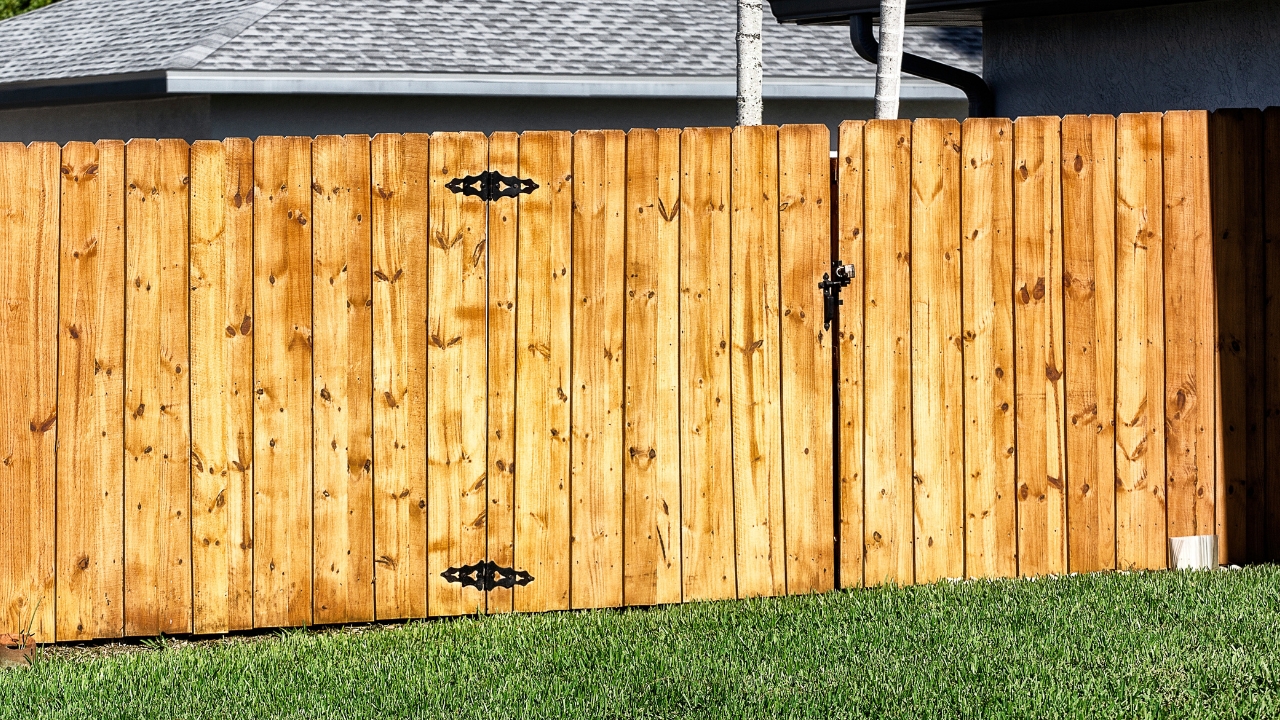
The fence gate hardware that sags within one season
You expect a new fence gate to last for years before it starts dragging on the latch or scraping the ground. Yet a surprising amount of gate hardware starts sagging before you even get through one winter, especially when you rely on light-duty kits or undersized hinges that were never meant to carry the load you put on them. To give your next project a better chance of holding its line, you need to understand why that seasonal sag shows up so fast and which parts of the hardware are quietly setting you up to fail.
Once you see how weight, geometry, soil movement, and hardware quality interact, you can choose components that keep your gate square instead of watching it slump month by month. From diagonal bracing and steel frames to properly sized hinges and support jacks, you have more control than you might think over whether your gate still swings with one finger a few seasons from now.
Why your “brand‑new” gate starts sagging so quickly
When your gate drops in a single season, you are usually looking at a design problem, not bad luck. You hang a heavy panel on two small hinges, fasten it to a post that is already leaning, then expect that assembly to shrug off wind, kids, pets, and freeze–thaw cycles. As one specialist explains, gates sag either because the structure itself is weak or because the installation is not done carefully enough, so the weight slowly pulls everything out of square and the latch side sinks.
Think of the gate as a lever: the hinges sit at the fulcrum and the latch corner is the far end where all the stress lands. Over time, that stress twists the frame and pulls screws through soft wood, especially when you do not give the gate any diagonal support or use hardware that is too light for the span. Guidance on why a gate spells this out clearly: if you want the best chance of avoiding droop, you need both a sound structure and an installation that respects the forces at work.
The weak hardware that fails within one season
The fastest way to build a gate that slumps before its first anniversary is to start with flimsy hardware. Thin strap hinges, small screws, and decorative kits that focus on looks instead of load rating all invite early failure. You see it when the hinge barrels start to bend, the screws wallow out of the post, or the latch side of the gate twists because there is nothing tying the corners together.
By contrast, when you choose truly heavy-duty components, you give yourself a fighting chance. One customer review of Gate Hinges from a Reviewer in New York highlights how “really solid hinges” arrive quickly and feel substantially stronger than the light hardware that often comes in budget kits. That kind of mass and build quality helps resist the twisting forces that chew through cheaper parts. If your current gate is sagging already, you can usually spot the culprits right on the surface: undersized hinges, short screws, and no visible bracing.
Why diagonal bracing matters more than the latch
If you only upgrade one element on your next project, make it the brace. A rectangular frame without a diagonal will always try to turn into a parallelogram under load, which is exactly what you see when the top latch corner starts to drift down. When you Install a Brace, you create a triangle that locks the shape so the gate cannot rack nearly as easily.
Best practice is to run the Brace from the lower hinge side up to the upper latch side, so the compression path carries weight back into the hinges instead of letting it hang unsupported. Advice on how to build a fence Gate that stays straight in Milwaukee stresses that this positioning makes sagging less likely, because the diagonal is actively resisting the direction the gate wants to move. If your current gate hardware kit did not include any real diagonal support, that omission alone can explain why it started dragging within a season.
Steel frames and kits that actually fight sag
Once you understand how much work that diagonal brace is doing, you can look at gate kits through a different lens. Some products build that structure in from the start so you are not relying on a loose collection of parts and wishful thinking. For example, the Homax EASYGATE No-sag gate kit is marketed to let any homeowner build a sag-free frame in about 20 minutes, with Homax providing the EASYGATE brackets and hardware that create a rigid rectangle ready for cladding.
Similarly, the Adjust brand focuses on steel frames that wrap your lumber in a metal skeleton. The Gate Steel Frame from Adjust is designed so that when your gate needs a little face lift, you can slip the wood into a pre-engineered steel frame instead of relying on two-by-fours alone. Guidance on wooden gate kits even tells you to Look for models that include a steel frame or integrated anti-sag supports, because those features help keep the gate level and secure over time instead of letting it twist out of shape after one season of use.
Telescopic braces and anti‑sag kits that save a failing gate
If your gate is already drooping, you still have options short of rebuilding it from scratch. Telescopic braces let you retrofit diagonal support into an existing frame and then fine-tune the tension until the latch side lifts back into alignment. An 8′ Telescopic Gate from Febtech, for example, is described as adjusting to restore alignment, eliminate sagging, and protect your gate from wear, extending its life and keeping it functional.
On the cable side, kits such as SANKINS highlight how Top features like an Anti and Sag Gate Kits Easy To Install design use a wire and tensioner to pull the gate back into square. You also see anti-sag systems built into full walk gates, where the anti-sag system is called the real hero because steel wire ties and heavy-duty galvanized hinges let the gate carry more weight than standard designs while still operating smoothly. If you prefer a compression solution, products described as telescopic anti-sag braces are marketed as great for wooden or vinyl privacy gates, with language like Once installed, the brace adds cross-bracing support that redistributes weight and keeps the gate from drooping again.
Hinges: where many one‑season failures begin
Even the best frame will not stay square if you hang it on the wrong hinges. Many garden gates rely on traditional spring hinges that eventually fail to function effectively, especially when corrosion and wear creep in and you are left with rusty, squeaky closure instead of a clean swing. Mount a heavy gate on light hardware and you concentrate stress on a small hinge barrel and a handful of screws, which accelerates sag.
Guidance on heavy-duty hinges for warns that this practice can place considerable stress on the hinge, leading to a sagging door or gate and, over time, hinge failure. You see the same theme in advice on Common Causes of Gate Sag, where Improper Hinges and Using undersized parts are singled out because Hinges must be strong enough to support the weight of the gate. When you step up to Old and Fashioned Heavy Duty Hinges or a product described as The Old and Fashioned Heavy Duty Hinge Set, you get corrosion resistance and strength that are specifically built to withstand demanding scenarios instead of folding under seasonal use.
Support hardware that carries the load you forgot about
Hinges are only part of the story. The hardware that connects your gate to the post and the ground can quietly decide whether you see sag within a season. Adjustable eyebolt setups are described as ideal for heavier gates and those exposed to frequent use or environmental changes, because the adjustable feature allows you to tweak alignment and accommodate shifts in ground level over time. Without that adjustability, a small amount of frost heave can turn a once-perfect swing into a dragging mess.
On the support side, products like Heavy Duty Support hangers are Specifically designed to support heavy and long gates, making them attractive for farms and large properties where spans and loads are bigger. Spring-loaded supports such as GateJak are promoted as rugged, high-performance options, with marketing that starts with Description and emphasizes that GateJak is Engineered for preventing and correcting sag in metal gates. A Magnum version is described as Made in the USA and aimed at ornamental gates up to 2.5 inches wide, giving you another lever to keep weight off your hinges and posts so the structure stays level longer.
Why some anti‑sag kits still disappoint
Not every anti-sag kit lives up to its packaging, especially when you treat it as a band-aid instead of part of a system. Cable-based kits can lose tension if you do not set them correctly, and a brace that is too short or too light for the span can flex instead of holding the gate rigid. Even products designed to prevent or correct sagging gates with up to a specific diagonal length, such as a kit described as This Anti and Sag with up to 7.5 foot diagonal bracing, will struggle if you bolt them to a rotten post or a frame that is already badly twisted.
Disappointment also shows up when you expect an anti-sag kit to fix problems that belong to the posts or the soil. A telescopic brace might restore alignment on day one, but if the hinge post keeps moving, the gate will go out again and you will blame the hardware rather than the footing. That is why some contractors recommend using steel-frame kits such as an adjustable heavy duty Gate Steel Frame Gate Building Kit from Adjust in combination with solid posts and quality hinges. When you combine structural rigidity, proper bracing, and hardware that can be tightened or adjusted over time, you are much less likely to watch your investment slump before the next season rolls around.
How to spec a gate that still swings straight years from now
If you are planning your next fence project, you can use all of this to spec a gate that resists seasonal sag instead of inviting it. Start by sizing the opening and weight honestly, then choose hardware that is rated for more than you think you need. Heavy Duty and Rust resistant hinges marketed as Our gate hinges have solid iron construction are a better match for frequent use than thin decorative straps. Products like The Everbilt Gate hinges, which are described as ideal for surface applications on doors and gates and feature offset screw holes to help provide strength, show how small design tweaks can help spread load on the mounting surface so Doors and posts do not wear out as quickly.
Next, build in redundancy. Use a diagonal brace, whether that is a telescopic bar, a cable system, or the integrated structure of a steel frame. Consider an anti-sag brace like a Safety Gate telescopic kit, where Once installed, the adjustable steel brace adds cross-bracing support and redistributes weight across the frame. Add an adjustable support such as a GateJak or a lower RSJ hanger to carry part of the load and give yourself a way to compensate if the ground shifts. Finally, pay attention to the installation details that specialists at places such as 360 Yardware and long-running outfits that sell Old Fashioned Heavy Duty Hinges for Wood Gates keep repeating: set your posts deep, fasten into solid material, and align the frame carefully. If you treat those steps with the same care you bring to choosing the hardware, you will be far less likely to watch your new gate sag within a single season.
Like Fix It Homestead’s content? Be sure to follow us.
Here’s more from us:
- I made Joanna Gaines’s Friendsgiving casserole and here is what I would keep
- Pump Shotguns That Jam the Moment You Actually Need Them
- The First 5 Things Guests Notice About Your Living Room at Christmas
- What Caliber Works Best for Groundhogs, Armadillos, and Other Digging Pests?
- Rifles worth keeping by the back door on any rural property
*This article was developed with AI-powered tools and has been carefully reviewed by our editors.