What I changed after I got tired of dragging the hose across the whole yard
Photo credit: Eak.Temwanich/Shutterstock.com
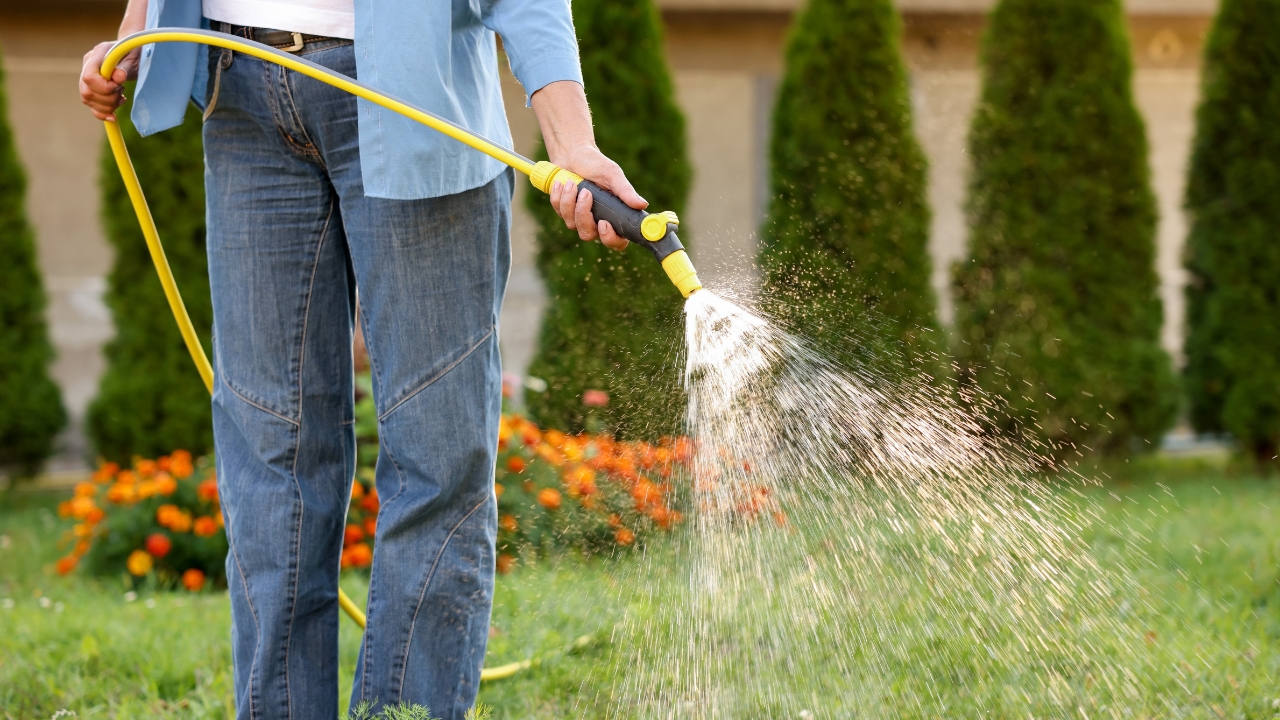
Gardeners often reach a breaking point with hoses long before they give up on plants. The routine is familiar: dragging a heavy line across the lawn, knocking over pots, flattening borders and still missing dry patches. When frustration finally outweighs habit, the smartest move is not more effort, but a different watering structure altogether.
Across backyards, that shift is unfolding in three stages: getting the hose under control, handing off repetitive watering to simple sprinkler systems, and then, for those who want it, moving to app-based devices that treat irrigation more like a set‑and‑forget utility than a daily chore.
Step one: tame the hose, then shorten its job
The first change many homeowners make is to stop treating the hose as a loose, wandering snake. Retractable reels turn it into a tool that lives in one place and moves in a controlled arc instead of across every bed.
Wall mounted units such as The Gardena reel package a 35 m hose in a casing that swings toward the lawn but retracts cleanly when the job is done. Testing of retractable designs has highlighted how a long reach, such as the 130-foot capacity of some reels, lets one unit cover a typical suburban yard without dragging loose coils through every planting strip.
Other compact options, like the Garden Retractable Hose, emphasize durable housings and simple pull‑to‑lock mechanisms so the hose stays at a fixed length instead of creeping into beds. A similar approach appears in the Hoselink range, where one Retractable Hose Reel is explicitly described as engineered for long service, with UV-stabilized casing and reinforced hardware built to survive years of sun.
Video guides from creators such as Rusted Garden Homestead show how a disciplined hose path, combined with simple stakes or guides, prevents the line from snapping tomatoes or crushing perennials. Community gardeners echo the same logic: in one discussion, members shared tricks like cutting short pieces of pipe as low-cost hose bridges, so the line rides above foliage instead of through it.
Some gardeners take a more structural approach. In a separate exchange, a gardener described using a splitter at the spigot so front and back beds each have a dedicated line, a tactic that another member, Angel Pribanic, said she also uses, while a second commenter, Joy Hillier, confirmed doing the same in a front flowerbed. The pattern is clear: once the hose is anchored, the next logical move is to reduce how often it needs to move at all.
Step two: let sprinklers handle the routine passes
Manufacturers have leaned into that instinct with kits that turn a single faucet into a semi-permanent watering network. One example is an in‑ground sprinkler system that connects through a hose faucet timer and promises the feel of professional irrigation without complex plumbing.
Another above‑ground kit from Orbit is marketed with the line “Get the beauty of an in-ground sprinkler system with none of the complicated installation,” a pitch that speaks directly to homeowners who want coverage but not trenches in the lawn. Pop‑up rotor kits such as The Rainbird 32HE system go a step further, installing flush with the soil so the hardware disappears when not in use.
The appeal of these kits is not just convenience. By fixing the water pattern, they protect plantings from the physical abuse of a dragged hose and from the uneven soaking that comes with manual passes. Reviewers who tested multiple hose reels and sprinkler setups have pointed out that once a yard is divided into predictable zones, the gardener’s role shifts from hauling water to fine‑tuning coverage.
Social media marketing has picked up on the frustration that drives that shift. A Hoselink campaign that opens with the line “Tired of dragging your garden hose across the yard?” and introduces an “Easy” retractable reel captures the emotional payoff: less wrestling, more watering.
Step three: when the yard starts thinking for itself
For homeowners who want to go further, the next change is to let software decide when and where the water flows. App-controlled devices use Wi‑Fi, onboard valves and spray heads to automate not only timing but also direction and volume.
One prominent example is the OtO sprinkler, which is described as an above‑ground smart unit that can replace an irrigation system up to 4,800 square feet per zone. Its support materials explain how the Smart Sprinkler works using mapping and targeted spray patterns so one device can cover multiple beds without manual repositioning.
The company’s help center at support lays out details on Wi‑Fi setup, nozzle maintenance and zoning, while its social presence on Facebook showcases installations in small side yards and larger suburban lawns. In each case, the hose becomes a fixed supply line, not a mobile tool.
Traditional brands are also moving into app-linked territory. The smart watering kit that connects directly to a hose faucet uses a timer and adjustable heads to mimic in-ground coverage while staying above the surface. Another package, the in‑ground rotor kit that is marketed for easy installation, offers a path for homeowners who want buried lines without contractor‑grade complexity.
Like Fix It Homestead’s content? Be sure to follow us.
Here’s more from us:
- I made Joanna Gaines’s Friendsgiving casserole and here is what I would keep
- Pump Shotguns That Jam the Moment You Actually Need Them
- The First 5 Things Guests Notice About Your Living Room at Christmas
- What Caliber Works Best for Groundhogs, Armadillos, and Other Digging Pests?
- Rifles worth keeping by the back door on any rural property
*This article was developed with AI-powered tools and has been carefully reviewed by our editors.