10 Winter Jobs a Compact Tractor Makes Easy
Photo credit: Krysek/Shutterstock.com
Winter doesn’t care if you’ve got a gravel drive, a long lane, or a tidy little barnyard. Snow shows up heavy, ice shows up slick, and chores still need doing when your hands are numb. A compact tractor won’t fix every cold-weather headache, but it turns a bunch of miserable jobs into something you can knock out between coffee and lunch.
1. Breaking Snowbanks Before They Turn To Ice
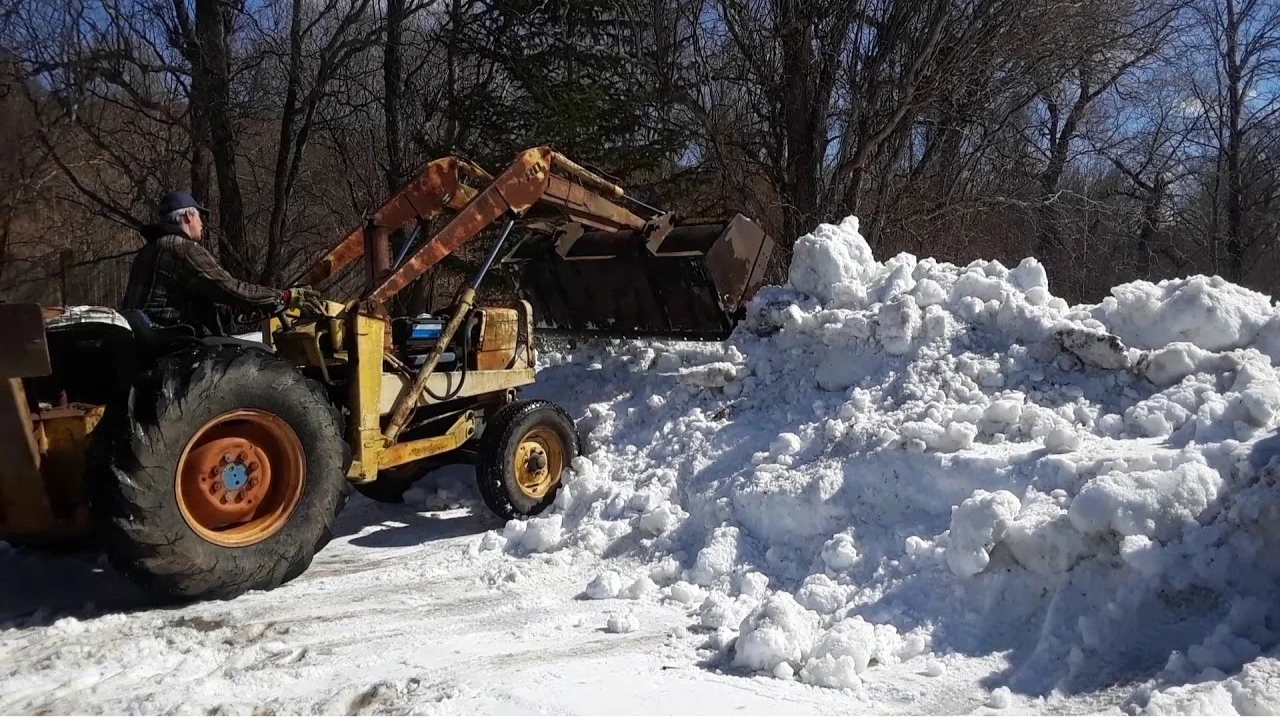
You can shovel the same edge of the driveway for three storms in a row, then wake up to a wall of packed snow that’s basically concrete. That’s when cars start scraping, the plow truck has nowhere to put new snow, and you lose usable width fast.
A compact tractor with a front loader or a rear blade lets you push banks back early, while they’re still light enough to move. Take thinner bites instead of ramming the pile, and keep the bucket low so you don’t gouge gravel. Do it after each storm and you won’t be fighting a frozen berm in February.
2. Clearing A Long Driveway Without Burning Out
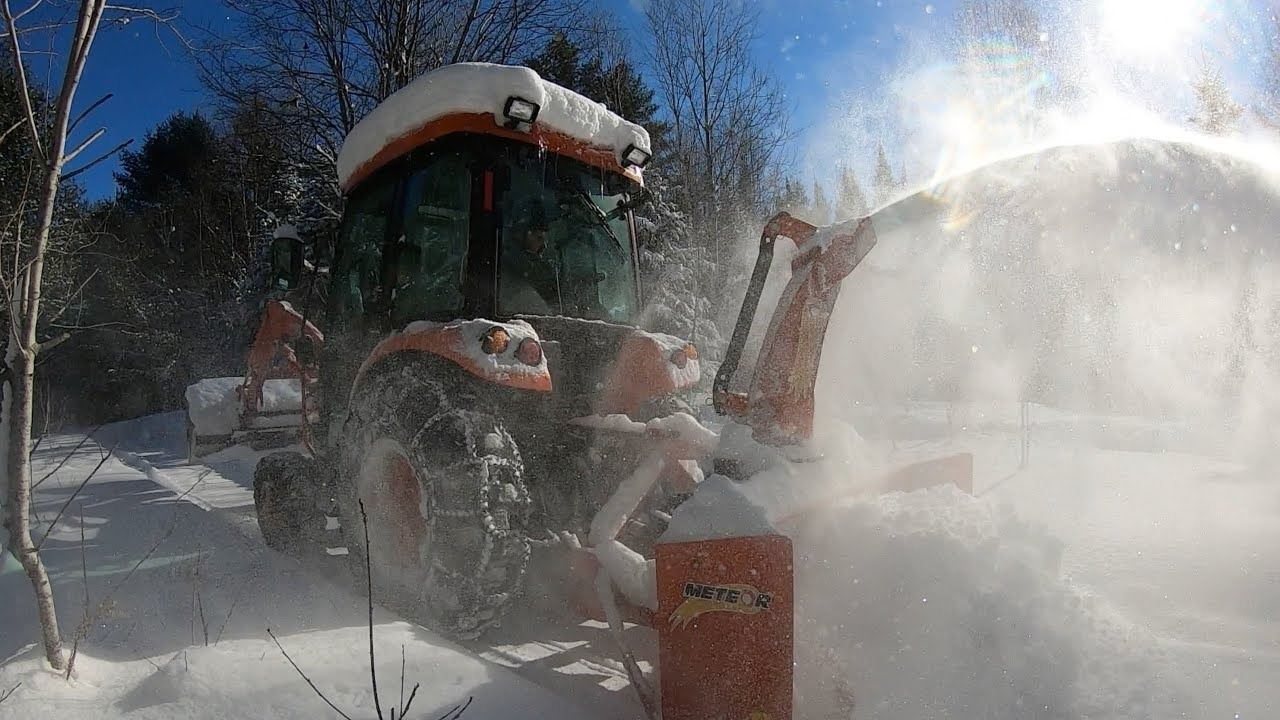
Walk-behind snowblowers are fine for a short sidewalk. Stretch that to a few hundred feet and you’ll spend your whole morning wrestling a machine that wants to climb, clog, or stall the second it hits windrowed slush.
With a tractor, you’ve got options: front blade, rear blade, front snowblower, even a loader if you’re careful. The big difference is you’re sitting down, you can stack snow where it won’t drift back, and you can clear before you’re late for work. If you’ve got gravel, pack the first snow down a little and raise the cutting edge to avoid throwing stones through windows.
3. Hauling Firewood In Deep Snow
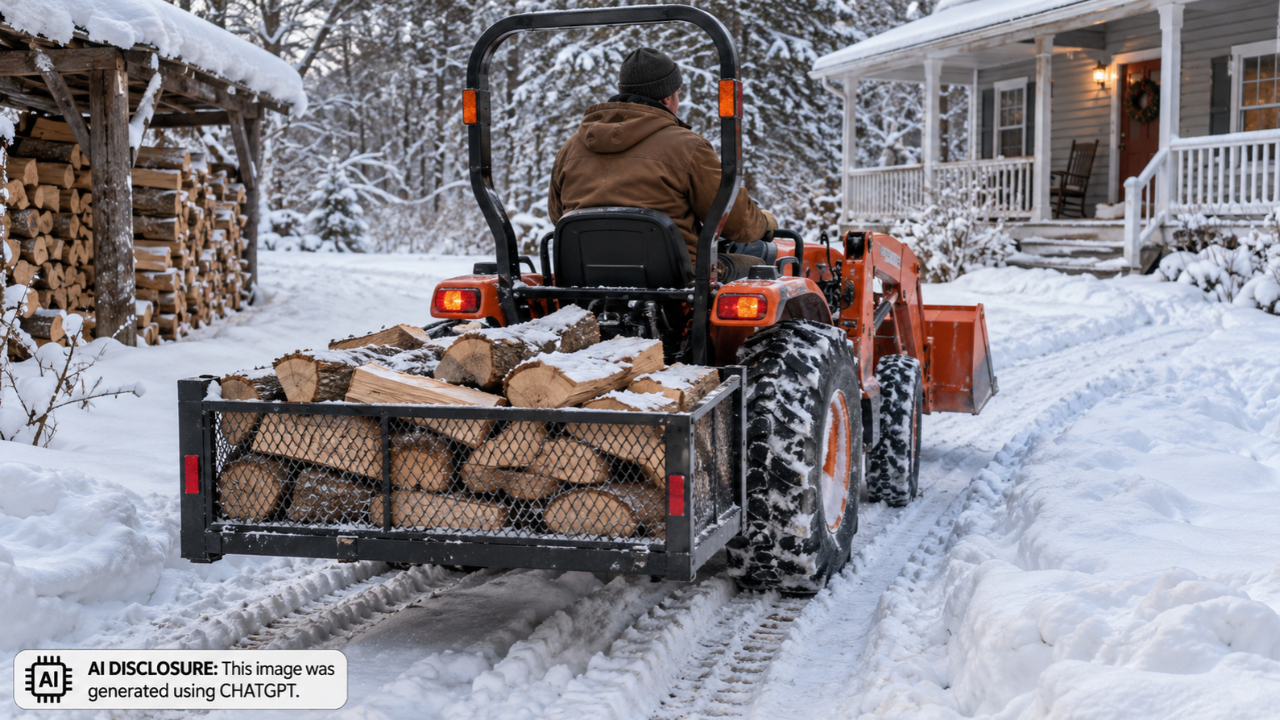
Firewood always needs moved when the ground is worst. Dragging a sled by hand sounds doable until it sinks, tips, and turns into a frozen anchor halfway to the porch.
A tractor with a carryall, pallet forks, or a small trailer lets you move a week’s worth at once. Keep the load low and balanced so you’re not teetering on ruts under the snow. If you’re working near kids, pets, or tight spaces, go slow and use the horn or a second person as a spotter.
4. Spreading Salt, Sand, Or Stone Chips Evenly
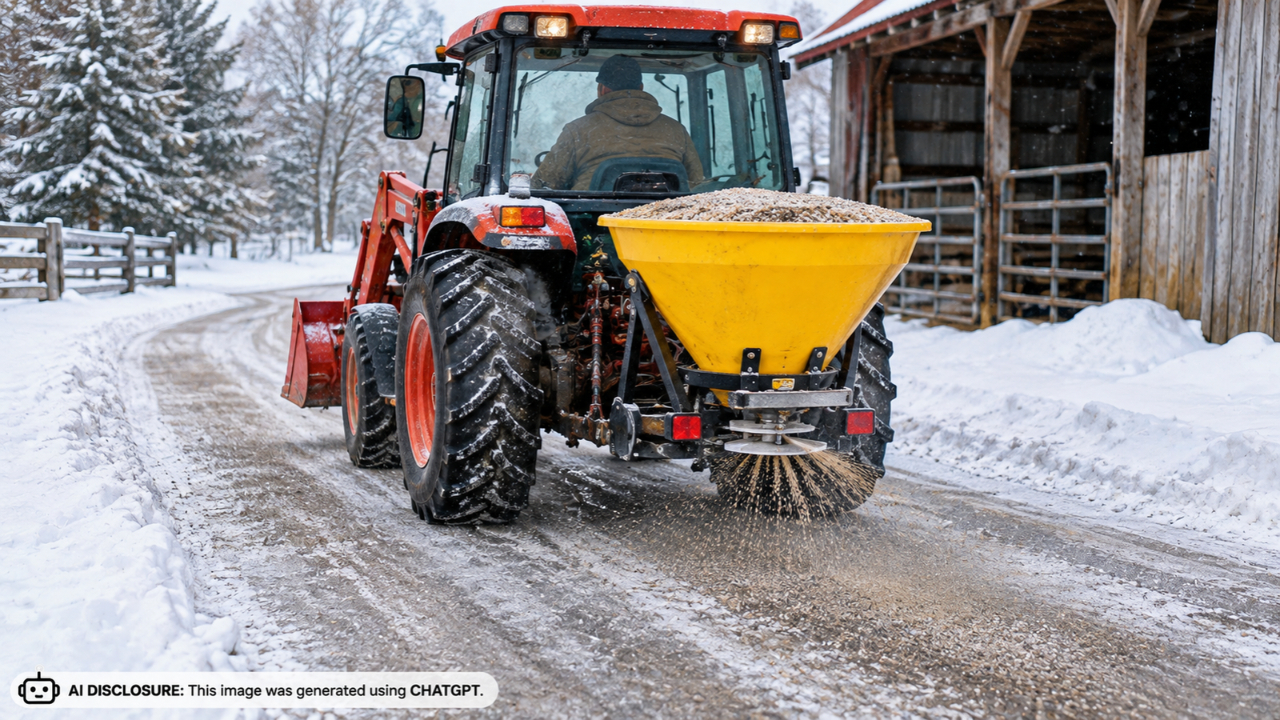
Throwing salt by hand never lands where you need it. You end up with a slick strip right where you step, and a white crust on the lawn where you didn’t want anything.
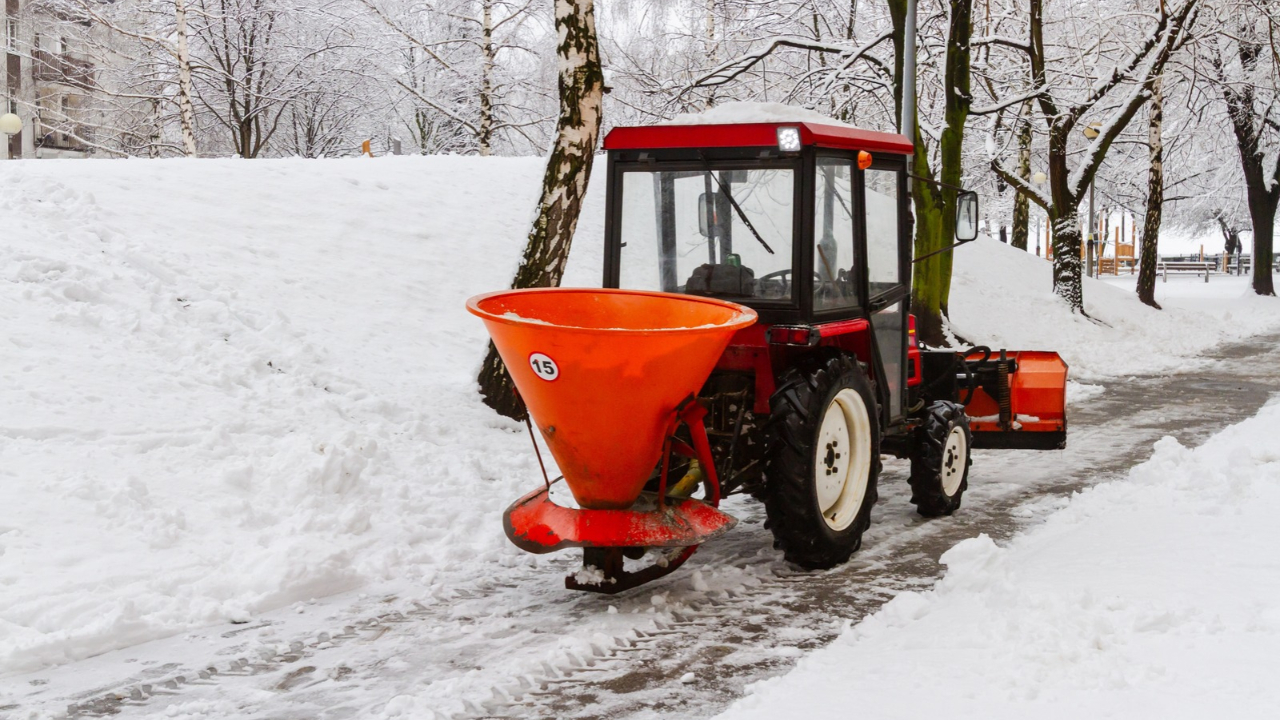
A 3-point spreader makes clean, even passes down a lane, around outbuildings, or on a steep approach. Sand or stone chips can be a better pick than salt near concrete, metal gates, and pet areas, and they still help traction. Rinse equipment afterward, salty slush eats fasteners and wiring over time.
5. Moving Round Bales And Heavy Feed Safely
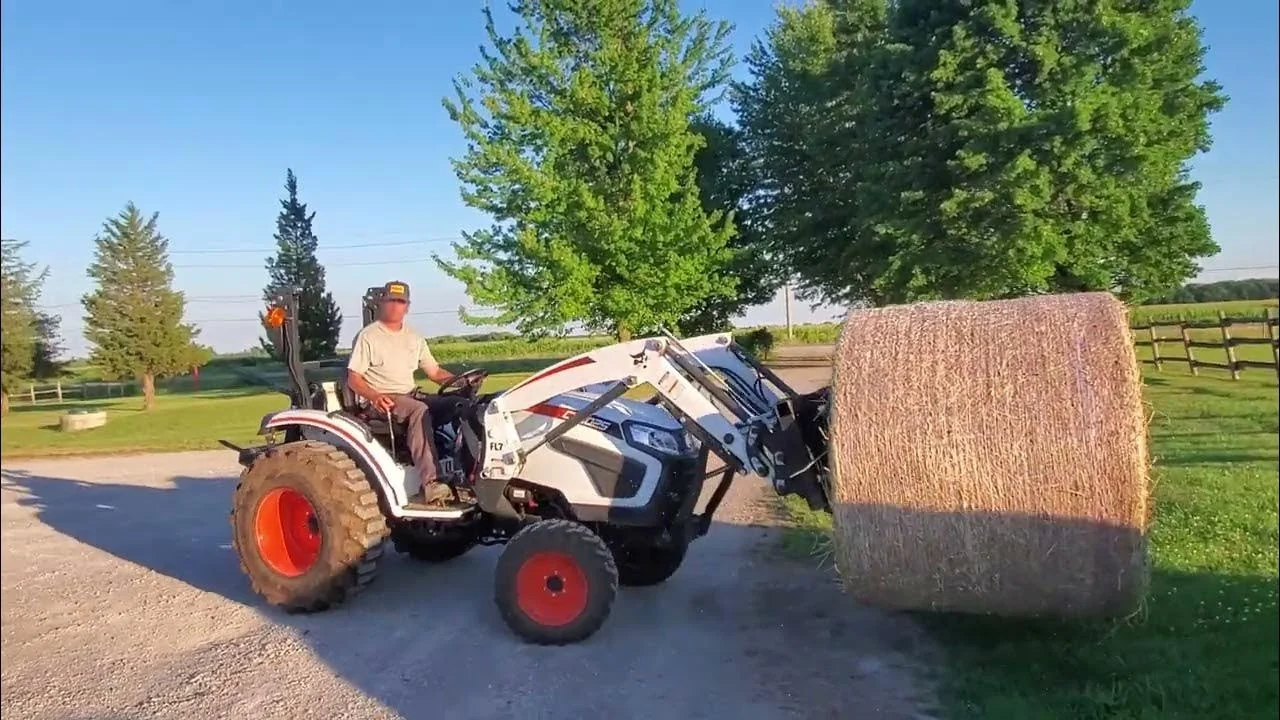
Winter is when you find out if your feed setup makes sense. Carrying bags across glare ice is how backs get tweaked and knees get wrecked, and rolling a bale by hand is a good way to end up pinned in a bad spot.
A compact tractor with a spear, forks, or a bale grab takes the drama out of it, as long as you respect the limits. Add rear ballast when lifting up front, keep the load low, and don’t side-hill on slick ground with weight in the air. If the path is icy, fix traction first with chains or sand, don’t just “take it slow” and hope.
6. Plowing Manure And Bedding When It Freezes Solid
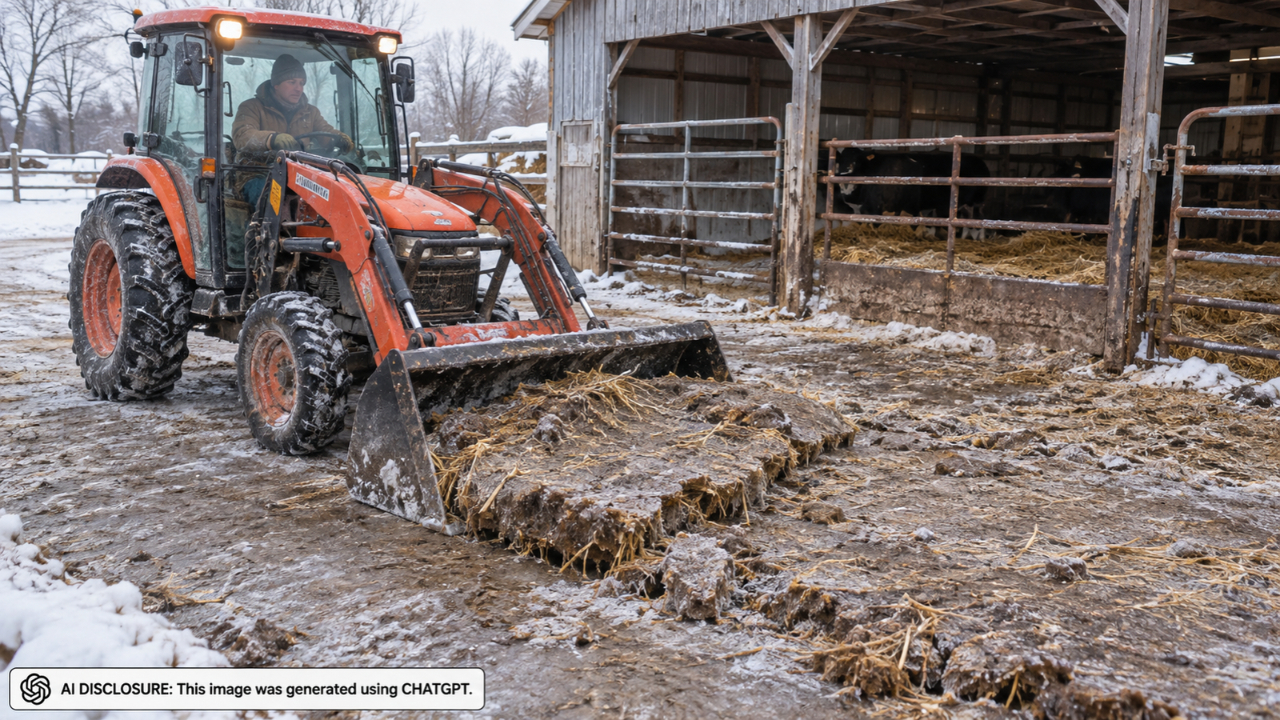
Once bedding packs down and freezes, a shovel just skates. You end up chipping like you’re breaking concrete, and the smell lingers because nothing’s really getting cleaned out.
A tractor with a loader and a tooth bar, or a rear scraper in the right spot, can peel up layers and move them to a pile without a full-day fight. The trick is timing. Clean sooner, before everything turns into one frozen mat, and you’ll save wear on the machine and your shoulders.
7. Pulling Vehicles Out Without Spinning Ruts
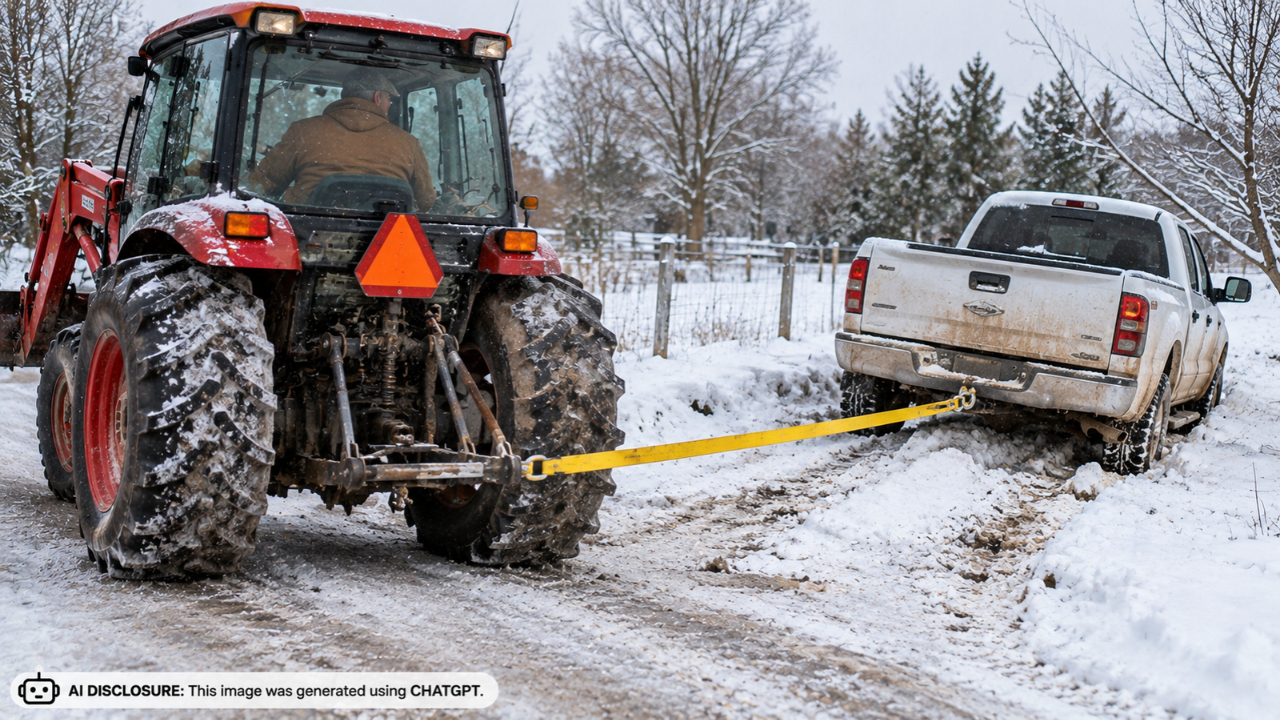
Some winters you’ll get one thaw, then a deep freeze, and the driveway turns to polished glass with a soft spot underneath. That’s when a car slides into the ditch or the delivery truck can’t climb the hill.
A tractor can pull, but it’s not a tow truck, so set it up like you mean it. Use a rated recovery strap or chain, hook to the drawbar or a proper tow point, and keep the pull low to the ground. If it feels sketchy, stop and call a wrecker, rolling a tractor is worse than a stuck sedan.
8. Digging A Path To Gates, Tanks, And Propane
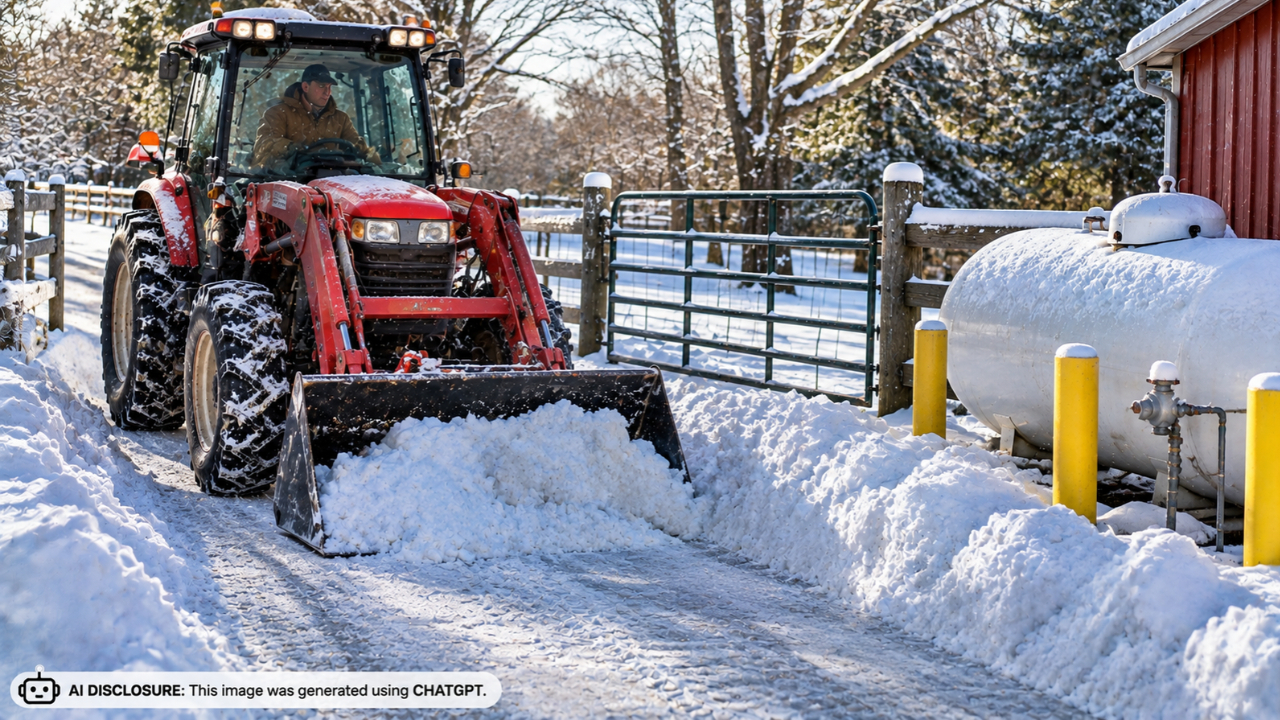
You don’t notice the drift pattern until you need the gate, the trash area, or the propane fill. Then you’re out there with a shovel trying to carve a tunnel while wind keeps stuffing it back in.
A tractor makes quick work of opening access lanes and stacking snow away from hinges and latch posts. Angle a rear blade to roll snow off to one side, or use the loader to relocate it where it won’t drift right back. Leave clearance around propane tanks and regulators, and don’t bang into lines or valves.
9. Maintaining A Crowned Gravel Lane All Winter
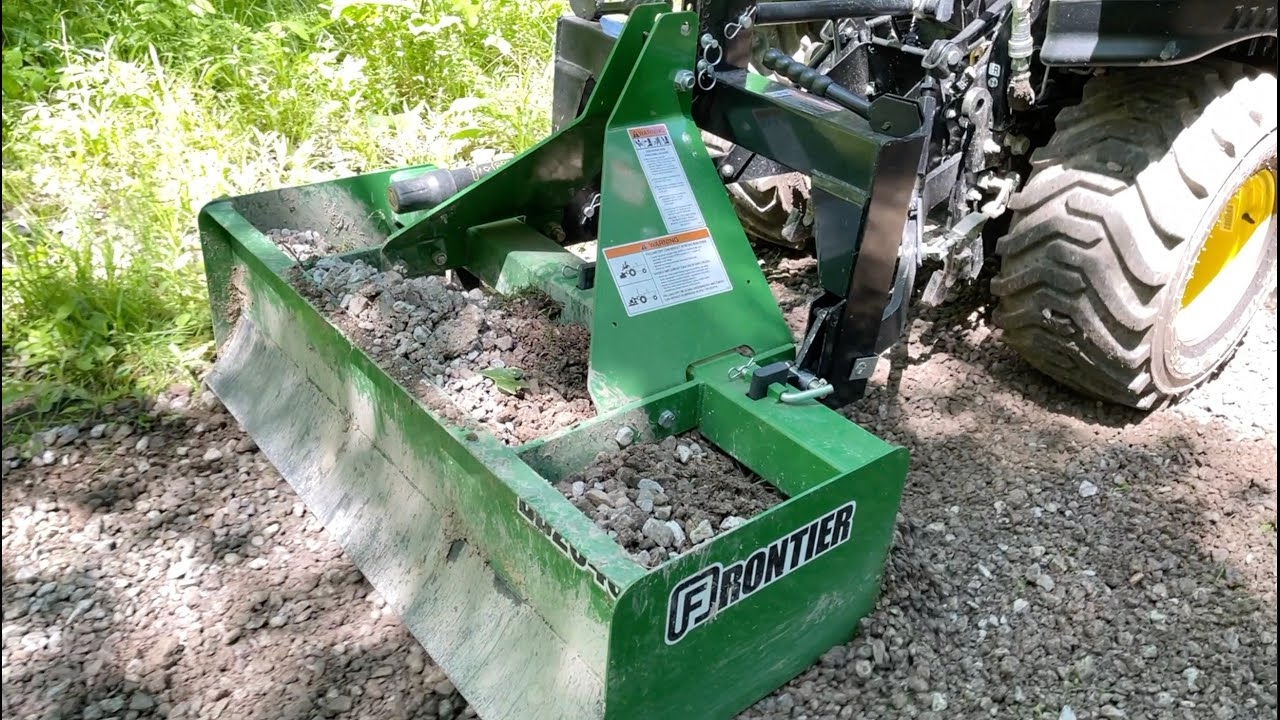
Gravel roads don’t stay smooth under snow. Tires polish ruts into the base, meltwater freezes in the tracks, and by midwinter you’ve got two icy grooves that steer the truck for you.
A rear blade or box blade can pull material back toward the center and rebuild a crown when you get a warm spell or a thin snow cover. Don’t try to grade frozen hardpack, you’ll just bounce and scar the surface. There’s one honest exception though: if the lane is short and flat, a cheap landscape rake on the back can be “good enough” to smooth light washboard without digging up your base.
10. Handling Winter Storm Cleanup Beyond Snow
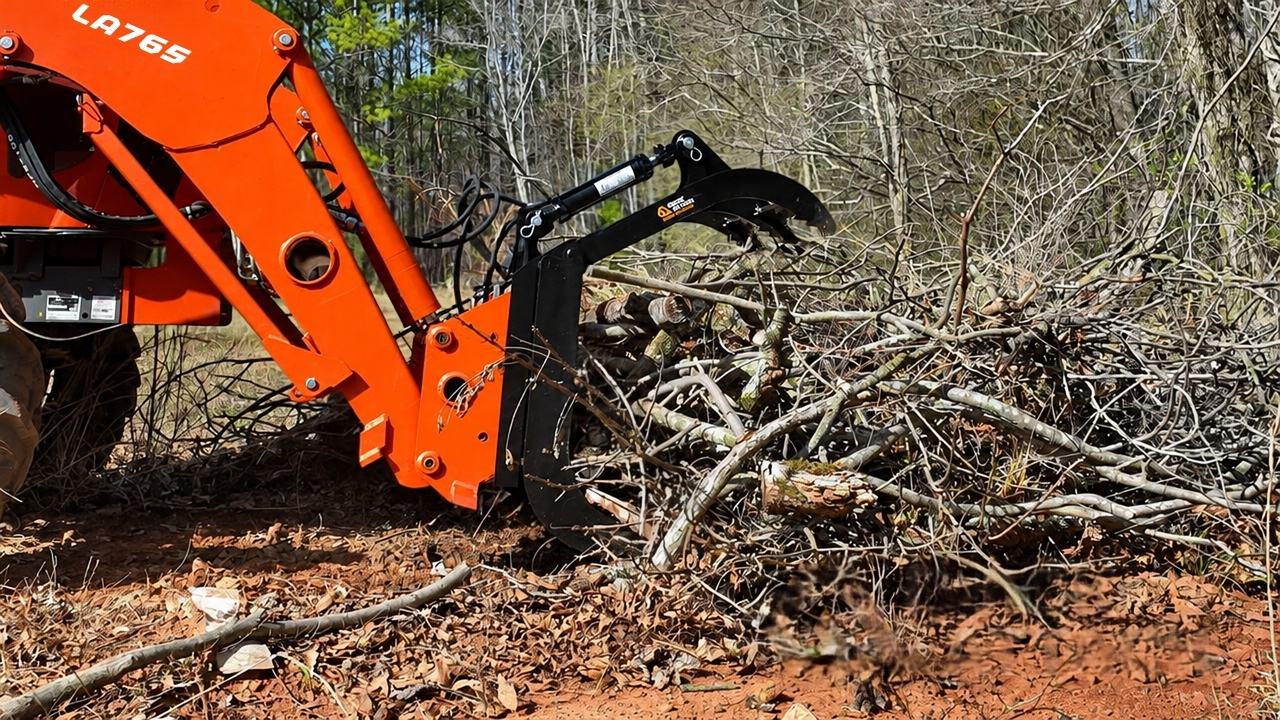
Winter storms don’t always show up as snow. Wind drops limbs across the drive, ice snaps small trees, and suddenly you can’t get to the road or the barn.
A compact tractor with pallet forks, a grapple, or even just a loader bucket can move brush piles and logs out of the way fast. Cut to manageable lengths with a saw, then carry instead of dragging so you’re not tearing up frozen turf and gravel edges. If a limb is tangled in power lines, stop and call the utility company, that’s not a tractor job.
Before the next storm hits, walk your place and decide where snow should live for the season, where traction matters most, and what paths have to stay open no matter what. A compact tractor pays you back when you plan the routes, keep the attachments ready, and don’t wait until everything’s frozen into a problem.
Like Fix It Homestead’s content? Be sure to follow us.