Rural Homeowner Says the Neighbor’s Dogs Keep Killing Chickens — Then the Fence Argument Turns Into a Property Fight
Photo credit: Fix It Homestead
For a rural homeowner, chickens can be part of the whole reason for moving out to more land.
They are not just decorations wandering around the yard. They are animals the homeowner feeds, protects, and counts on for eggs. They may be part of a small homestead setup, a family project, or the first step toward a more self-sufficient lifestyle.
So when a neighbor’s dogs keep getting loose and killing chickens, it does not feel like a small nuisance.
It feels like someone else’s problem keeps coming onto the property and leaving damage behind.
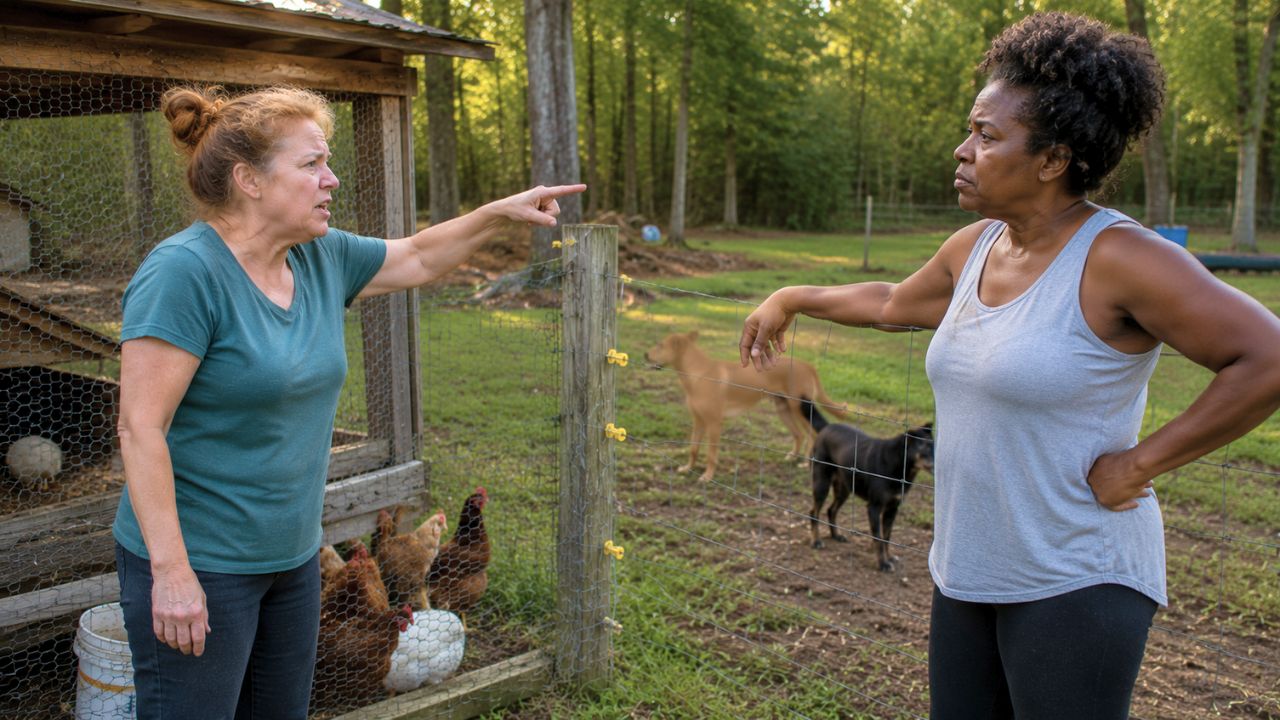
That was the situation one rural homeowner said they were dealing with after the neighbor’s dogs repeatedly killed chickens. But what started as an animal-control problem soon turned into a bigger fight over fencing, responsibility, and where one neighbor’s obligations ended.
The chickens were not the ones leaving the property
The frustrating part for the homeowner was simple.
The chickens were on their own property. The dogs were not.
That difference matters.
In rural areas, people sometimes treat loose dogs as part of country life. A dog wanders. A neighbor’s animal crosses a pasture. Someone shrugs and says dogs will be dogs.
But when those dogs start killing livestock or poultry, the situation changes fast.
The homeowner was not complaining because a dog ran through the yard once. They were dealing with dead chickens. Each time it happened, the loss was immediate and personal.
There was the cost of the birds, the lost eggs, the time spent raising them, and the upsetting scene left behind after an attack.
The neighbor’s answer became part of the problem
After the attacks, the homeowner expected the neighbor to take responsibility.
That could mean keeping the dogs contained, repairing their own fence, paying for the chickens, building a proper enclosure, or finding another way to stop the dogs from crossing onto someone else’s property.
Instead, the conversation shifted toward the fence.
The neighbor seemed to treat the issue like a shared boundary problem rather than a dog-control problem. That made the homeowner feel like the burden was being pushed back onto them.
If the dogs were escaping from the neighbor’s land, why should the chicken owner be the only one expected to build stronger defenses?
That is where rural neighbor disputes get messy.
One person says, “Your dogs are coming onto my property.”
The other person says, “You need a better fence.”
A fence does not erase responsibility
A good fence can help protect chickens, but it does not automatically solve the responsibility question.
Many chicken owners do build coops, runs, and fencing because predators are a real part of homestead life. Coyotes, raccoons, foxes, hawks, snakes, and loose dogs can all be threats.
But there is a difference between protecting chickens from wildlife and repeatedly dealing with a known neighbor’s dogs.
The homeowner may be willing to improve their setup, but that does not mean the neighbor gets a free pass to let dogs roam.
If a dog keeps leaving its property and killing animals next door, the issue is not only whether the chicken owner’s fence could be stronger. It is whether the dog owner is controlling their animals.
The property fight grew out of repeated damage
The conflict likely became worse because it was not a one-time incident.
A single attack might be handled with an apology, reimbursement, and a promise to fix the problem.
Repeated attacks make the homeowner feel like the neighbor is not taking it seriously.
Each loss makes the next conversation harder. The homeowner becomes less willing to accept excuses. The neighbor may become defensive. The fence becomes a symbol of the larger disagreement.
Who is supposed to pay?
Who is supposed to change?
Who is responsible for stopping the next attack?
Those questions matter because chickens are not replaceable in the way a broken lawn ornament is replaceable. They are living animals, and the homeowner has to think about the safety of whatever birds remain.
Commenters focused on documentation and local rules
When loose dogs kill chickens, people often tell homeowners to document everything.
Photos of the damage, dates of each incident, messages with the neighbor, vet or replacement costs, and any footage of the dogs entering the property could all matter.
Commenters also usually suggest checking local animal-control laws, county rules, livestock protections, leash requirements, and whether poultry is treated as livestock in that area.
The homeowner may need to report the dogs, especially if the attacks continue. In some places, repeated livestock attacks can lead to fines, liability, or stronger action against the dog owner.
People also tend to recommend strengthening the chicken enclosure for practical reasons, even if the neighbor is legally or morally responsible. A secure run may protect the birds while the dispute is being handled.
But the bigger point remains: improving the chicken fence does not mean the neighbor gets to ignore loose dogs.
The homeowner was left protecting animals from a preventable problem
What made the situation so aggravating was that the danger had a known source.
This was not a mystery predator slipping in from the woods.
The homeowner knew whose dogs were involved. The neighbor knew there was a problem. The chickens had already been killed. And yet the argument shifted toward who should build or repair a fence.
That can make a rural homeowner feel trapped.
They can spend money fortifying their own property, but if the neighbor refuses to control the dogs, the risk may continue. They can complain, but if nothing changes, more chickens may die. They can report the problem, but that may worsen the neighbor relationship.
In the end, the fight was not really about whether fences are useful.
It was about whether one homeowner should have to keep absorbing the cost of another person’s animals getting loose.
And when dogs cross the line and kill chickens, that line becomes more than a boundary between yards.
It becomes the difference between a peaceful homestead and a neighbor problem that keeps drawing blood.
Like Fix It Homestead’s content? Be sure to follow us.