New Homeowner Finds the Neighbor’s Propane Tank Was Installed Less Than a Foot From the Property Line — Then the Fuel Company Says Moving It Is the Homeowner’s Problem
Photo credit: AI-generated image created using ChatGPT. Illustrative only.
It started as a straightforward demolition plan: tear down a dilapidated garage, clean up a leaning block wall, and finally put up a simple wood fence to enclose a city yard. The kind of project that’s annoying and dusty, but predictable.
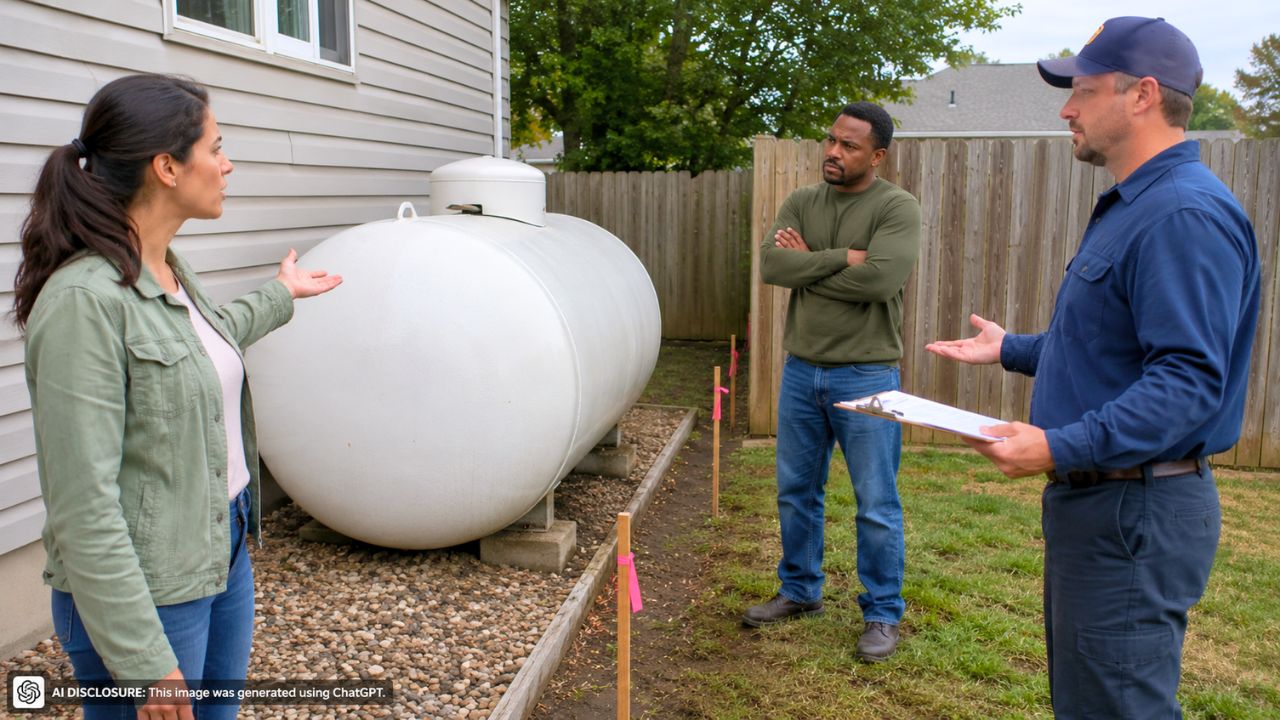
Then the homeowner noticed what was sitting directly behind that wall on the neighbor’s side—an oversized propane tank positioned less than a foot from the property line. In the original post, they describe realizing the placement doesn’t just feel tight. It potentially changes what they’re allowed to build on their own land.
The wall was already a problem, until it became a safety problem
Between the two properties sits a 10-by-8 Allen block wall that’s right on the line—but technically on the homeowner’s property. It’s also leaning “badly” toward the neighbor’s side, which already makes it feel like a waiting game: when does it get worse, and who gets hurt when it goes?
The homeowner planned to demolish it next month, along with the garage. They weren’t even looking to split costs or start a dispute. The fence would benefit both households, especially because the neighbors have dogs, too.
But removing the wall isn’t as simple as knocking it over. With a propane tank directly behind it, the homeowner says the wall needs to come down block by block to avoid the nightmare scenario—blocks falling onto the tank.
A planned fence turned into lost yard space overnight
The real punch came when the homeowner learned they can’t build a wood fence within three feet of a propane (or oil) tank because wood is combustible. That’s not an abstract “best practice” problem; it’s a tape-measure problem.
If that tank stays where it is, the homeowner says they’d have to build their fence three feet inside their own boundary. For a city lot that’s already tight, that’s not nothing. It’s a strip of yard they’d lose permanently—space they expected to have enclosed and usable.
And because the garage used to serve as the effective barrier between properties, the timing matters. Once the garage comes down, the yard needs an enclosure. They’re trying to replace one boundary with another without turning the yard into an awkward, shrunken shape.
Then came the code question nobody wanted to ask
The homeowner also found something even more concerning: regulations in their area apparently require a propane tank to be 10 feet from the property line. This tank was installed only two years ago, which raises the uncomfortable question of how it ended up less than a foot from the line in the first place.
Now the homeowner is stuck between two bad options. Push the issue and risk straining a long-standing relationship—these neighbors are described as “old family friends.” Or stay quiet and absorb the cost, the stress, and the yard impact of someone else’s equipment placement.
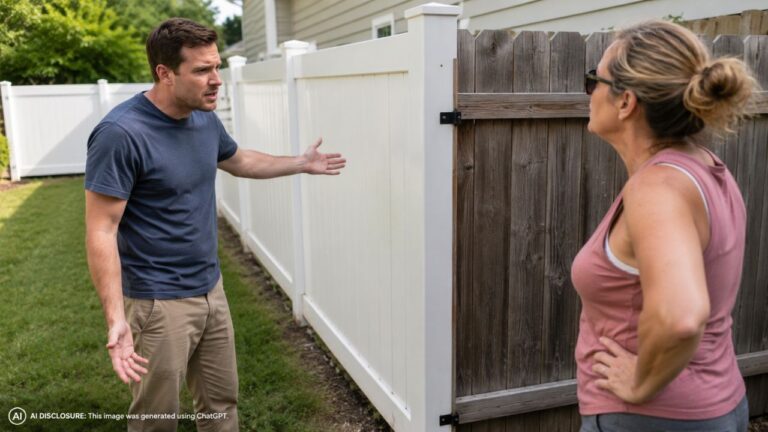
The hardest part is that this isn’t just about what looks fair. It’s about whether the current placement is even allowed, and what happens if the homeowner builds a fence anyway. They’re worried about liability if there’s an accident—like a hurricane damaging the fence and sending it into the tank.
The neighbor relationship made it harder, not easier
If this were a stranger, the homeowner might approach it like a typical boundary dispute: confirm the line, cite the rules, demand a fix. But when you’re dealing with family friends, every sentence feels loaded.
The homeowner’s original stance was generous: they weren’t going to ask for help paying for the fence, and they weren’t going to ask the neighbor to chip in on the expensive demolition. They just wanted their own property cleaned up and enclosed.
Instead, the propane tank’s location means the homeowner may pay extra to dismantle the wall carefully, then potentially give up usable yard space on top of it. That’s a lot to swallow quietly—especially when the installation happened recently enough that someone made an active decision about where that tank would sit.
What people urged: document first, then escalate carefully
Even without a long comment thread included in the source material, the direction most homeowners take in a bind like this is predictable: don’t start with a blowup conversation. Start with proof.
When property lines and safety equipment are involved, people tend to recommend getting the basics in writing: a survey or confirmation of the line if there’s any doubt, photos with measurements showing the tank’s distance to the boundary, and copies of any applicable setback rules. Not because you want to “win,” but because once you start talking about moving a tank, everyone suddenly remembers things differently.
From there, many homeowners would approach the neighbor with a practical frame: you’re not accusing them of doing anything wrong, but the placement creates a barrier to building a legal fence and creates safety concerns during demolition. That keeps it grounded in real impacts—contractors, timelines, and what can be built—rather than turning it into a personal complaint.
And if the neighbor’s propane supplier or installer is part of the story, commenters typically push for contacting them with the documented measurements and asking them to explain how it met setback requirements at installation. The homeowner’s stress point is clear: if the tank doesn’t comply, why should the neighbor—or the homeowner—be the one stuck solving it now?
A demolition date doesn’t wait for a perfect solution
This is the kind of mess that gets more expensive the longer it drags on. The homeowner is already planning a demo next month, and that means scheduling contractors, permits, hauling, and a sequence of work that assumes the property edge can be rebuilt cleanly.
But with the tank so close, even the order of operations becomes risky. The wall has to come down carefully. The fence might have to shift inward. And the homeowner can’t shake the feeling that if they proceed without resolving the tank placement, they could inherit a liability question they never signed up for.
They’re not looking for a feud. They’re looking for a yard they can use and a project that doesn’t turn into a safety lecture after something goes wrong.
For now, the homeowner is left with a grim choice: absorb the consequences of a tank they don’t own, or initiate a difficult conversation that could force the neighbor—and possibly the propane company—to deal with an installation that seems wrong on its face. And with the wall already leaning and demolition on the calendar, “wait and see” doesn’t feel like an option.