Buyer Finds an Unpermitted Fence Running the Full Two Hundred Feet of the Back Property Line — Then the County Says It Was Never Approved
Photo credit: AI-generated image created using ChatGPT. Illustrative only.
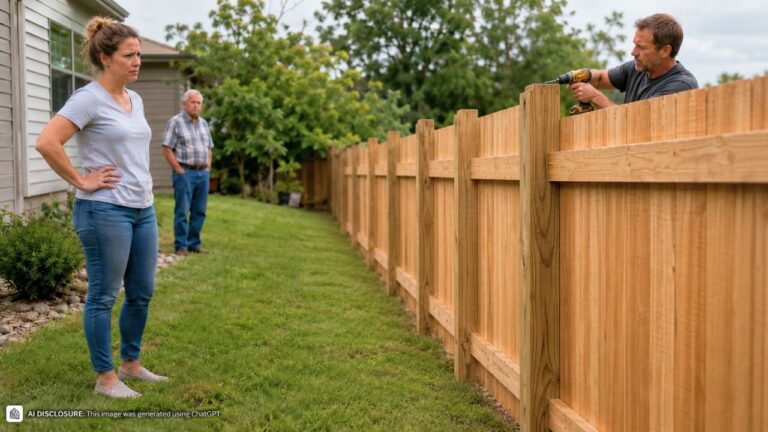
It started the way a lot of boundary problems start: a fence that “looks” like it’s been there forever, and a homeowner who just wants to know what they actually own. But once the tape measures and paperwork came out, the backyard stopped feeling like a backyard and started feeling like a dispute waiting to happen.
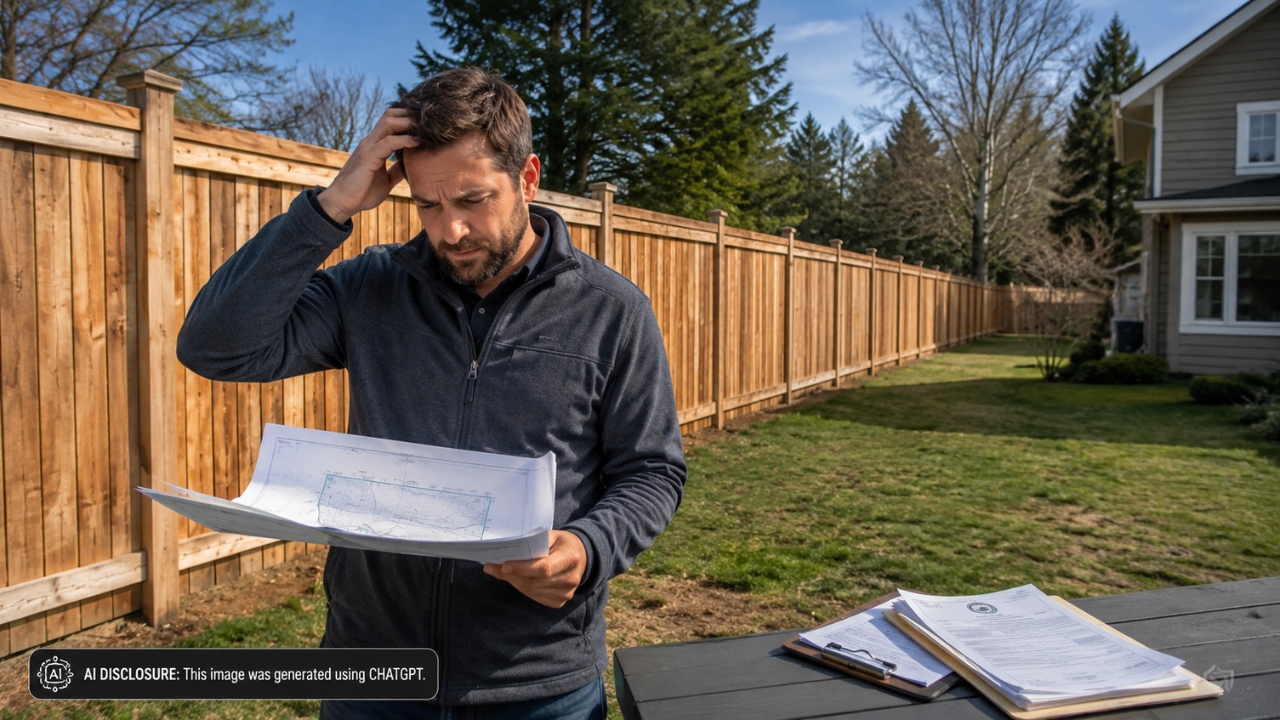
In the original post, a homeowner in Illinois said they hired a surveyor after getting advice to stop guessing and get real lines on the ground. The surveyor’s early assessment wasn’t subtle: the neighbor’s fence and deck appeared to be over the property line “by a fair bit,” cutting a wedge-shaped slice out of the lot because the parcels aren’t perfectly square.
The survey put numbers to what felt “off”
The homeowner described the lots as skewed, the kind where fence lines can look straight but still drift across a boundary. The surveyor pointed to rebar in the ground that “looks like the original stake,” and even noted the placement might actually be a few inches different than what the homeowner first saw in a photo.
That detail matters because property disputes often turn on inches that become feet over distance. When a fence runs along a long rear line, even a slight angle can carve out a noticeable chunk of usable yard. The homeowner said the surveyor planned to reassess and finish the final drawing later, which suggests this wasn’t just a casual glance—this was headed toward an official map the homeowner could actually use.
And once a surveyor is involved, the entire tone changes. This isn’t “my yard versus your yard” anymore. It’s “what does the record show?”
The neighbor’s story was: we built to the old fence
When the homeowner spoke to the neighbor, the neighbor’s explanation leaned hard on history. The fence, he said, was built against the previous owner’s fence, and that old fence line was how they “determined property lines back then.” In other words: we didn’t invent this boundary—we followed what was already there.
Then came the bigger hint. The neighbor reportedly said the fence has been up for “over 20yrs,” dangling the idea of adverse possession—basically suggesting that time and use might matter as much as the deed. Illinois does have rules around long-term possession and boundary issues, but the key point here is the practical one: the neighbor wasn’t approaching this like a small adjustment. He sounded prepared to defend the placement as established.
That’s the moment a lot of homeowners realize they’re not just dealing with boards and posts. They’re dealing with competing versions of reality, and each version comes with its own paperwork—or lack of it.
Then the permit check turned up… nothing
The homeowner didn’t stop at the survey. They called the local permit department to see what had been approved over the years for the neighbor’s property. What came back was clean—too clean.
They were told there were no permits on file for a fence or a deck. The only permit the department found was for concrete, which the neighbor used for a front-yard patio. That’s the kind of discovery that makes a homeowner’s stomach drop, because it changes what “old and established” means. Something can be old and still be unapproved.
At the same time, a missing permit doesn’t automatically solve a boundary fight. The homeowner recognized that even if code enforcement got involved, the physical problem would still remain: the fence would still be over the line, and the neighbor would still be standing behind his version of the story.
The trapped feeling: “What can I do besides a lawyer?”
Once the homeowner had survey evidence and a permit department saying there was no record of approval, the next question wasn’t about wood panels anymore—it was about options. The homeowner asked what they could do “besides lawyer,” which is the most relatable part of this whole thing.
Lawyers cost money. Neighbor fights cost sleep. And the homeowner added another pressure point: they have an FHA mortgage and said they can’t just sell off the land without the bank, even if they wanted to. They also said they don’t want to sell it at all. They want their yard back, or at least clarity and control.
The homeowner floated the idea of calling code enforcement after the final survey drawing comes in. That’s a common crossroads in disputes like this—do you keep it neighbor-to-neighbor, or do you bring in the county and let the chips fall where they may?
But there’s no magic phone call that teleports a fence back onto the correct line. If the neighbor refuses to move it, the homeowner is left with the grind: documentation, formal notices, and possibly court.
Why an unpermitted fence can still be a real headache to remove
A lot of people assume “no permit” equals “tear it down.” In real life, it can be more complicated. A permit record is one tool, but boundary enforcement is often its own separate lane. You might be able to get attention from inspectors for unpermitted work, but inspectors typically aren’t there to referee property lines—they’re there to enforce building rules.
And even when a fence is clearly over a line, homeowners still have to think through what happens next. Who pays to remove it? What if the neighbor claims the fence is theirs and damages occur during removal? What if moving it exposes other issues, like disturbed grading, old concrete footings, or encroachments from a deck?
The homeowner’s note about the fence and deck both being over the line adds weight here. A fence can be shifted in a weekend. A deck is heavier, more expensive, and more emotionally loaded. It also raises the stakes because a deck can feel like an “extension” of someone’s home, not just yard décor.
The crowd-sourced instinct: prove it, then paper it
The homeowner credited earlier advice for pushing them toward a surveyor, which is usually step one for any boundary mess that might turn serious. People who’ve been through these fights tend to focus on proof before confrontation: get the survey, get the final stamped drawing, keep records of what the permit office said, and avoid making threats you can’t back up.
The homeowner seemed to be following that playbook—survey first, then conversations, then calls to the permit department. It’s not dramatic, but it’s the kind of sequence that keeps you from accidentally turning a fixable issue into a permanent neighbor war.
Now they’re in the waiting phase: the surveyor still has to finalize the drawing, and the homeowner has to decide whether the next step is code enforcement, a formal demand to the neighbor, or something more serious.
For now, the fence still sits where it’s sat for years, and the homeowner is stuck looking at a long back line that may not actually be theirs to enjoy. The rebar is in the ground, the paperwork trail is thin, and the next move could set the tone for the entire block for a long time.