New Homeowners Find the Neighbor’s Camper and an Entire Trailer Home Sitting on 90 Percent of Their Backyard — Then They Learn He Turns Violent Whenever Anyone Asks Him to Move It
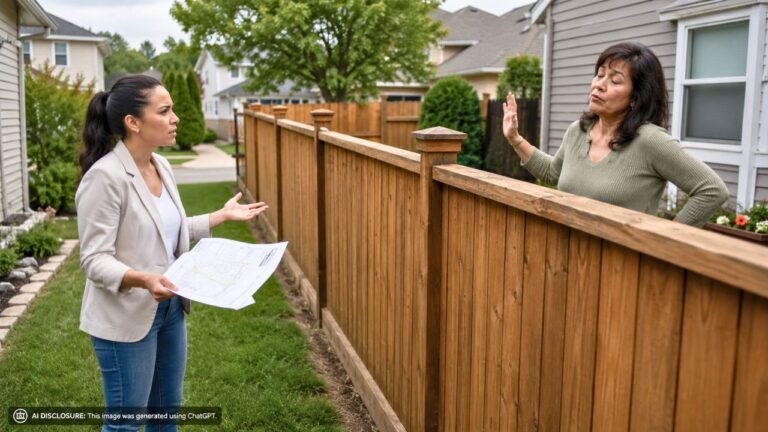
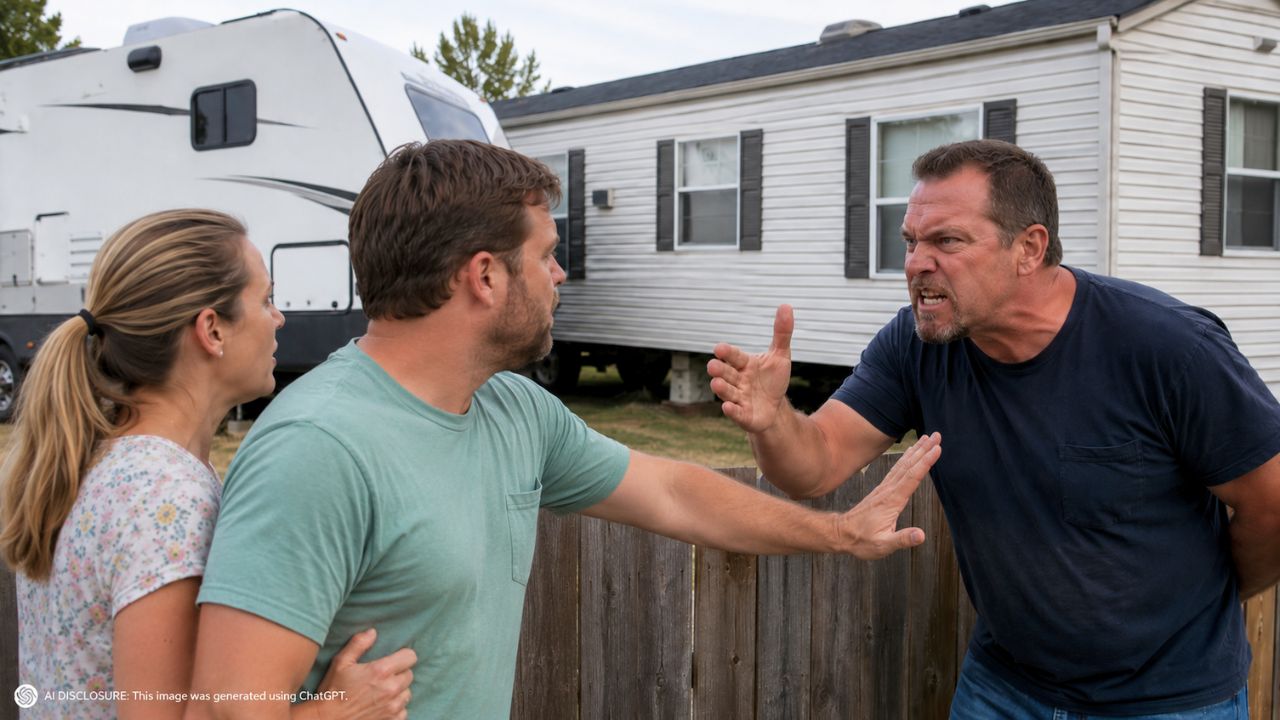
Photo credit: AI-generated image created using ChatGPT. Illustrative only.
They finally got the keys to their first home, the kind of milestone that’s supposed to come with paint samples and renovation plans. Instead, a 25-year-old homeowner and his fiancée walked behind the house and found their “backyard” was basically a storage lot for someone else: a camper trailer and an entire trailer home sitting completely on their land.
In the original post, the couple explained they live on Canada’s eastern coast and the neighbor—who they call “Mark”—has been using roughly 90% of their backyard for years. And it wasn’t just the camper and the trailer home. There’s also a shed and even part of Mark’s driveway encroaching onto their property.
The backyard they paid for is mostly unusable
The couple described a lot that’s 4 to 5 times the size of the house—just in the backyard alone. But the “useable” portion behind the home is down to a small strip: enough room to park two vehicles, one behind the other. Everything else is swallowed by Mark’s parked structures.
It’s the kind of problem that doesn’t just ruin weekends and cookouts. It affects how you can renovate, where you can put a fence, whether you can safely bring in contractors, and what you can even do with your own land without tripping over someone else’s property.
And looming over it all is the fear that if they wait too long, it gets harder to fix. The homeowner said they want everything removed “ASAP,” worried about the risk of the neighbor trying to claim rights after using the space for so long.
This wasn’t a surprise—just a problem nobody could solve
One detail makes the story messier: this wasn’t a fresh violation that happened after closing day. The camper and mobile home were already there when the fiancée originally bought the place from her grandmother, before COVID. At the time, she was around 18 or 19 and described herself as nonconfrontational—especially when the person she’d have to confront was older and known for getting in people’s faces.
Later, the home became a rental property for a few years while the couple moved around. Now they’re back, engaged, and trying to settle down and start a family in the house. Suddenly the old “we’ll deal with it later” problem is in the center of every plan they make.
They were also told the previous owners tried to get Mark to move his things and couldn’t. That history matters, because it suggests the issue isn’t a simple misunderstanding about property lines—it’s an entrenched pattern.
The neighbor is rarely around, hard to reach, and reportedly explosive
Mark, they said, owns two other homes, with his main home about two hours away. In nearly six months living there, they haven’t seen him once. That’s its own kind of stress: there’s no casual “hey, can we talk?” moment when someone’s never around.
But the bigger problem is what they’ve been warned will happen if they do manage to contact him. The homeowner wrote that Mark has a reputation for screaming, yelling, and occasionally getting physical when confronted about moving his camper and trailer home.
That changes the whole equation. A lot of property disputes can be solved with a calm conversation and a deadline. This one carries the threat that a simple request could turn into a safety issue in the yard where they’re supposed to feel most secure.
Fixing the house is hard enough without a land fight
Money is tight, and that’s another real-world pressure point. The couple said they’re already in the middle of “NEEDED renovations” on an older home, and they’re dealing with the aftermath of renters who did a poor job maintaining the house and surrounding land.
That’s the part that will feel familiar to a lot of homeowners: you budget for the obvious upgrades, then the hidden problems start stacking up. A property line battle—with vehicles, trailers, and potentially an angry neighbor—can quickly become the kind of issue that blocks other repairs and makes every project more complicated.
Even if you want to be patient and do things politely, it’s hard to stay calm when 90% of the yard you paid for is occupied and you’re staring at a long list of repairs inside the house too.
Most people pushed “proof and paperwork” over confrontation
The homeowner didn’t paste individual responses, but he did say many people gave similar advice and asked the same core questions. The theme of what he took from the feedback was clear: don’t handle this as a shouting match in the yard. Handle it as a documented property issue with the right offices involved.
He also mentioned that commenters raised an idea he hadn’t considered—looking into whether it’s possible to claim property that appears abandoned. That tells you where people’s heads were: if Mark won’t respond and won’t move the structures, the couple needs a path that doesn’t rely on Mark acting reasonably.
And because Mark is described as violent when confronted, the idea of avoiding direct contact isn’t just about being polite. It’s about minimizing the chances of an in-person blowup, especially for a couple trying to build a life in a home they plan to keep.
The first move they made: local legal aid
Instead of storming over to the neighbor’s place, the homeowner said he contacted local government legal aid and sent an email laying out the details. He’s hoping that starts the process—or at least gets them pointed toward someone who can help without “dump[ing] loads of money on a lawyer.”
That step matters because it’s the first sign of momentum after years of the problem sitting there. It also suggests the couple is trying to do this in a way that won’t escalate: not by threats, not by a surprise tow, but by figuring out what their options are and who has the authority to enforce them.
For now, the camper, the trailer home, the shed, and the driveway encroachment are still part of their daily view. The renovations are still waiting. And the backyard—the one that’s supposed to be theirs—is still mostly off-limits, held hostage by someone they can’t easily reach and don’t feel safe confronting.
Like Fix It Homestead’s content? Be sure to follow us.