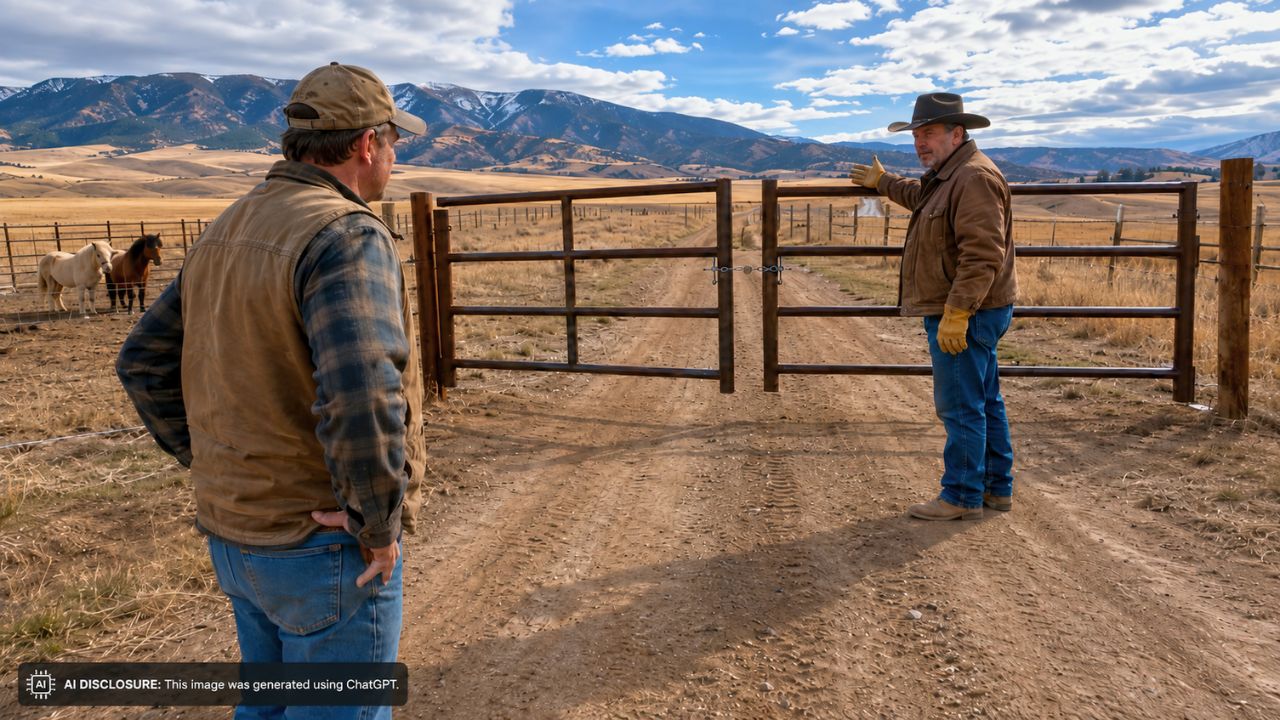
Rural Colorado Landowner Finds Two New Gates Blocking the Recorded Fifty-Foot Access Easement to His Twelve Acres — Then the Neighbor Claims It’s to Protect Two Miniature Horses in a Separate Fenced Yard
Photo credit: AI-generated image created using ChatGPT. Illustrative only.
In rural Colorado, a long dirt driveway isn’t just a convenience—it’s the difference between having a property you can use and one you can’t reliably reach. That’s why one landowner did a double-take when two new gates suddenly appeared across the only road leading to his 12 acres.
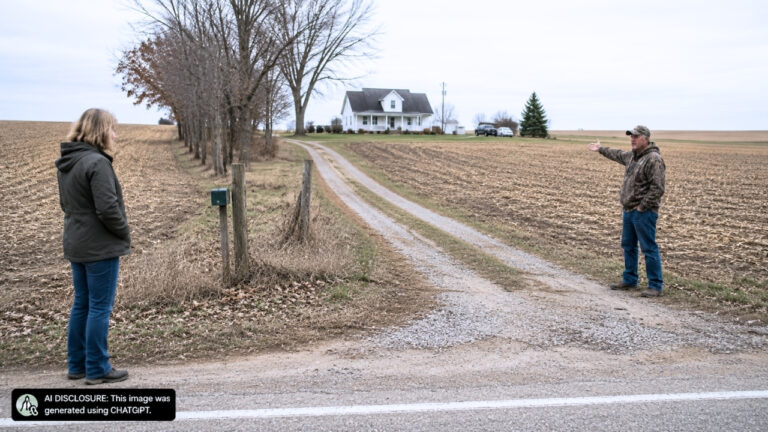
In the original post, he explained that his access runs along a 1,300-foot recorded easement coming off the county road. It’s written into the title as a 50-foot-wide “access easement,” and he maintains the dirt road himself. Then, without warning, a neighbor put up one gate at the county road entrance and another at the property line between them—turning an open route into a stop-and-start obstacle course.
A recorded easement, and then a brand-new barrier
The homeowner’s description is the kind of setup lots of rural buyers recognize: a big piece of land, not much around, and one clearly defined way in and out. The easement isn’t a handshake agreement or “we’ve always done it this way.” It’s recorded on the title, specifically for access, and it’s the only way to reach the property.
That detail matters because gates don’t just slow you down. They change the day-to-day reality of owning the land. If you’re hauling materials, bringing in equipment, expecting deliveries, or trying to get emergency access, “open and passable” isn’t the same thing as “you can get through if you stop, get out, unlock, re-latch, and repeat.”
And it wasn’t just one gate at the entrance. It was two, placed at points that function like chokeholds—one right where the dirt road begins at the county road, and another where the neighbor’s property line meets the easement route.
The neighbor’s explanation didn’t match what the owner could see
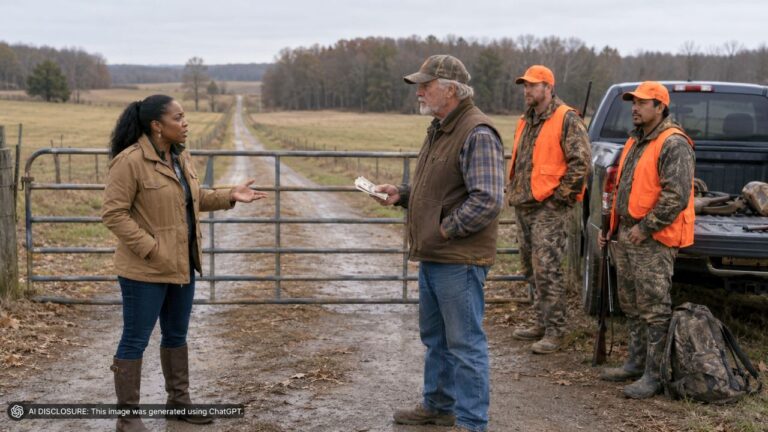
When the landowner reached out, the neighbor’s stated reason was “protecting his property and livestock.” In rural areas, that can sound reasonable at first. People worry about trespassers, loose dogs, nighttime traffic, and strangers mistaking a private drive for a public road.
But the details didn’t line up for the owner. The neighbor’s own driveway wasn’t gated, and the neighbor had “free and open access” to his property through that driveway. In other words, someone could still reach the neighbor’s land without going through the easement road at all.
Then there was the livestock claim. The only animals mentioned were two miniature horses kept in their own fenced area with a barn. That’s not nothing—horses getting out can turn into a mess fast—but a separate fenced yard suggests the animals already have a containment system that doesn’t depend on blocking someone else’s access road.
So the landowner was left with a familiar rural-feud question: is this actually about animals and safety, or is it about control of the road?
Why gates across an access road hit differently in the country
In a subdivision, a blocked driveway is annoying. In the country, it can be a real operational problem. A 12-acre parcel is the kind of place people use for storage, projects, equipment, seasonal work, and long weekends—stuff that often requires trailers, heavy loads, and a steady flow of vehicles.
Even if a neighbor hands over a key or a code, gates add friction. Contractors show up when you’re not there. Friends don’t always close gates correctly. Delivery drivers won’t open a gate they don’t understand. If weather turns the dirt road slick, stopping on a grade to get out and fuss with a latch is its own hazard.
And there’s the darker practical issue: emergencies. Rural response times can be long even under perfect conditions. A locked gate is one more thing between help and the property. Owners think about that whether they live there full-time or not, because remote acreage can still have accidents—fires, injuries, stuck vehicles, and medical issues.
The landowner’s core frustration wasn’t subtle. The easement exists because his land otherwise doesn’t connect to a public road. When someone else changes the rules of that access, it doesn’t feel like a minor disagreement. It feels like someone messing with your ability to use what you own.
The immediate pressure: keep the peace, but don’t give up ground
This is the part that turns neighbor tension into something heavier. Rural neighbors can be a long-term reality—shared boundaries, shared snow drifts, shared assumptions. People often try to “talk it out” first because once the relationship goes sour, you see the fallout for years.
But there’s also a reason easements are recorded: so access isn’t dependent on someone’s mood, or on a verbal promise that can change after a property sale. A gate installed without agreement can feel like a test. If the landowner accepts it quietly, it becomes the new normal. If he pushes back, he risks escalation.
The owner asked what legal options he had, which is often the moment people realize a “simple gate” isn’t simple anymore. It’s not just about removing hardware. It’s about rights, boundaries, and whether the neighbor is allowed to place obstacles across an easement that’s specifically for access.
Reactions leaned toward documentation and formal steps
In homeowner disputes like this, the most common practical advice tends to be less about dramatic confrontations and more about boring, solid proof. When someone blocks a recorded access route, the details matter: the language of the easement, who holds what rights, and whether the obstruction materially interferes with access.
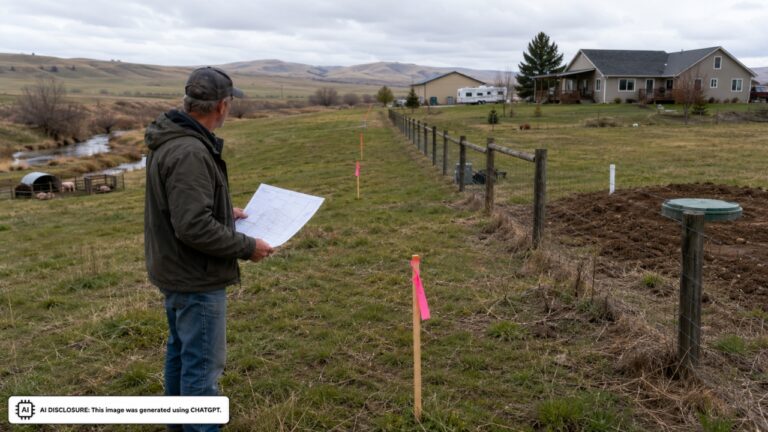
Even without getting into courtroom talk, the pattern of reactions in these cases is usually consistent: get your paperwork in order first. That means pulling the recorded easement language, the title documents, and any map or description that shows the easement location and width.
From there, people typically emphasize keeping communication clear and trackable—written notes, dated photos of the gates, and a record of when they appeared and where they’re placed. The goal isn’t to “build a case” for fun. It’s to avoid the he-said-he-said spiral that can happen when a neighbor insists the gates are reasonable and you insist they’re not.
And because it’s a rural dirt road that the owner maintains, the maintenance detail also adds another thread: if you’re paying for upkeep and someone else is physically controlling the route, that imbalance tends to raise eyebrows fast.
Living with the gates isn’t the same as agreeing to them
The ugliest part of access disputes is that the short-term workaround can turn into a long-term concession. If the neighbor offers a key, it might solve tomorrow’s problem while quietly creating a bigger one: the neighbor now acts like the “gatekeeper” of a road the owner is legally entitled to use.
Meanwhile, every day the gates stay up, they become part of the landscape. Visitors start thinking the road is private. Drivers hesitate. Deliveries get skipped. A simple trip to check on the property becomes a two-gate routine.
The landowner’s post included an “Edit: Update,” hinting that more happened after the initial question, but even at the moment he wrote in, the tension was already clear. A recorded access easement isn’t supposed to come with surprise checkpoints—especially not when the reason given is two miniature horses already kept behind their own fence.
For anyone who owns land reached by an easement, this is the nightmare in plain sight: you buy acreage for freedom, and then find yourself negotiating for the privilege of driving to your own property.
Like Fix It Homestead’s content? Be sure to follow us.