Homeowner Orders a Survey Before Building a Fence and Finds the Neighbor’s New Pool and Deck Sitting on Her Land — Then the Town Starts Sending Fine Letters Until It’s Removed
Photo credit: AI-generated image created using ChatGPT. Illustrative only.
It started the way a lot of backyard projects start: one homeowner watching the neighbor’s “big improvement” go up and assuming everything was handled correctly. A new pool. A new deck. Lots of construction. Nothing that needed a confrontation, right?
Then she ordered a survey for a fence and learned the part nobody wants to learn after the concrete is already poured—the pool and deck weren’t fully on the neighbor’s side. The details come from the original post, where she laid out a year-long slog that went from polite talks to attorneys to the town stepping in.
The first sign was easy to brush off
The homeowner said she bought her house first, and the neighboring home changed hands about two years later. When the new neighbors moved in, they quickly began building what she described as a giant pool in their backyard.
At the time, she didn’t step in. It’s a normal instinct—most people assume a major install like that involves permits, contractors, and someone verifying setbacks and lines. She figured they knew exactly where the property boundaries were.
That assumption held until she decided to do something common and practical: put up a fence.
A fence survey turned into a property-line gut punch
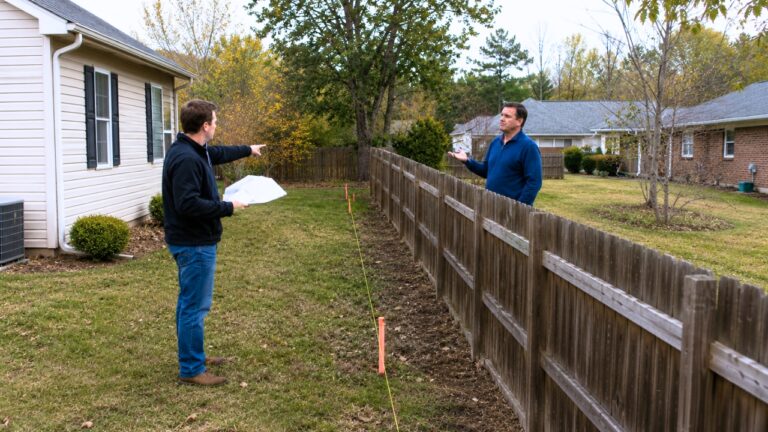
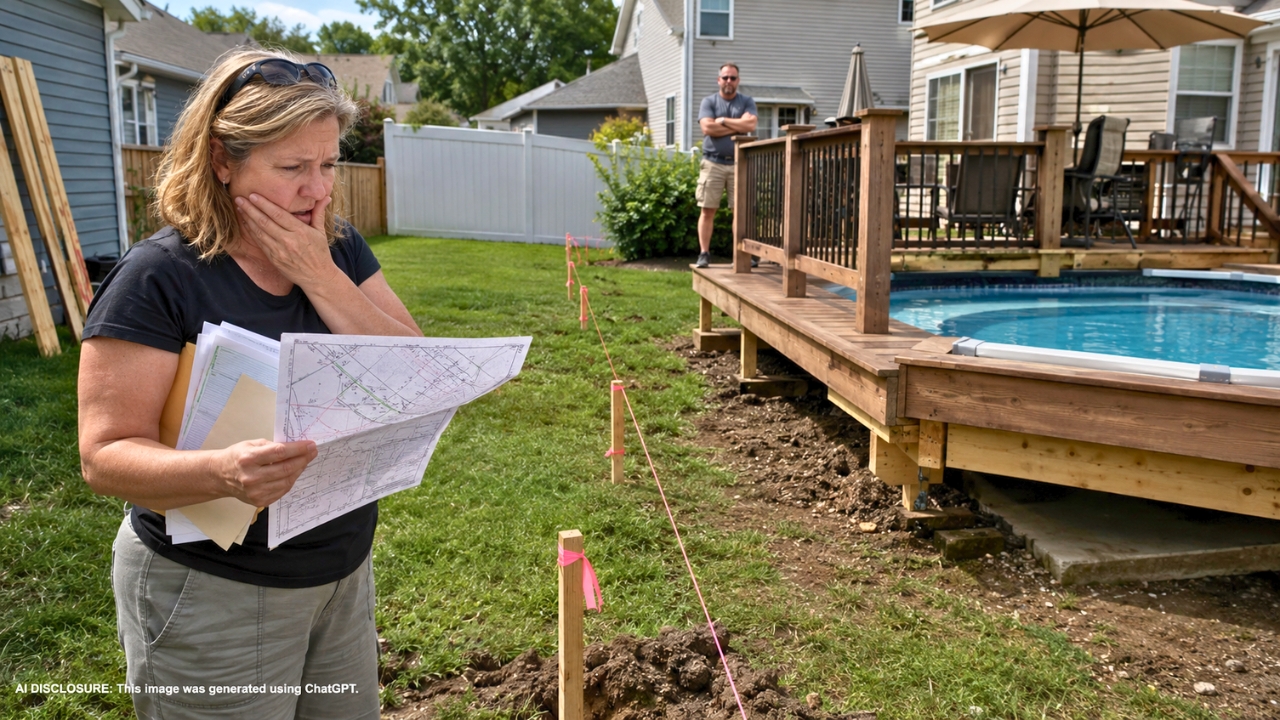
Last summer, preparing for the fence, she paid for a survey. That’s when the picture changed. The survey determined the neighbor’s pool and deck were sitting on her property.
It’s the kind of discovery that makes your stomach drop because it’s not just about a few inches of lawn. A pool and deck are expensive, permanent-looking improvements. Even if everyone stays calm, the fix is rarely simple.
And once you know, you can’t unknow it. A fence line becomes a legal line. A future sale becomes a question mark. And a “friendly wave” neighbor relationship suddenly has paperwork hanging over it.
She tried the “keep the peace” agreement—then the waiting began
Instead of immediately escalating, she tried to offer a compromise. She told the neighbors they could leave the pool where it was, and she would put her fence around it, as long as they signed an agreement acknowledging the land was hers.
The agreement wasn’t meant to be a casual handshake. She wanted something in writing stating both parties understood the pool and deck sat on her property, and that if something changed in the future—like one of the houses being sold—she could require it to be removed.
To do it right, she hired an attorney and said she spent north of $1,000 having the agreement drafted. That’s money a lot of homeowners don’t budget for when they start out thinking, “I’m just installing a fence.”
Then came the part that drains people: the slow stall. She said she asked the neighbors to review the agreement for seven or eight months. When they finally responded, they refused to sign it and said they had no interest in paying the lawyer fees either.
Now the fence is the problem too
Once the neighbors refused to sign, the homeowner wasn’t just out the attorney cost. She was stuck with practical fallout in the yard.
She explained that she would now have to move her fence again since the neighbors wouldn’t sign paperwork that clarified the property ownership. In other words, she tried to be flexible, and the lack of cooperation made it harder to build anything cleanly and permanently.
That’s a detail a lot of people miss when they read these disputes: it’s not only the encroaching structure. It’s the ripple effect—design changes, replanning, re-marking, and the uncertainty of whether anything you build near that boundary will later become a legal headache.
After about a year of dealing with the back-and-forth, she said she gave up trying to make them happy and contacted the city. Her big question was blunt: how did a permit get issued for something installed on her property?
The town inspection changed the tone fast
The update is where things finally got real. She wrote that the town came to look at the issue and recognized the pool didn’t belong where it was.
According to her post, the town planned to send the neighbors a letter stating it needs to be removed. If it isn’t moved after the fourth letter, she said the town will start sending fines until it’s moved or removed.
It’s not hard to imagine the shift that creates. A neighbor-to-neighbor dispute is one thing. A town enforcement timeline is another. Once a municipality gets involved, the issue stops being about who’s being “reasonable” and starts being about compliance, deadlines, and penalties that keep stacking.
For the homeowner, that likely brings relief and stress at the same time. Relief because someone in authority validated the survey-backed claim. Stress because enforcement tends to inflame relationships, and now the neighbor has a clear financial incentive to be angry.
What readers latched onto: proof, paper, and not paying twice
Even without a full comment thread included in the source material, the practical shape of the responses is familiar in these property-line stories. People tend to focus on documentation first—surveys, permits, written notices—because the only thing worse than an encroachment is an encroachment you can’t prove.
Another theme that comes up in disputes like this is “don’t absorb their problem.” The homeowner already paid for the survey and the legal draft in an attempt to be accommodating. Once the neighbors refused to sign, readers typically view that as the moment the dispute stops being a shared fix and becomes a boundary issue—literally and figuratively.
And then there’s the quiet but important point: time matters. The longer an encroachment sits, the more complicated everything can feel—fence placement, resale disclosures, and the creeping worry that doing nothing today becomes paying more tomorrow.
In this case, the homeowner’s original approach was almost overly generous: she offered a way for them to keep using the pool while protecting her rights in writing. When that failed, she did what many homeowners eventually do—bring in the city, because it’s the only lever left that doesn’t require personally funding the neighbor’s mistake.
Now the next chapter depends on whether the neighbors actually move or remove what they built, or whether they let the letters pile up until fines force the issue. Either way, a simple fence project already turned into a year-long lesson in why property lines aren’t just lines on paper—they’re where backyard dreams either fit, or don’t.
Like Fix It Homestead’s content? Be sure to follow us.