Neighbors Twice Ask to Build a Wall on the Property Line and Rent Driveway Space for an RV — Then Quietly Build a Stone Wall That Turns Out to Sit Two Feet Onto the Land a Year Later
Photo credit: AI-generated image created using ChatGPT. Illustrative only.
It started the way a lot of boundary trouble starts: a neighbor “just asking” for a small favor that would make their project look better. The homeowner said the request felt off, like the neighbors weren’t being straight about what they wanted—and that instinct ended up mattering.
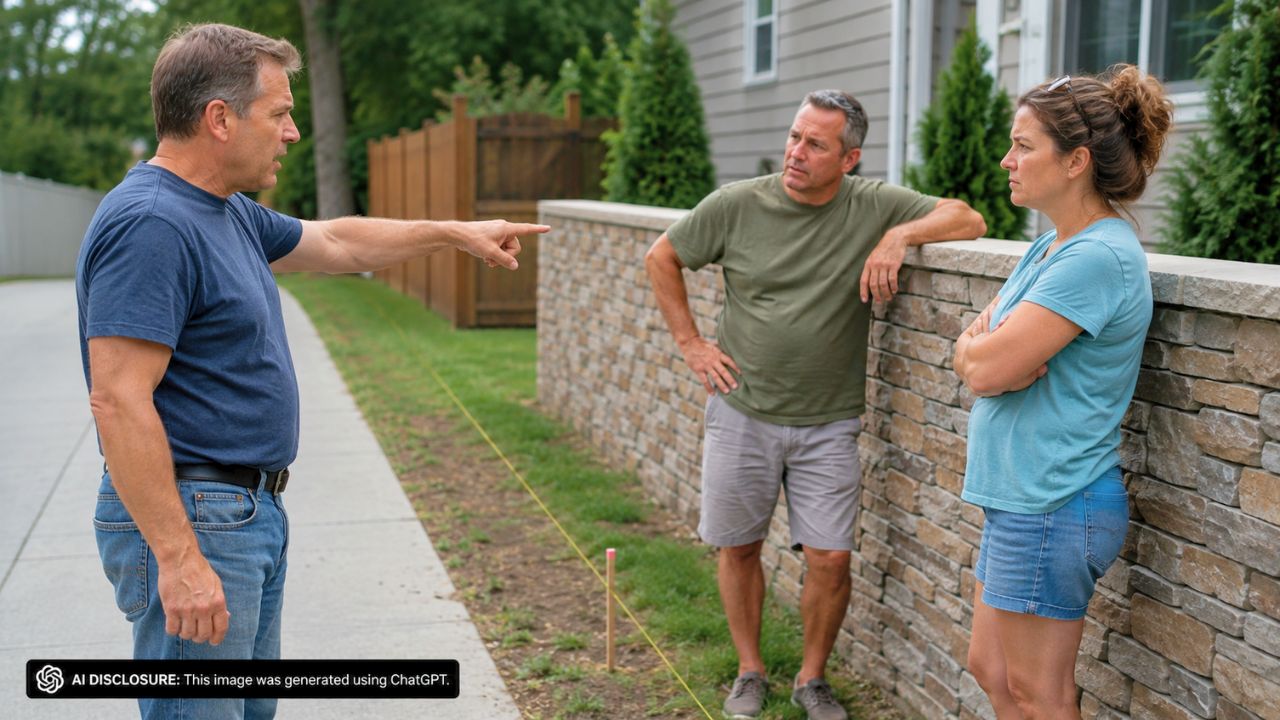
In the original post, the homeowner describes denying two separate requests—first to put a wall right on the property line, then to rent driveway space so the neighbors could park a large RV for $500 a month. About a year later, the homeowner noticed something they say they never agreed to: a stone-and-dirt wall that appears to sit nearly two feet onto their land for a stretch along the lower portion of the driveway.
The first request sounded simple, but the vibe was wrong
The neighbors began by building a concrete wall “on their side of the property,” according to the homeowner. But before that happened, they had asked to build it on the property line because it would “look nicer.”
The homeowner denied it. Not because they were trying to be difficult, but because the way the request was made didn’t feel honest. They describe it as neighbors trying to pull a fast one—something that wasn’t adding up even before any concrete was poured.
That early “no” is the kind homeowners sometimes second-guess later. But in this case, it becomes a pattern: ask for access, get denied, then push the boundary anyway—just in a less obvious way.
Then came the RV pitch: $500 a month for driveway space
After the property-line wall idea was shut down, the next request was different: the neighbors asked to park a large RV on the homeowner’s driveway next to the wall. They offered $500 per month for the space.
The homeowner said no again. On paper, it sounds like easy money, but driveway parking deals can come with headaches—blocked access, wear and tear, awkward expectations, and the creeping feeling that you’ve given away more control than you meant to.
And when you put that request next to the earlier one—build right up to the line, then use your driveway right next to the build—it starts to look less like coincidence and more like a plan to expand their usable space.
A stone wall quietly appeared—and it took a year to really see it
Later, the neighbors built another layer: “a wall made of many large stones and dirt on the lower portion of the concrete wall.” This is where the homeowner’s problem stops being theoretical and becomes physical.
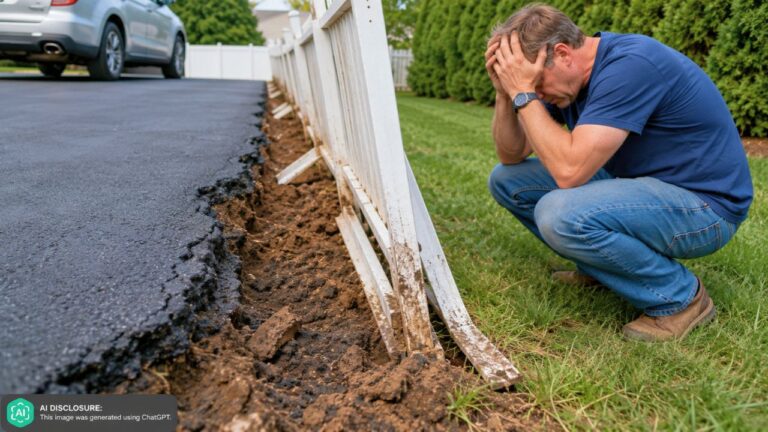
After a year or so, they noticed the stone-and-dirt portion didn’t seem to stay where it belonged. The homeowner says it sits almost two feet out onto their side for roughly 6 to 10 feet, and it slopes along the lower portion of their driveway.
The concrete wall is described as being at the top portion of the driveway, while the stone section is lower—exactly the kind of place where you’re not always staring at a straight line. The homeowner also notes you’d have to look hard to notice it at first.
That’s the part that makes these disputes so messy: once something is built and blended into landscaping, it stops looking like “new construction” and starts looking like “that’s just how it is.”
Bushes, maintenance, and the way encroachments get normalized
To complicate it further, the homeowner says bushes were planted there, and the bushes come over onto the driveway. The neighbors maintain the area, which on the surface can look neighborly.
But maintenance can also serve another purpose: it visually and practically reinforces that the strip of land is “theirs.” If someone trims, waters, and tends a border every week, it can feel like they own it even if they don’t.
The homeowner is stuck in the weird emotional space that these conflicts create. They feel bad about the idea of forcing removal, but they also feel it’s “so messed up” that the neighbors kept pressing and then built something anyway.
And because the wall is stone and dirt—heavy, messy, and not easily moved—it’s not like shifting a fence panel back six inches. Removal could scar the driveway edge, create erosion issues, or turn into a loud, prolonged project with contractors and equipment.
The driveway question is where the stakes get real
The homeowner’s biggest practical worry is a future repair: what happens if they decide to replace the driveway? Driveway work is disruptive even when everything is straightforward. When a questionable wall is sitting at the edge, “straightforward” disappears.
If the wall is truly over the line, a driveway contractor may refuse to work near it without clarity. Or the project could expose the encroachment in a way that forces an immediate decision: cut the driveway narrower than planned, risk damaging the neighbors’ wall, or pause everything to resolve the boundary first.
Then there’s the selling question. The homeowner wonders how serious the encroachment is if they list the house later. Buyers tend to get jumpy about property lines, and lenders and title companies don’t love surprises. Even if it never turns into a courtroom fight, it can still become a bargaining chip during negotiations—or a reason a buyer walks.
This is the kind of problem that feels small until you try to do anything major: install a new driveway, add a gate, regrade the slope, or even just clean up that edge without stepping into someone else’s “claimed” zone.
How readers framed it: prove the line before you talk about removal
While the post itself is mostly the homeowner laying out what happened and asking how it might play out, the typical reaction to these stories is consistent: don’t rely on eyeballing it, and don’t let time do the neighbors any favors.
People who’ve dealt with boundary issues often push for documenting everything before a direct confrontation—photos from multiple angles, measurements from fixed points, and, most importantly, a survey if there’s any doubt about where the line actually sits. The homeowner already suspects the stone section is nearly two feet over; getting that confirmed is what turns a “feels like” problem into a “here are the stakes” problem.
Another common theme in these disputes is avoiding informal deals after the fact. The neighbors already tried to negotiate access with money—first with “it’ll look nicer,” then with “we’ll pay you $500.” Once a structure is in place, some neighbors will try to convert that into a new negotiation: “Let us keep it and we’ll maintain it,” or “We thought you didn’t mind.”
Even without escalating, simply putting concerns in writing can matter later if the encroachment becomes part of a future sale or repair. The homeowner’s fear isn’t just the wall—it’s what the wall turns into if nobody draws a clear line now.
For the homeowner, it’s now a choice between discomfort today and bigger trouble tomorrow. The stone wall may look like landscaping, but it sits in the exact place where property rights, driveway access, and expensive future projects collide. And the part that keeps nagging is the pattern: they asked twice, got told no twice, and something ended up over the line anyway—quietly, and in a way that was easy to miss until enough time had passed.
Like Fix It Homestead’s content? Be sure to follow us.