New Jersey Homeowner Finds the Neighbor’s Driveway Poured Five Inches Over the Property Line — Then Watches the Buried Asphalt Push Their New Fence Back a Full Foot
Photo credit: AI-generated image created using ChatGPT. Illustrative only.
It started with a toddler in one arm and a neighbor yelling over a dog that slipped into the wrong yard. The homeowner says the dog shouldn’t have gotten out, but what stuck was how quickly the temporary guest next door escalated—calling police, screaming, and unloading insults right at the property line.
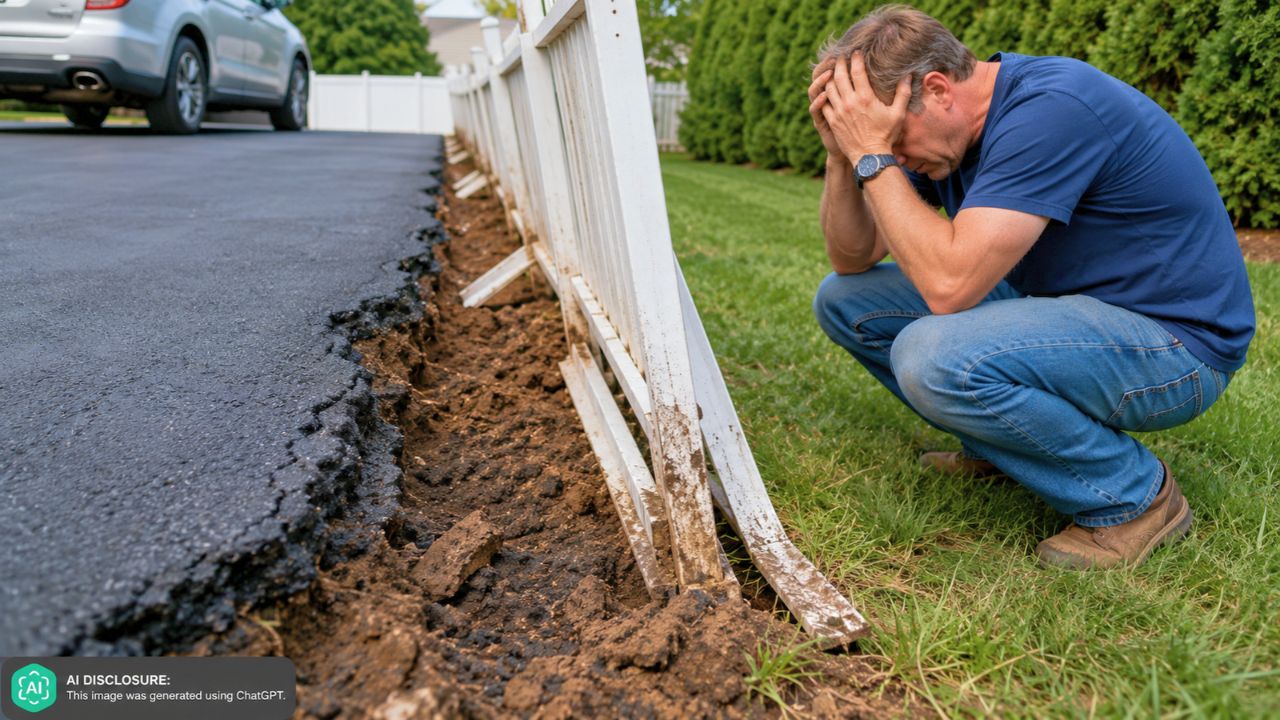
So the homeowner did what a lot of people do when they’re done dealing with chaos: plan a better fence. But when they pulled out the survey and started measuring, they found a surprise that felt a lot more permanent than a loose fence board. In the original post, they describe discovering the neighbor’s driveway appears to be poured roughly five inches over their property line, with the asphalt spread underneath the surface far enough that it changes where a new fence can even go.
A fence project turned into a property line problem
The homeowner’s plan sounded straightforward: fix the section where the dog had been escaping, then add a new picket fence along the border to create a clean separation. No more arguing. No more accidental “your dog crossed over” moments. Just a clear line and some peace.
But measuring against the survey changed the whole project. What looked like a driveway that simply ran close to the boundary line, on paper, wasn’t close—it was over. And it wasn’t just a neat edge of asphalt either. The homeowner says the way it was poured “distributed further underground,” which meant the driveway footprint wasn’t limited to the visible top layer.
That’s where the fence plan hit a wall. They say they can’t place the fence less than 12 inches from the property line because of how far the driveway base extends. Instead of reclaiming a clean boundary, they’re staring at a forced setback on their own land—because someone else’s driveway is occupying the space where a fence post would normally go.
The neighbor problem already had a backstory
This wasn’t a one-off misunderstanding between friendly neighbors. The homeowner describes the next-door household as loud, known for parties, and messy with litter, with a reputation that has already soured the rest of the block.
Then came the “temporary” person staying there, the one who called the police after the dog entered their backyard. The homeowner admits the dog shouldn’t have been there, but they also describe the response as intensely hostile—screaming and cursing while the homeowner was holding their toddler.
When the homeowner tried to talk to the actual owners, they didn’t get an apology or a solution. They got a brush-off: “I’ll talk to them but maybe you shouldn’t let your dog out.” That kind of reply doesn’t exactly inspire confidence that a calm conversation about property lines and driveway encroachment will go any better.
The buried asphalt made the “easy fix” feel impossible
Homeowners expect a fence project to involve posts, string lines, maybe a surprise rock in the soil. They don’t expect a driveway to be the thing blocking the build—especially when that driveway belongs to someone else.
The homeowner’s frustration isn’t just about losing five inches at the edge. It’s that the subsurface spread of the driveway seems to push the workable fence line even farther into their yard. In practice, that means less usable space and a fence that won’t match the survey line, which can create future headaches when people start treating the fence as the “real” boundary.
And because the driveway material is involved, this isn’t as simple as trimming a hedge or moving a planter. Asphalt and its base layers are heavy, compacted, and not something most homeowners can just dig out without equipment—and without risking an ugly confrontation the moment the first shovel hits the edge.
Permits were pulled, but that didn’t make it feel any cleaner
The homeowner notes they’re in New Jersey and that permits have been pulled. That detail matters because it suggests the driveway wasn’t some midnight DIY pour—there was at least some formal process involved at some point.
But permits don’t automatically prevent bad placement, and they don’t guarantee someone checked the property line in the way a homeowner expects. The result, at least from the homeowner’s perspective, is the worst kind of official-looking mistake: something that feels “approved” even though it appears to overlap the neighbor’s land.
That’s part of what makes this so tense. The homeowner isn’t just thinking about the fence anymore. They’re thinking about how long the driveway has been there, how hard it will be to challenge, and whether letting it slide creates an even bigger problem down the road.
“What can I do without suing?” became the real question
The homeowner’s central ask is painfully relatable: they want a fix that doesn’t involve a lawsuit. They’re already avoiding direct contact because they don’t see the neighbors as rational, and past interactions haven’t exactly been productive.
But the driveway overage puts them in an awkward spot. If they build the fence inside their own property to avoid the driveway’s underground spread, they may be giving up a strip of land in a way that feels permanent. If they try to build closer to the true line, they may run into the buried driveway materials and a confrontation they’re trying to avoid.
And there’s also the emotional piece. When a neighbor calls police over a dog crossing a yard, it sets a tone. Once that happens, everything that follows—fences, measurements, noise, parking—feels like it’s happening under a microscope.
Reactions focused on documentation, not yelling matches
Even without a long comment thread included in the source material, this type of property-line dispute tends to pull the same practical instincts out of other homeowners: prove everything before you do anything. A survey isn’t just a piece of paper when you’re talking about asphalt that may need to be cut back or removed. It’s your starting point.
People in these disputes also tend to emphasize keeping interactions formal and trackable. When a neighbor relationship is already volatile, verbal agreements can evaporate overnight. Written communication, photos, dated notes about what was discovered during measurement, and records of permits are the kinds of details that can keep a fence project from turning into a long, expensive mess.
The homeowner is already thinking in that direction by referencing their survey and the permit history. They’re not trying to start a war—they’re trying to build a fence and keep their kid and dog safe without giving an unreasonable neighbor more reasons to show up angry.
For now, the driveway edge is still there, and so is the problem it created: a fence line that can’t simply go where it should. The homeowner wanted a basic boundary upgrade. Instead, they’ve been handed a choice between surrendering space, escalating the dispute, or finding some middle path that keeps the peace without letting the property line quietly disappear.
Like Fix It Homestead’s content? Be sure to follow us.