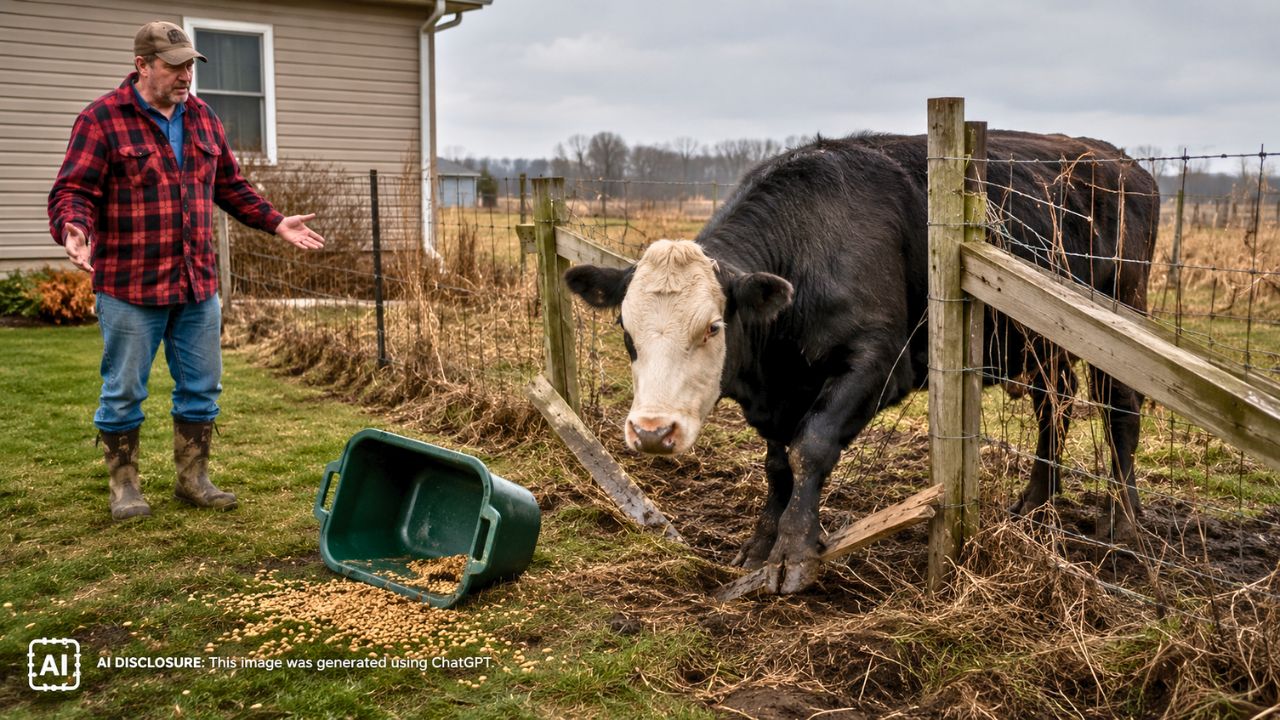
Rural Midwest Homeowner Watches the Same Neighbor’s Cow Break Through a “Fixed” Fence Again and Again — Then Tallies Ruined Feed Tubs, Eaten Rabbit Food, and a Trampled Yard From the Repeat Visits
Photo credit: AI-generated image created using ChatGPT. Illustrative only.
You don’t really feel “moved in” to a rural place until the land starts testing you. For one Midwest homeowner who recently bought a three-acre property outside a tiny town, that test showed up on four legs—again and again—on the wrong side of the fence.
In the original post, the homeowner describes a neighbor who grazes cattle on the land directly behind their property. The neighbor doesn’t live there, but he owns the pasture. And one particular cow has made a habit of treating the new homestead like it’s part of the grazing lease.
The first visit felt like a fluke
At the start, it was easy to chalk it up to rural living. A cow wandered over, the homeowner reached out, and the neighbor came to “fetch” the animal. The fence, they were told, was “fixed.” That should have been the end of it.
Except it wasn’t. The cow came back. Then again. And again. Each return made it harder to pretend this was just a one-off escape rather than a repeat problem with a predictable outcome.
Once the cow found the feed, it wasn’t just annoying anymore
The homeowner says they keep small livestock—chickens, ducks, and rabbits—which changes the stakes fast. Feed storage is constant work on a small place: tubs, bags, tight lids, keeping things dry and pest-free. A cow doesn’t care about any of that. If it can reach it, it will.
According to the post, the cow ruined two feed tubs and ate multiple bags of rabbit food. That kind of loss isn’t just messy; it’s expensive, and it creates an instant scramble to replace what’s gone so the animals you actually own don’t miss meals.
Then there’s the yard. A single large animal can tear up a patch of ground in minutes—soft soil, divots, churned grass, and a trail of manure that turns a simple walk outside into a cleanup job. The homeowner describes holes in the yard and “cow pies everywhere,” the kind of damage that doesn’t stop at looking bad. It can wreck the usability of the space and leave you wondering what else the cow might push into next.
The fence was “fixed,” but the visits kept happening
What makes this kind of problem so maddening is the in-between zone of responsibility. The cow belongs to someone else. The pasture is behind the homeowner’s property. The animal is crossing a boundary that’s supposed to be clear and physical—fence means fence.
And yet, the cow keeps getting through. Whether that’s because the repair wasn’t effective, the fence line has weak spots, or the animal is simply persistent, the homeowner is left living with the consequences of a barrier they don’t control.
It also creates a repeating pattern that’s hard to ignore: the neighbor retrieves the cow, says the fence is addressed, and the same cow shows up again anyway. Each repeat makes the homeowner feel more stuck. If you complain too hard, you risk starting a war with the people who share your property line. If you stay quiet, you’re basically agreeing to be the cow’s side quest.
Two options, neither one feels neighborly
The homeowner lays out what they believe their choices are, and neither one feels like a peaceful first-year-on-the-property move. They say that in their state it’s illegal for them to get “abandonment possession,” so turning the repeat trespasser into steaks is off the table.
That leaves two paths. One is to capture the cow and turn the matter over to the police. The homeowner says that route would allow them to charge $500 a week for “boarding fees,” and to charge for property damages—though they also acknowledge it could end in a lawsuit. In other words: yes, it might force the neighbor to take the fence seriously, but it could also be the moment the relationship goes from awkward to permanent hostility.
The other idea is a paintball gun—something designed less to injure and more to scare the cow off and teach it that this yard isn’t welcoming. Even that carries risk, because anything that looks like “shooting at” a neighbor’s livestock can spiral into an argument fast, even if the goal is deterrence rather than harm.
So the homeowner does what a lot of rural newcomers do when they’re trying not to light a match: they wait. They haven’t chosen either option yet because they don’t want to start off on the wrong foot with neighbors. But every new cow visit is the wrong foot already landing.
Readers leaned toward proof and paperwork before escalation
Even without a full comment thread included in the source material, the homeowner’s own framing shows where people tend to go with this kind of dispute: documentation, damages, and a clear record. When you’re dealing with repeat property damage tied to someone else’s animal, the details start mattering—how often it happens, what it broke, what it ate, what it cost, and whether the fence was actually repaired or just temporarily patched.
The homeowner already has a running tally: two ruined feed tubs, multiple bags of rabbit food, torn-up yard, and manure cleanup. That kind of list is more than venting. It’s the beginning of a case file, whether they want it to be or not.
And in rural neighbor conflicts, “proof before confrontation” is often what keeps things from turning into a he-said-she-said mess. When the animal’s owner doesn’t live on-site and only sees the problem when someone calls them, a paper trail can be the only thing that makes the issue feel real enough to fix permanently.
The real pressure is living on guard at your own place
There’s the money part—replacing feed, replacing containers, repairing a yard. But the bigger grind is the constant feeling that you have to patrol your own property for a problem you didn’t create. Every time you set down a new feed tub or bring home another bag, you’re wondering if you’re just stocking a buffet for a cow that has already proven it can get in.
And it’s not just about grass and manure. The homeowner has small animals, and while the cow isn’t described as directly attacking them, a large animal barging around coops, hutches, and feed areas is unpredictable. Even a gentle cow can break things by sheer size.
For now, the homeowner is caught between being “understanding” and being the default cleanup crew for someone else’s livestock management. The cow keeps coming back, the fence keeps being “fixed,” and the tally of damage keeps growing—one torn-up patch of yard and one emptied feed bag at a time.
Like Fix It Homestead’s content? Be sure to follow us.