New Homeowner’s Survey for a Backyard Fence Reveals a Neighbor Landscaped Twenty-Five to Thirty Yards Onto Their Land Behind the Tree Line
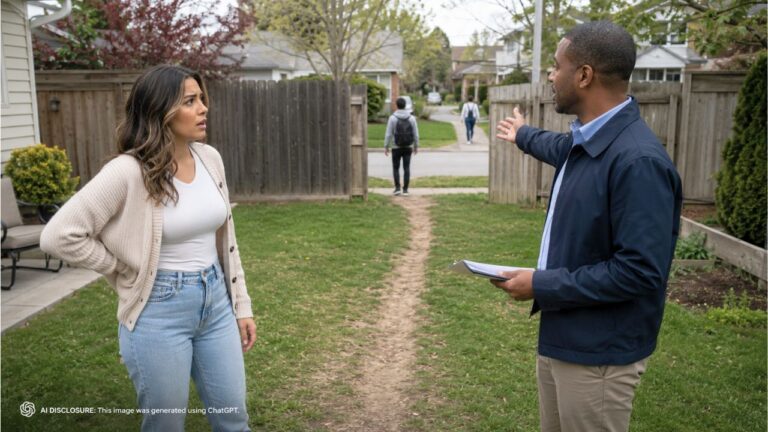
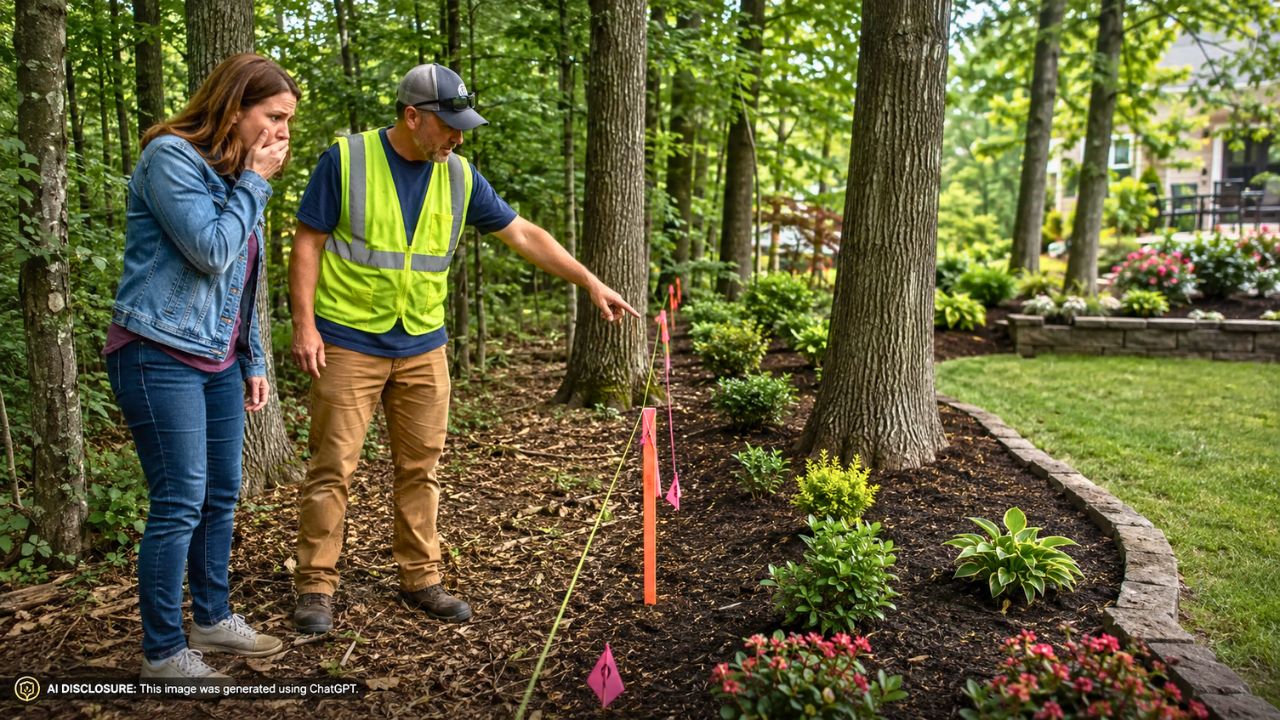
Photo credit: AI-generated image created using ChatGPT. Illustrative only.
A month into homeownership, everything still feels like a to-do list: change the locks, learn the quirks, figure out where the water shutoff is. For one new owner, the next step was supposed to be simple—order a survey and put up a backyard fence. Instead, the survey turned into a jaw-dropper.
In the source post, the homeowner explains that the back neighbor—someone who owns “a whole bunch of property”—has landscaping sitting well past the tree line, about 25 to 30 yards into the new owner’s land. Not five feet. Not a corner. The kind of distance that makes you stare at the survey stakes twice and wonder how long this has been going on.
The survey wasn’t for a fight—it was for a fence
The homeowner had a straightforward plan: confirm the property line and build a fence. That’s the classic “keep the dog in, keep the problems out” move, especially when there’s a wooded buffer and you want privacy.
But the survey results changed the whole vibe. The land behind the house has a tree line, and the homeowner believed everything behind that line was theirs—because it is. The surprise was that the neighbor behind them had effectively extended their yard into it with landscaping.
That detail matters because landscaping isn’t like a fallen branch or a random pile of debris. Landscaping takes intention—clearing, planting, shaping, maintaining. The homeowner is now looking at a chunk of their own property that they can’t really use without stepping into somebody else’s “finished” space.
Twenty-five to thirty yards is not a misunderstanding
A few feet can happen from old fences, sloppy mowing patterns, or a property corner marker getting buried. But 25 to 30 yards reads differently. That’s a full swath—wide enough to hide behind the tree line, wide enough that the neighbor’s use starts to feel normal to them over time.
It also creates a daily-life problem. If the homeowner allows it to continue, they’re living with a quiet, ongoing takeover—one they didn’t agree to and didn’t even know existed when they bought the place. If they push back, they risk turning the first month in a new house into a cold war with the person behind them.
The homeowner’s immediate question is the most practical one: what happens if they put a fence right through that landscaping?
The fence line is where things can get ugly fast
Building a fence sounds like an obvious solution until you picture the moment it starts. Survey flags go up. Contractors or friends show up with posts and tools. Then comes the first “Hey, what are you doing back there?” from a neighbor who thinks that area is theirs now.
Even if the homeowner is fully within their rights to fence their land, the neighbor’s landscaping complicates the human side. People get attached to the improvements they paid for, even if those improvements are on someone else’s property. And if the neighbor has been using that space long enough, they may genuinely believe the boundary is somewhere else.
There’s also the risk of claims and counterclaims flying around—arguments about where the line “always” was, whether the previous owner “allowed” it, and whether removing plants or features is “damaging” someone else’s property. None of that makes a fence cheaper, easier, or calmer.
For the homeowner, it isn’t just about winning an argument. It’s about being able to use what they bought without inheriting someone else’s backyard design choices.
Taxes, unusable land, and the temptation to sell it off
The homeowner doesn’t hide the part that makes a lot of people nod along: they don’t want to pay taxes on land they can’t use. That’s the kind of line that comes from staring at a property tax bill and then staring back at the tree line, realizing the “extra” land is currently functioning as a neighbor’s extension.
So the homeowner asks the next logical question: could they just sell that strip to the neighbor?
It’s a tempting idea because it seems like a clean trade—neighbor gets to keep what they already landscaped, homeowner stops worrying about it and potentially recoups some money. But it’s also the kind of “clean” solution that can get complicated fast once you remember that land sales usually mean surveys, legal descriptions, recording, and lender involvement if there’s a mortgage. And emotionally, it can feel like rewarding someone for taking space that wasn’t theirs in the first place.
Still, it’s revealing that the homeowner is already thinking in terms of options, not just retaliation. They want out of the headache, not a permanent feud behind the trees.
Reactions leaned toward documentation and slow steps
When homeowners share property line problems, the most common response is rarely “go rip it out.” People tend to fixate on proof first, then patience, because boundary fights can spiral.
The homeowner already has the big piece of proof: a survey. That’s usually the foundation for any next move, whether it’s talking to the neighbor, marking corners clearly, or moving forward with a fence that follows the legal line.
In these kinds of disputes, reactions typically cluster around a few themes: keep everything in writing once you start discussing it, avoid doing anything impulsive that could be painted as vandalism, and don’t assume the neighbor will react reasonably just because the map is clear. A tree line can hide a lot, including long-running habits and old assumptions.
And even when the facts are on paper, the emotional part is real. A neighbor who “owns a whole bunch of property” may not be used to being told no, especially by someone who just moved in.
Living next to the problem while you decide what to do
The hardest part of these disputes is the in-between time. The homeowner now knows the truth, but the land still looks the way it looked yesterday: landscaped, claimed, and sitting behind that tree line like it belongs to someone else.
Meanwhile, every decision has consequences. Put the fence on the line and you may destroy landscaping and trigger a blowup. Negotiate a sale and you may be stepping into months of paperwork and awkward conversations. Do nothing and you may be paying for land that feels off-limits, while the neighbor’s use becomes more entrenched and harder to unwind.
For a homeowner only a month into the place, it’s a rough welcome. They didn’t go shopping for a boundary dispute. They went shopping for a house. Now they’re staring at survey stakes and a landscaped strip of “their” land, deciding whether the first big project in their new home is a fence—or a fight.
Like Fix It Homestead’s content? Be sure to follow us.