Homeowner Hires a Contractor to Move the Fence Back to the Surveyed Line — Then the Neighbor Threatens to Shoot Him
Photo credit: AI-generated image created using ChatGPT. Illustrative only.
It started the way a lot of fence sagas start: a neighbor suggested splitting the cost, and it sounded reasonable. The homeowner agreed—on one condition. Get a survey and put the fence on the actual property line.
Instead, after money changed hands and the fence went in, the homeowner discovered the line wasn’t just a little off. It was crooked and wandering onto their land by inches in some spots and up to 2.5 feet in others. The details come from the source post, where the homeowner laid out how a “simple” replacement fence turned into threats, police calls, and a looming lawsuit.
The fence was supposed to be a fresh start
The neighbors had an older fence that dated back to around 2014-ish, and the new fence was framed as a replacement, not a brand-new boundary fight. When the neighbor asked to share funding for the new build, the homeowner agreed and paid $200 toward a roughly $4,000 project.
Before agreeing, the homeowner says they made their expectations clear: the fence needed to follow the property line. The neighbor insisted it did, saying it tracked the property stakes that were already there. Most of the communication happened through text messages, and the homeowner says it’s documented.
For a moment, that probably felt like a win—neighbors cooperating, a clean new fence, and the yard looking buttoned up. Then one small detail made it impossible to ignore.
A shed “four inches” over turned into feet of missing yard
The neighbor admitted they had a shed that was “4 inches” onto the homeowner’s property. That confession was enough to push the homeowner to get a survey done after the fence was installed, just to make sure nothing else was off.
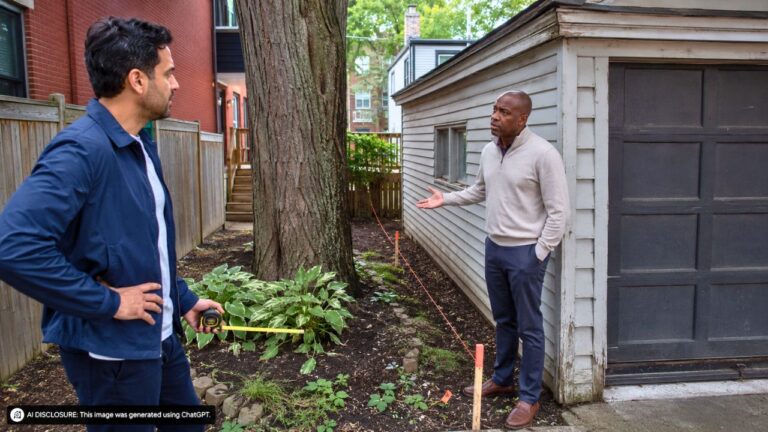
The survey result was the kind that makes your stomach drop. The fence line wasn’t just slightly misplaced—it was crooked, and it cut into the homeowner’s property by about 11 inches in some areas and as much as 2.5 feet in others.
That’s not a minor “oops.” Over the length of a yard, a couple feet becomes a strip you can’t use, can’t landscape, and can’t treat like your own without starting a new argument every time you mow or plant. And because it’s a fence, the visual message is loud: this side is mine, that side is yours.
The homeowner felt they’d consented to a fence on the boundary line, not a fence that quietly redrew it.
Then came the adverse possession threat—without the paperwork
After the survey, the homeowner tried to push the issue the normal way: talk to a lawyer, document the boundary, and ask the neighbor to either move the fence or formally pursue whatever claim they believed they had. The neighbor, according to the homeowner, started claiming “adverse possession.”
In plain homeowner terms, that claim is basically: “I’ve treated this like mine long enough that it becomes mine.” But the homeowner says the neighbor refused to go to court to actually file the claim, even after the homeowner’s lawyer sent three letters asking them to do exactly that.
That’s where the practical nightmare shows up. The fence is in the wrong place, the neighbor won’t agree to fix it, and they also won’t take the formal step that would force a clear decision. Meanwhile, the clock keeps ticking, and the fence keeps sitting there like a permanent “before” photo you can’t get past.
The homeowner also described their attorney as “rather unhelpful,” which adds another layer of stress: paying for advice that doesn’t produce a plan you can actually act on.
Hiring a fence contractor is when it turned dangerous
Eventually, the homeowner decided they might just pay out of pocket to move the fence back to the surveyed line. It’s the kind of move that feels decisive—until you remember you’re dealing with someone who’s already dug in.
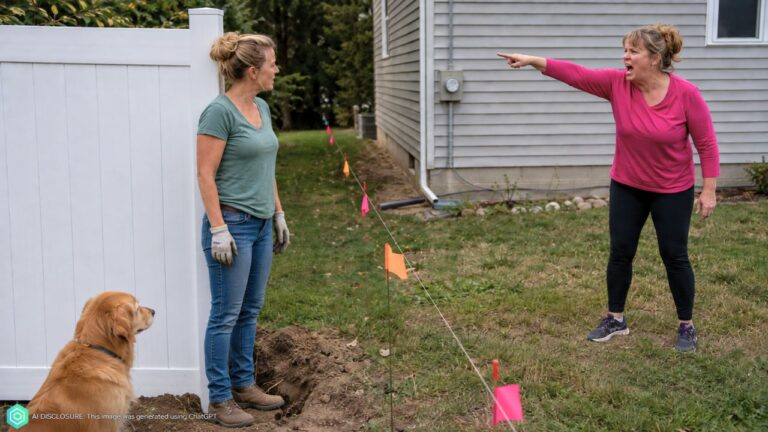
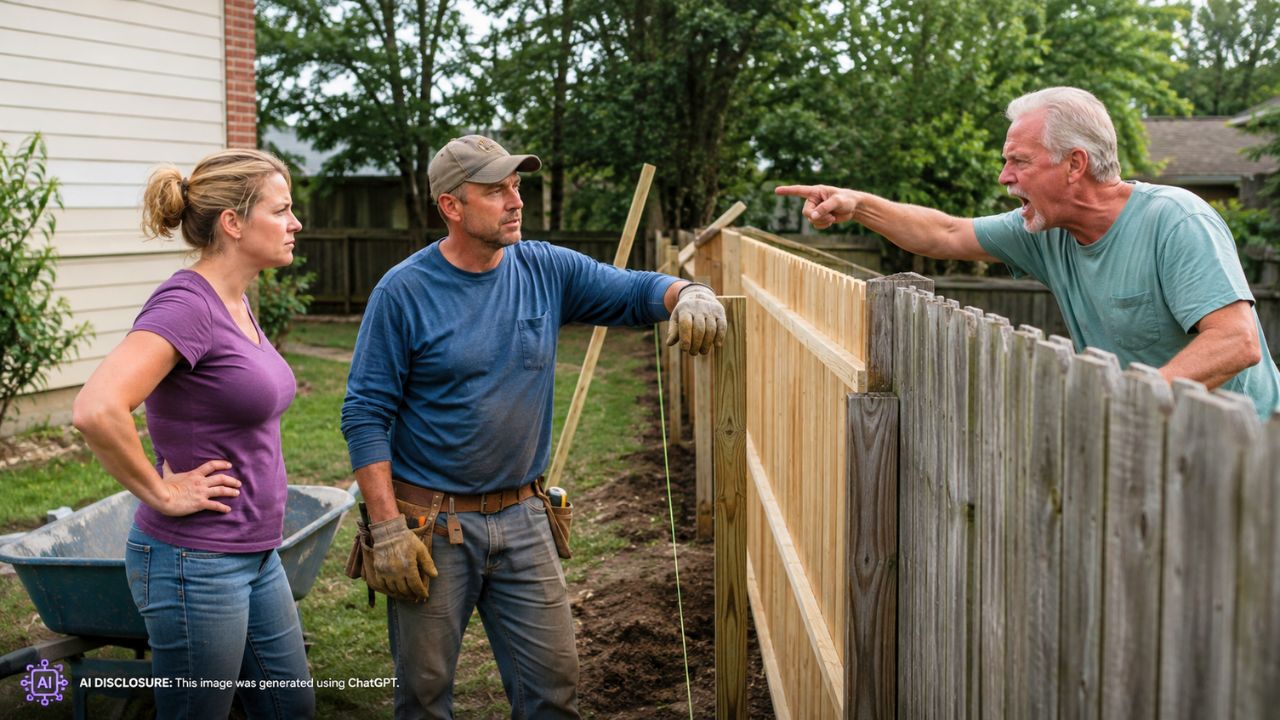
When the homeowner hired a fence professional to do the work, the neighbor’s response wasn’t another angry text. The homeowner says the neighbors threatened to shoot the fence contractor.
Police were called. And instead of a clean resolution, the homeowner says officers told them they’d have to “deal with court.” That’s the brutal part of these property-line wars: you can have a survey, texts, and common sense on your side, and still end up being told the real solution is slow, expensive, and unpredictable.
The contractor reportedly suggested another angle—pull permits through the city. In the homeowner’s words, the fence guy believed that if they filed with the city for a permit, “then we’ll be golden,” implying the work could proceed under a clearer official process.
But even that “solution” comes with tension. Permits don’t magically make neighbors calm down, and they don’t erase the fact that someone just threatened violence over fence posts.
The update nobody wants: the lawsuit finally arrives
In a later update, the homeowner wrote that the neighbors filed a lawsuit after the homeowner moved the fence. The claim, according to the homeowner, was for “mutual agreement and acquiescence” adverse possession.
That detail matters because it suggests the neighbors weren’t only arguing the classic “we used it long enough” version. They were also pointing to the idea that both sides accepted the fence line over time—something that can hinge on old fences, past conversations, and whether anyone objected soon enough.
And that’s why replacement fences are such a trap. If there was an older fence in roughly the same wrong spot for years, even if it was sloppy or temporary, it can become part of the story later. People remember where the fence “always was,” not where the legal line actually sits.
The homeowner’s frustration comes through clearly: they tried letters, tried lawyers, tried hiring it done, and still ended up right where these things so often go—court.
What people tend to focus on in fights like this
When homeowners tell stories like this, the most common practical reactions tend to cluster around the same survival checklist: documentation, cameras, surveys, and not doing anything that can be framed as “agreement.” This homeowner already had some of that—most notably the survey and text messages where the neighbor allegedly said the fence followed existing stakes.
The permit idea fits that mindset too. Permits don’t decide property ownership, but they can create a paper trail, clarify what’s being built and where, and reduce the risk of a contractor getting spooked and walking away. In a standoff where even a fence pro is being threatened, “paper trail” starts to matter as much as lumber.
Another theme people lock onto is safety. Once a firearm threat enters the picture, the fence stops being a yard project and becomes a personal security problem. It changes how you schedule work, whether you’re present, and what kind of record you keep of every interaction.
For now, the homeowner is stuck in that miserable in-between place: trying to protect their property line without triggering the next escalation. It’s a reminder that the most expensive part of a fence isn’t always the materials—it’s what happens when a few feet of dirt turns into a fight nobody wants to back down from.
Like Fix It Homestead’s content? Be sure to follow us.