New Neighbor Moves In and Within a Month Plants Spray-Painted Stakes Across the Yard — Then Claims a Metal Detector Found the Real Property Pins With No Survey Paperwork to Back It Up
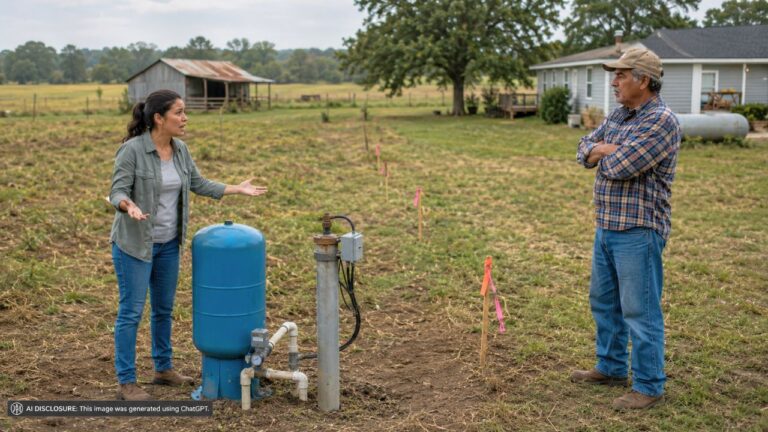
Photo credit: AI-generated image created using ChatGPT. Illustrative only.
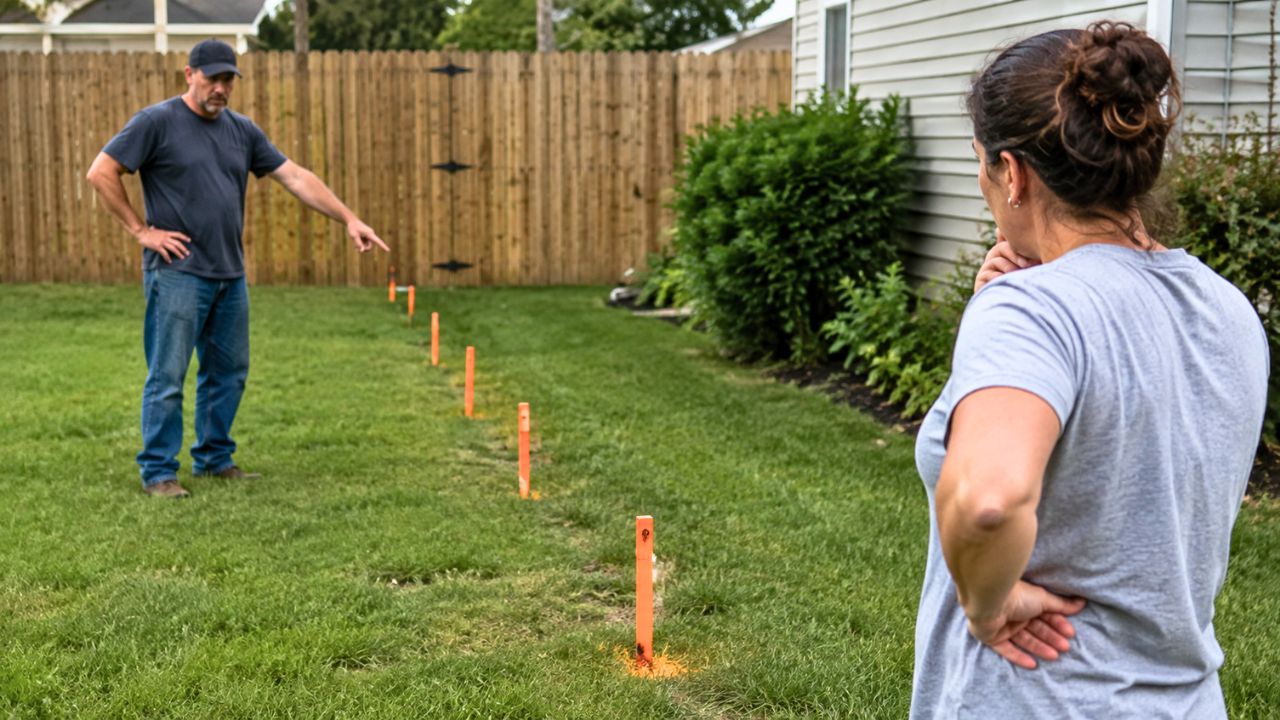
They were at the hospital when the photo came in: a line of wooden stakes pushed into the ground and hit with spray paint, marching across what they believed was their yard. A family member had snapped the picture, and the new neighbor next door already had an explanation ready.
In the original post, the homeowner in Missouri said the neighbor moved in about a month ago and things have been petty ever since. Now, with the homeowner away, the neighbor is claiming those stakes mark the “true” property line—about five feet into territory the homeowner thought was theirs.
A month after moving in, the boundary suddenly “changed”
The homeowner didn’t describe a long-running feud or a decades-old disagreement. This felt abrupt: new owner buys the place, and within weeks there’s a fresh line in the ground, as if the yard came with an update.
What made it worse was the timing. The homeowner wasn’t even there to see what was done, who did it, or whether anything was disturbed in the process. They only had a photo and a message relayed through family—hardly the way anyone wants to learn their lot lines might be in dispute.
And because the stakes were spray-painted, they didn’t read like a casual “Hey, I think it’s about here.” They read like a declaration.
The neighbor’s proof: a metal detector and “found pins”
When asked how they knew the line, the neighbor’s answer was simple: they said a surveyor came out with a metal detector, found the pins, and used those to place the stakes. No paperwork. No drawing. No copy of a stamped survey handed over to the homeowner—just “we found them.”
That’s the part that made the homeowner uneasy. They’d heard that property corners can be located by finding buried or obscured markers, and that tools like metal detectors can help. But the homeowner also pointed out the obvious problem: if you’re not watching the process and you don’t have documentation, how do you know what was found, where, and whether anything was moved?
It’s one thing to locate a monument. It’s another thing to use a few stakes as a basis to start acting like the ground has officially changed hands.
Five feet matters when fences, mowing, and liability are on the line
In a lot of neighborhoods, five feet isn’t a minor measurement error. That’s a strip wide enough for a fence line, a row of plantings, a shed corner, a gate swing, or a section of driveway edge. It’s also enough space to change who is “responsible” for a nuisance—overgrown weeds, drainage flow, or the spot where a dog keeps digging.
The homeowner said their understanding of the line came from the plat on file through the local assessor’s office. That’s a common place people look when they’re trying to confirm boundaries quickly. But plats and assessor maps can give you a general picture without being precise to the inch on the ground, which is exactly where disputes get messy.
Even if nobody builds anything today, those stakes create pressure. If the neighbor starts mowing that strip, landscaping it, or using it like it’s theirs, it becomes harder to ignore. And if the homeowner later tries to reclaim it, it can turn into a “you never said anything” argument that nobody enjoys.
The real stressor: no one wants to escalate, but silence invites more
This wasn’t written like someone eager for a fight. It read like someone trying to stay calm while being boxed out of their own yard—while also dealing with a hospital stay. That’s a rough combination: your attention is already split, and now you’re trying to manage a property line dispute remotely.
The homeowner’s question was straightforward: can someone really just show up, detect metal, and declare the boundary without producing anything in writing?
Because if the only “proof” is a neighbor saying a surveyor did a thing, the homeowner is left with an uncomfortable choice. They can confront the neighbor immediately and risk the conflict getting hotter. Or they can wait until they’re home and risk the stakes turning into something permanent—posts, fencing, or landscaping—before they can even respond.
What people pushed for: documentation, photos, and a real paper trail
Even without a full comment section included in the source material, the shape of the problem points to the same practical advice homeowners usually get when a boundary suddenly becomes “disputed”: don’t rely on someone else’s stakes as gospel, and don’t let the only record live in a neighbor’s text message.
In these moments, people tend to focus on proof before confrontation. That means photographing the stakes as they sit, noting the date, and comparing what’s in the ground to what your existing documents suggest. If the neighbor truly hired a professional, there should be a deliverable—something with measurements, corner calls, and a name attached to it.
And if you suspect a neighbor stepped onto your property to install markers, many homeowners also think about basic deterrence for round two. That can be as simple as visible cameras aimed at the yard line, so the next “adjustment” doesn’t happen while you’re away.
Why “found pins” without paperwork can become a long-term headache
Corner pins and monuments can be real—lots of properties have them—and sometimes they’re buried, bent, paved over, or hidden under vegetation. Locating them can involve tools, experience, and careful measurement. But a pin existing in the ground is different from a neighbor proving they found the correct one, in the correct place, and interpreted it correctly.
The homeowner’s worry about markers being moved is also not random paranoia. If all you see is a new set of painted stakes and a neighbor’s assurance, you’re being asked to accept a boundary change on trust alone. And trust is usually in short supply when the relationship is already “petty.”
In the meantime, the homeowner is stuck with the most aggravating part of property-line drama: the land itself is quiet and ordinary, but every routine chore—mowing, edging, planting—suddenly feels like a potential argument. The stakes aren’t just wood in the ground. They’re a message.
For now, the homeowner is left balancing health, timing, and next steps—trying to figure out how to protect their yard without turning a new-neighbor cold war into an all-out battle. The painted line may be temporary, but the tension it creates tends to stick around until somebody produces real documentation or backs down.
Like Fix It Homestead’s content? Be sure to follow us.