Homeowner Finds Only Six Feet Between a Neighbor’s Oversized House and the Property Line — Then He Wants Heavy Pool Equipment to Cross It Anyway
Photo credit: AI-generated image created using ChatGPT. Illustrative only.
It started with a pretty normal neighborhood update: the people next door want a pool. But for one Ohio homeowner, that announcement immediately collided with the physical reality of how tightly the houses sit on the lots—especially after the neighbor’s house went up oversized for the parcel.
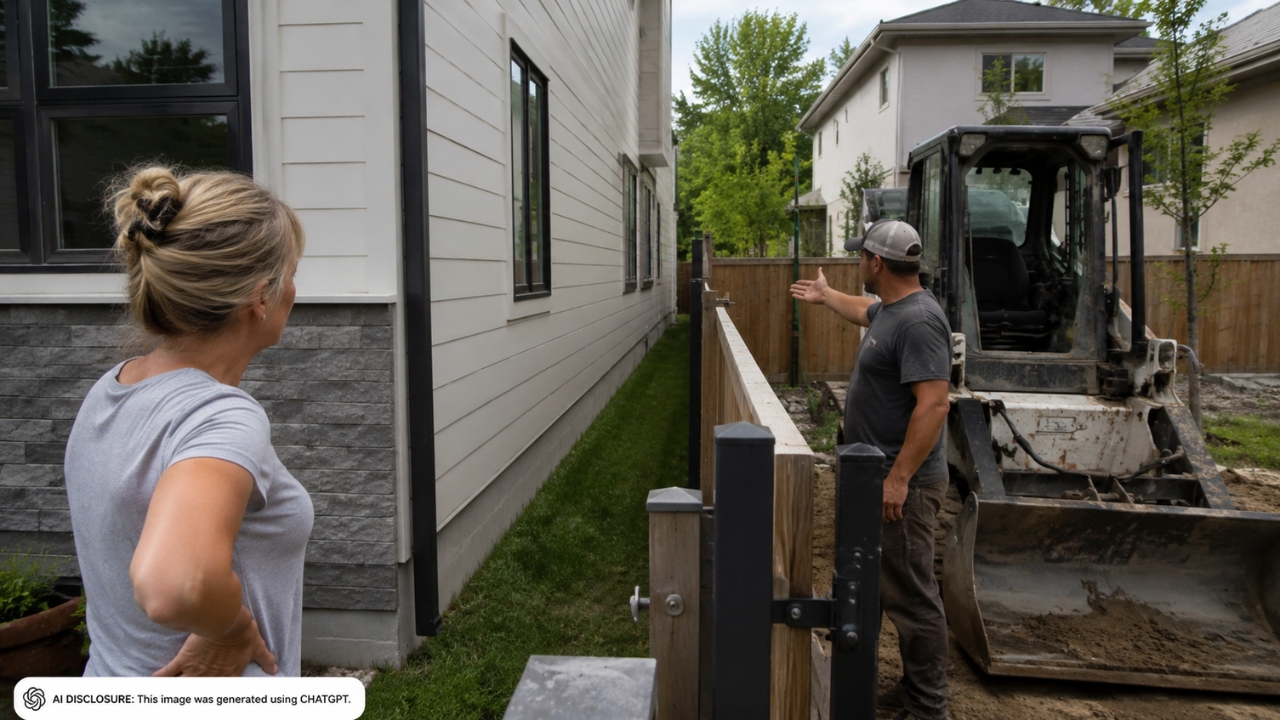
In the original post, the homeowner says there’s only about six feet between the neighbor’s house and the property line, with a fence already marking the divide. Now the neighbor wants heavy equipment access for the pool build, and the homeowner’s question is blunt: wanting a backyard upgrade doesn’t mean they get to roll machines onto someone else’s land and tear it up.
Six feet sounds like a lot until you picture machinery
Backyards feel spacious when you’re mowing, grilling, or letting a dog run laps. Six feet can even feel workable for a walkway, some shrubs, maybe a narrow strip of storage. But construction equipment doesn’t think in terms of “walkway.” It thinks in terms of turning radius, track width, soil compaction, and how much room a crew needs to safely operate.
The homeowner describes the layout as the neighbor’s own making: when the neighbor built their house, they pushed the footprint so far that it left only a slim gap along the side yard. That kind of tight build can be legal, but it comes with consequences later—especially when you want to add something as excavation-heavy as a pool.
In neighborhoods like this, access becomes the whole game. If the neighbor can’t get equipment down their own side yard without crossing the line, the temptation is obvious: just use the other side.
The fence is doing its job—until someone decides it’s inconvenient
The fence matters here, not just because it’s a physical boundary, but because it’s a daily reminder that the space is already spoken for. If heavy machinery needs to pass, the fence becomes a problem to “solve”—temporarily moved, removed, or simply pushed too close to without saying much.
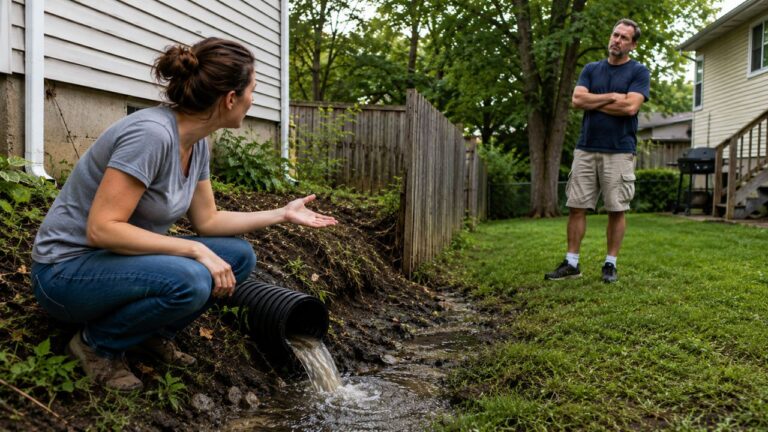
And that’s where homeowners start to picture the real damage, not the theoretical kind. Ruts that turn into drainage channels. Compacted soil that kills grass and makes future landscaping a fight. Fence posts knocked out of plumb. Underground lines that nobody remembers until they’re hit.
The original poster’s concern isn’t subtle: they don’t want their property “indiscriminately” damaged. That wording is telling. It suggests they’re not just worried about a scuffed lawn—they’re worried about a neighbor acting like permission is implied because the project is expensive or time-sensitive.
They checked with the city and HOA—and got their hunch confirmed
Before letting the issue turn into a face-to-face blowup at the fence line, the homeowner took a step a lot of people skip: they asked the city and the HOA what the rules actually say. According to their update, both the city and the HOA confirmed what they suspected.
They don’t spell out the exact language they were told, but the meaning comes through clearly: a neighbor’s pool plan doesn’t automatically create a right to use someone else’s land for access. In other words, wanting it badly doesn’t turn it into an easement.
That’s often the fork in the road with tight-lot construction. If a property doesn’t have adequate access for a big project, the options usually get more expensive and more complicated—different equipment, a different pool design, staging from the front, craning materials, or not doing it at all. The easiest path is frequently the one that pushes the cost and inconvenience onto someone else.
The real fear is what happens after the machines leave
Most neighbor disputes aren’t really about one day. They’re about the weeks after, when the dust settles and everyone pretends it’s fine.
Heavy equipment can do damage that doesn’t show up immediately. A yard might look “okay” until the next big rain, when water starts pooling where it never used to. Fence lines can shift subtly. Soil compaction can create dead strips that won’t take seed. And if any irrigation, electric, or drainage runs near the property line, the risk isn’t just cosmetic.
That’s why the homeowner’s framing—“simply because they want a pool”—lands with so many people who’ve lived through remodel season next door. The tension isn’t only about saying no. It’s about knowing that once you allow access, you can end up negotiating repairs from a position of weakness.
The neighbor gets a finished pool. You get to argue about ruts, regrading, sod, fence repairs, and whether “it was already like that.”
Commenters leaned practical: permission, proof, and not getting cornered
Even with limited details, the response pattern to stories like this is consistent: don’t rely on handshake arrangements when the stakes are your land and your fence line.
People tend to push for basics that keep emotions from rewriting history later—clear boundaries, documentation, and making sure the neighbor can’t act like silence equals consent. The homeowner already did one of the biggest reality checks by contacting the city and HOA instead of relying on the neighbor’s version of what’s “allowed.”
When access disputes pop up around fences and property lines, homeowners also commonly hear variations of the same theme: if you ever do allow anything, it should be specific and controlled. Not “sure, go ahead,” but what days, what path, what restoration, and what happens if something breaks. Because the moment a crew shows up with machines, the conversation gets a lot harder to pause.
And once a project is in motion, pressure changes. A neighbor who’s polite when they’re planning can become hurried when their contractor says they’ll lose a slot or pay a rescheduling fee. That’s often when “Can we just…” turns into “We’re already here.”
A backyard upgrade can turn into a boundary test
This Ohio homeowner isn’t complaining about noise or being anti-pool. They’re staring at a narrow strip of land beside an oversized build and realizing the neighbor’s plan likely doesn’t work without treating the fence like a suggestion.
The city and HOA feedback gave them confidence that their instincts weren’t unreasonable. But it doesn’t magically remove the awkward part: living next to someone who wants what they want, and may act like the only thing standing in the way is a neighbor who needs to be persuaded, pressured, or worn down.
For now, the six-foot gap remains what it’s always been—a tight buffer between two households. The difference is that it’s no longer just a side yard. It’s the line where a construction project either respects the boundary, or tries to bulldoze past it.
Like Fix It Homestead’s content? Be sure to follow us.