Landowner Finds a Neighbor Claiming Ownership of a Shared Back Alley — Then the City Zoning Department Says the Land Reverts to Both Houses Anyway
Photo credit: AI-generated image created using ChatGPT. Illustrative only.
A back alley sounds like the kind of thing nobody thinks about until the day someone decides it’s “private.” For one household, that day came when a neighbor started yelling over a landscaper’s truck and ended up putting a fence where it didn’t belong.
The story, shared in the original post, plays out in a strange little “capital L” layout: one house at the top, one at the corner, and the poster’s home at the bottom. Between them is an alley that cuts behind the properties—an access point the poster uses to park behind their house without ever driving past the corner neighbor’s front door.
A weird property layout with one practical purpose: parking
In this setup, the poster lives on Street B and can enter the alley directly from their side. The corner neighbor—called “Karen” in the retelling—lives on Street A, with the alley running between her place and “Jim’s” house up top.
That back stretch of alley matters because it’s how the poster reaches their behind-the-house parking spot. It’s not a luxury. It’s how their day-to-day works: pull in, park, unload groceries, live life.
And because the poster can access the alley from Street B, they aren’t even driving past Karen’s home to use it. From their view, it’s the least intrusive way to come and go.
The blow-up started with a landscaper’s truck
The trigger wasn’t a party, a bonfire, or a loud project. It was yard work. Jim had landscapers out, and one truck with a lawnmower came through the back half of the alley from the poster’s side and parked behind the poster’s house.
The poster needed to run to the store and asked the landscaper to back up so they could get out. He did. Normal neighbor stuff—until the poster came back with groceries and found Karen outside, yelling at Jim.
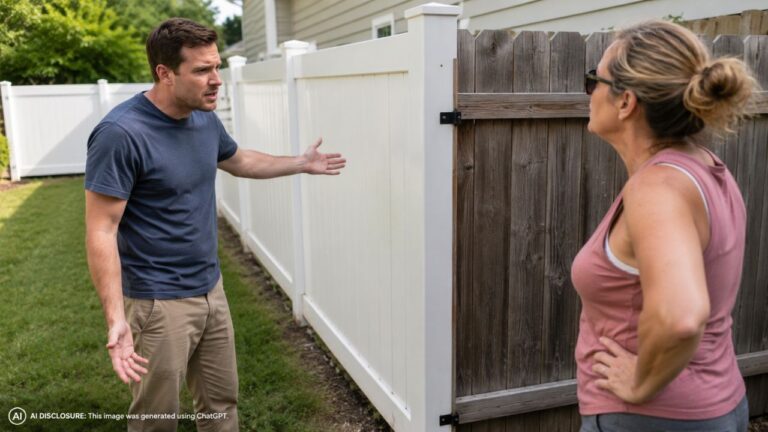
Her complaint was that Jim’s “company” was parking on her property. Then she escalated: she said she’d put a fence at the end of the alley to stop anyone from using it. The catch? That end point was in the poster’s yard.
“None of your business” turned into a fence behind the car
When the poster asked what was going on, Karen told them it was none of their business. That didn’t last long. As soon as the poster pointed out that a fence on their property definitely was their business, Karen changed tactics and claimed the alley belonged to her—not the poster—and that the poster wasn’t legally allowed to drive on it.
Then came the threat that makes homeowners’ stomachs drop: Karen said if the poster didn’t start parking on the street, she’d put up a fence right behind the poster’s car to block them in.
The poster pushed back, insisting the alley was public and that they had every right to use it, especially since it ran through part of their backyard. Jim, not wanting to be dragged into it, told his landscaping crew to park on the street going forward.
But Karen didn’t just talk. She put a fence up directly behind the poster’s car—on the poster’s property. The poster’s husband called the police, and officers told Karen to move it. She did.
The fence moved… and the signs went up
Moving the fence didn’t mean surrendering the point. Karen repositioned it across the alley in a way that prevented anyone from accessing her side of it. The poster noted they didn’t use her side anyway, but the new barrier changed the feel of the space. It wasn’t just a neighbor being cranky; it was a physical statement about ownership and control.
Then came the sign campaign: “No trespassing” signs all over her property, plus a “private drive” sign placed in the alley.
That’s the part that makes these fights so exhausting. You can be technically fine and still feel like you’re being watched every time you step outside. The poster said Karen would come out onto her back porch and stare when the poster, their mom, or their son were in the yard.
They even caught Karen writing down the mom’s license plate number, which added a new layer of unease—like the neighbor was building a file.
The zoning department finally clarified who owns what
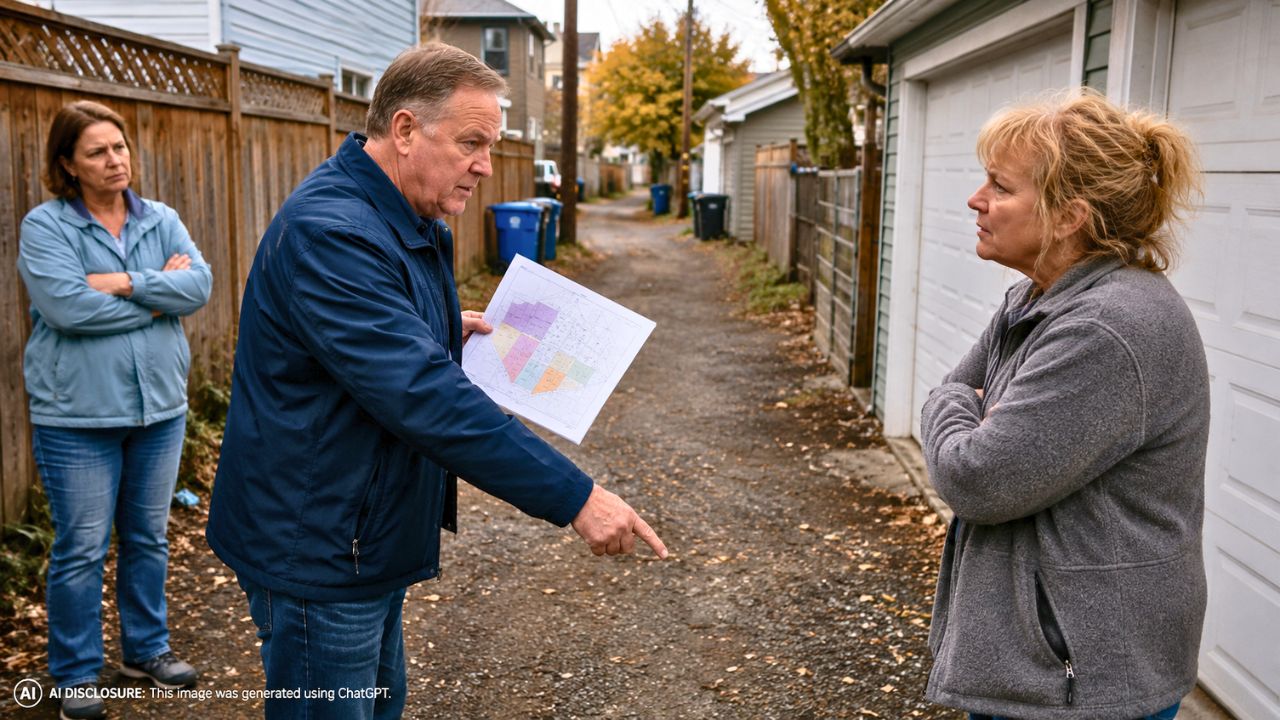
The biggest twist came after the poster and their family took the “proof first” route. The poster had checked zoning maps trying to confirm the alley was public. Later, in an update, they said their mom went directly to the local building and zoning department to get a clear answer.
What they found was more specific—and more useful—than internet guesses. The city had vacated the alley. And when that happens, the ownership doesn’t just disappear; it reverts to the houses that touch it.
In their case, that meant a split: Karen and Jim owned the front half of the alley, while Jim and the poster owned the back half. The key detail for daily life: the poster was legally allowed to use the back section and park behind their house.
That didn’t magically fix the neighbor relationship, but it changed the stakes. If Karen tried to claim trespassing or called police again, the poster said they now had documentation showing exactly who owned what.
What people urged: documentation, boundaries, and not giving up access
In the update, the poster thanked readers for advice, which strongly suggests the responses leaned practical: verify the status of the alley, get things in writing, and don’t rely on what a neighbor “says” the property line is.
That’s usually the turning point in shared-access disputes. People can argue forever about what’s “always been” the case, but zoning records, plats, and city decisions about vacated right-of-way tend to be what matters when someone tries to back their claims with a fence and signage.
The other theme embedded in the poster’s worry was whether to “keep the peace” by parking on the street instead. It’s an understandable instinct—until you realize that giving up access can turn into a new normal. Once a neighbor has successfully pushed you off an easement or shared drive, getting that use back can become even harder emotionally, socially, and sometimes legally.
In this case, the family didn’t have to guess. They got the city’s answer: the poster has rights to the back portion. Karen may still watch from the porch, and the signs may still be there, but now the poster’s daily routine doesn’t have to hinge on one neighbor’s version of reality.
Sometimes the “fix” isn’t lumber, concrete, or a new lock. It’s a folder with the right paperwork—kept close, ready for the next time someone tries to turn a shared strip of ground into their personal kingdom.
Like Fix It Homestead’s content? Be sure to follow us.