Property Owner Finds Professional Survey Pins Proving a Fence Line — Then the Neighbor’s Only Evidence Is a Google Maps Screenshot
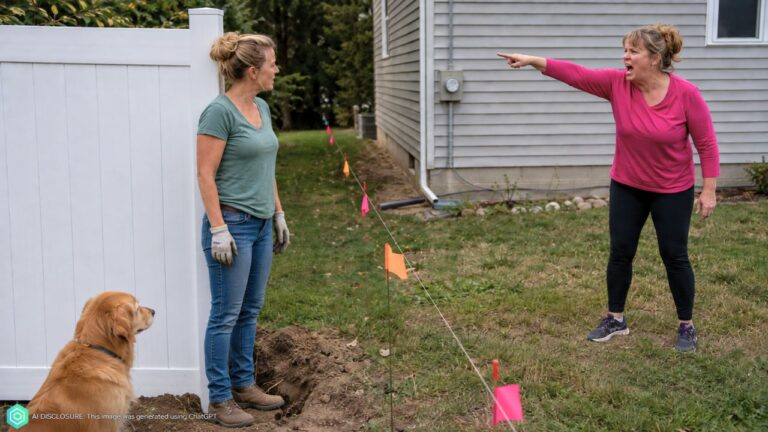
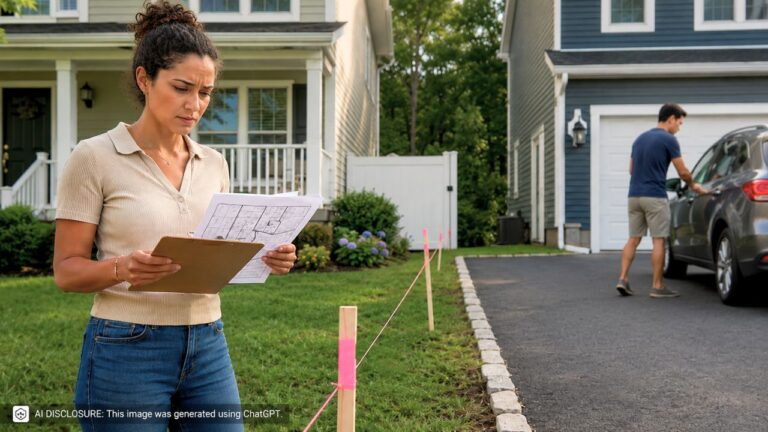
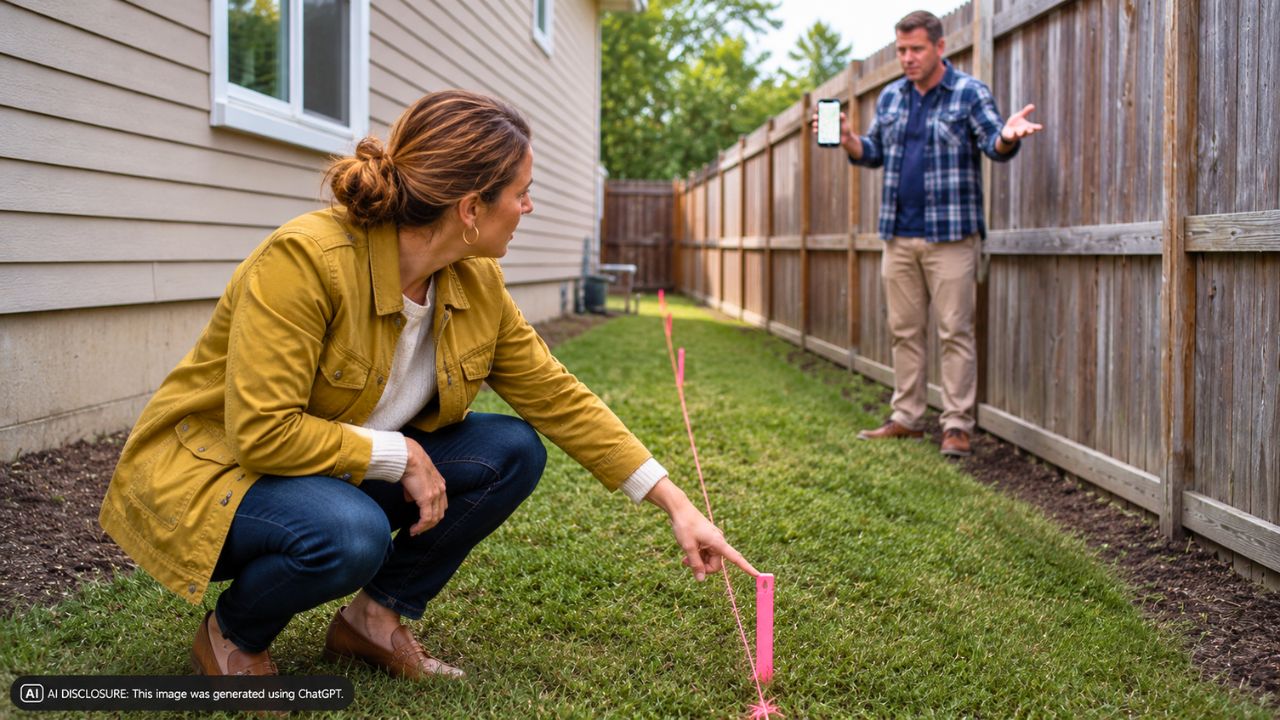
Photo credit: AI-generated image created using ChatGPT. Illustrative only.
Nothing makes a backyard feel like yours quite like a fence—right up until someone insists it isn’t actually on your land. That’s where one South Carolina homeowner found themselves after a neighbor dropped an encroachment letter in their lap, claiming the fence was sitting well over the line.
According to the original post, the neighbor had a GPS-based property survey done and alleged the fence was “2–8 feet” onto their property. The homeowner’s reaction wasn’t just disbelief—it was frustration, because they’d done their own homework before the fence ever went up.
The fence wasn’t thrown up blindly
This wasn’t a case of someone eyeballing the property line and hoping for the best. Before installing the fence, the homeowner says they spent the time finding the original rebar survey pins—physical markers left from an earlier survey.
If you’ve ever hunted for those pins, you know it can feel like a weird little treasure hunt: weeds, dirt, maybe years of mulch and landscaping piled over the top. But the point is, they located what they believed were the true corners and used those original markers as their guide.
So when the neighbor’s letter arrived, it landed with extra weight. It wasn’t just “you might be over the line.” It was “you are over the line,” by a lot, and now it was in writing.
The neighbor’s case came with a modern twist
The neighbor’s survey was described as GPS-based, and that’s the kind of thing that can sound ironclad to a regular homeowner. GPS feels authoritative. It’s how we navigate everywhere. But property lines aren’t the same as finding the nearest coffee shop.
What really set the homeowner off was the “evidence” they felt the neighbor was leaning on: a plot image tied to Google Maps. The homeowner described it as “(google maps :/)” and said it was off—suggesting the neighbor was taking survey results and comparing them to a mapping screenshot to argue the fence placement was wrong.
In other words, the homeowner believed the neighbor wasn’t just relying on a survey. They were trying to visually “prove” it with an aerial map image that didn’t match reality on the ground.
2 to 8 feet is not a small mistake
Property line disputes often start with inches and ego. This one, at least as alleged in the letter, was measured in feet. If a fence is truly 2 to 8 feet over a boundary, that’s enough to swallow a strip of yard—enough to change how you mow, where you plant, and what you assume you own.
It’s also enough to become expensive fast. Moving a fence is labor. Re-setting posts can mean digging out concrete. If the fence was built around slopes, trees, or existing landscaping, the “simple fix” can turn into a weekend-eating mess.
And there’s the part nobody likes to talk about: once a neighbor has accused you of encroaching, it can change the tone of every interaction. Even if you’ve waved before, even if your kids play outside at the same time, now every glance at the fence feels like a stare-down.
The real question: metal pins or a GPS survey?
The homeowner’s main question was straightforward: if this ends up in civil court, does a judge side with the GPS survey or the original property pins? They felt confident because they found the physical markers first and placed the fence based on those.
That’s the heart of a lot of homestead-style disputes: the collision between what’s physically in the dirt and what shows up on a modern display. People trust what they can touch. Rebar pins feel like “the truth.” At the same time, a survey done by a professional—especially one that produces clean measurements—can look like the final word.
The tension here is that the homeowner isn’t just arguing “my opinion versus yours.” They’re arguing “the old markers we found versus your GPS interpretation, plus a Google Maps overlay.” To them, the neighbor’s approach looked sloppy—like the neighbor was trying to make the map match the accusation, instead of letting boundary evidence speak for itself.
How these fights usually escalate in real life
Once a letter shows up, it rarely stays contained. Even if nobody calls a lawyer on day one, the paper trail starts growing. Text messages, emails, new measurements, photos of corners, screenshots of satellite images—every homeowner starts building their own folder of “proof.”
And fences create an extra layer of urgency because they’re physical. They don’t just sit there quietly like a disputed deed description. A fence is in your face every day. If the neighbor believes it’s on their property, they may see it as an ongoing trespass. If the homeowner believes it’s correctly placed, any demand to move it feels like being shaken down.
This is also where emotions and practicality collide. It’s one thing to argue about a line on a plat. It’s another to picture redoing an entire fence run because someone doesn’t like where it sits.
Reactions focused on proof that holds up outside the backyard
Even without a full comment thread included, the homeowner’s framing shows what people tend to fixate on in these disputes: what evidence actually counts when the stakes are real. A Google Maps screenshot might feel persuasive in a conversation, but homeowners who’ve been through boundary disputes know aerial imagery can be misleading—angles, scaling, and overlays don’t always line up with what’s on the ground.
The homeowner’s instinct—leaning on physical pins—also reflects what a lot of property owners consider “the most real” evidence available without paying for additional work. If you can point to existing markers, it feels like you’re standing on firm ground.
But the moment another party brings in a survey, it changes the playing field. Now it’s not just neighbor-versus-neighbor. It’s your confidence versus their documentation, and both sides start thinking about what a judge would believe if it came down to it.
The homeowner didn’t describe an outcome, just the uneasy spot they were stuck in: being told their fence is significantly over the line, being presented with a map-based image they don’t trust, and wondering whether the metal in the dirt they relied on will matter if the dispute turns into a formal fight.
In the meantime, the fence stays where it is—quiet, solid, and suddenly controversial—while two versions of the same yard compete to become the official one.
Like Fix It Homestead’s content? Be sure to follow us.