Rural Landowner Finds a Neighbor Parking a Cistern Truck at the Water Source Every Day — Then Realizes None of the Stream Reaches Her Pond
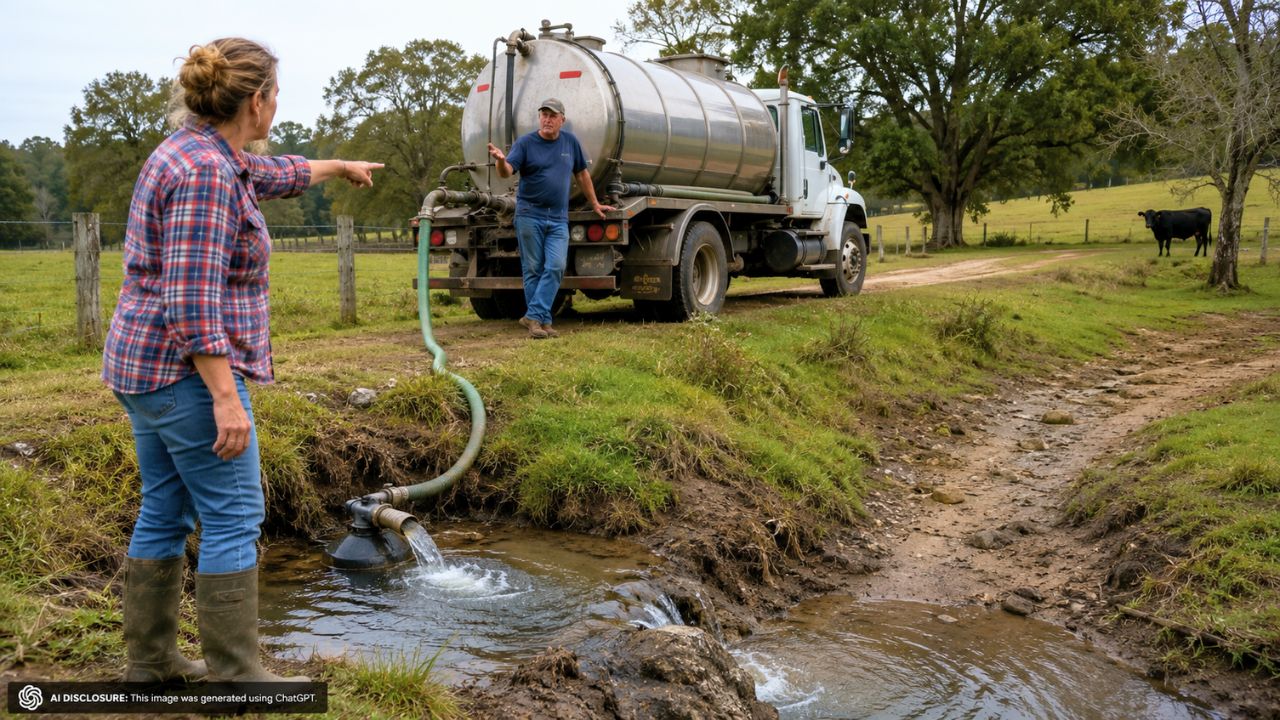
Photo credit: AI-generated image created using ChatGPT. Illustrative only.
In rural New Mexico, water isn’t just a utility line you pay for and forget. It’s the whole reason a pond stays a pond, a well stays dependable, and land stays usable. One landowner thought she had a simple, old-fashioned setup: a small stream feeding a pond on her property.
Then she noticed something that made her stomach drop. A neighbor was showing up daily with a cistern mounted in the back of a pickup, parking at the top of the hill where the stream starts, and collecting water before it ever flowed downhill. In the original post, she described it plainly: the neighbor was stopping the water “at the source” so none of it made it to her land.
The stream wasn’t “low” — it was being intercepted
When a pond drops, it’s easy to blame the usual suspects first. A dry stretch. A hotter-than-normal summer. A change in vegetation. A leak you haven’t spotted yet. That’s the mental checklist most landowners run through, because it’s less stressful than imagining someone else is causing it.
But this wasn’t a gradual change that could be explained away. The neighbor’s routine was consistent: every day, the truck appears at the stream’s origin point and fills up. Downstream, the landowner is left watching her tiny feeder stream deliver less and less—until “none of it makes it onto our property,” as she put it.
That’s when it stopped feeling like a natural swing in water levels and started feeling like a shutoff valve someone else controlled.
It hit the pond first, then the well anxiety kicked in
A pond is visible proof that something’s wrong. It’s the shoreline pulling back, the mud showing where water used to be, the smell changing, the wildlife shifting away. But the landowner’s bigger fear wasn’t just a shrinking pond—it was what that shrink meant underground.
She believed the same source feeding the stream was tied to her water table and, by extension, her well. Once you start thinking in those terms, the neighbor’s truck isn’t just “taking some water.” It becomes a threat to the basic habitability of the property.
Even if the science of that connection can get complicated, the lived experience is simple: if the land is running dry, everything gets harder. Gardens fail. Livestock watering becomes a daily chore. Fire risk feels closer. And a well that sputters or drops pressure turns into a financial and practical emergency fast.
The neighbor’s daily routine changed the whole power dynamic
One of the most aggravating parts of disputes like this is how repetitive they are. It’s not a one-time event where you can say, “Hey, please don’t do that again.” It’s a routine that becomes normalized—until you’re the one expected to adapt.
The landowner described a neighbor who wasn’t sneaking around at night or grabbing a bucket. This was a deliberate system: a cistern in a pickup, parked at the head of the stream, collecting enough water that nothing flowed to the pond.
And because it was happening at the source—uphill, before the water ever reached her—she wasn’t just dealing with a downstream shortage. She was dealing with a situation where the upstream neighbor effectively controlled whether her land received any surface water at all.
That’s the kind of rural conflict that doesn’t stay “polite” for long, because every day it continues feels like another day of permission granted by silence.
“Should he be allowed to do this?” isn’t just legal — it’s survival math
The landowner’s question was blunt and urgent: should this be allowed? She apologized for the rushed wording, but the urgency came through. When you’re watching a water source disappear in real time, you don’t have the luxury of waiting until it becomes a full-blown crisis.
There’s also a familiar rural complication baked into her post: the stream is “very small.” Small streams don’t have a lot of margin. A single diversion—especially a daily one—can change the entire downstream ecosystem and the way the property functions.
Even without diving into statutes, her practical point is obvious: if one neighbor can park at the top of the hill and take the full flow, the downstream land becomes dependent on someone else’s decisions. That’s not just annoying. It can hit property value, usability, and the long-term reliability of a well.
Readers zeroed in on documentation and local water rules
When homeowners describe a neighbor doing something bold and repeatable, the most common response isn’t “go yell at them.” It’s “prove it, carefully.” The reason is simple: the fastest way to lose control of a property dispute is to rely on memory and emotion instead of records.
In conflicts over shared resources—especially water—people often recommend gathering clear evidence of what’s happening: dates, times, photos, video, and notes about visible changes to the stream and pond. It’s not about being dramatic. It’s about having something concrete if the dispute escalates.
Another thread that comes up quickly in water disputes is that local rules matter a lot. Water rights in the West are famously complex, and what a landowner assumes is “their water” can be regulated, allocated, or restricted depending on how the source is classified and who holds rights to use it. The landowner’s post didn’t include those details, but it did show why people get serious about contacting the right local authority sooner rather than later—before the pond drops further or the well shows signs of stress.
In rural neighbor disputes, the damage is often slow — until it isn’t
This is the kind of problem that can sit in a weird limbo for too long. You see the truck. You see the cistern. You see the stream not running like it used to. But you also know that confronting a neighbor in the country can change your daily life in ways city people don’t always understand.
If you share roads, fences, gates, or just the reality of being far from immediate help, the stakes of a feud feel higher. At the same time, letting it continue can leave you with a pond that turns into a mud bowl and a well you no longer trust.
The landowner’s post ended where many rural water stories begin: with a tight, anxious question asked in a hurry, because the evidence was right there at the top of the hill every day. And once you realize the water isn’t “missing”—it’s being collected before it reaches you—it’s hard to unsee it.
Like Fix It Homestead’s content? Be sure to follow us.