New Homeowner Finds a Friendly Neighbor Intentionally Mowing a Two-Foot Strip of the Yard — Then Realizes It’s Happened Every Week for Six Months
Photo credit: AI-generated image created using ChatGPT. Illustrative only.
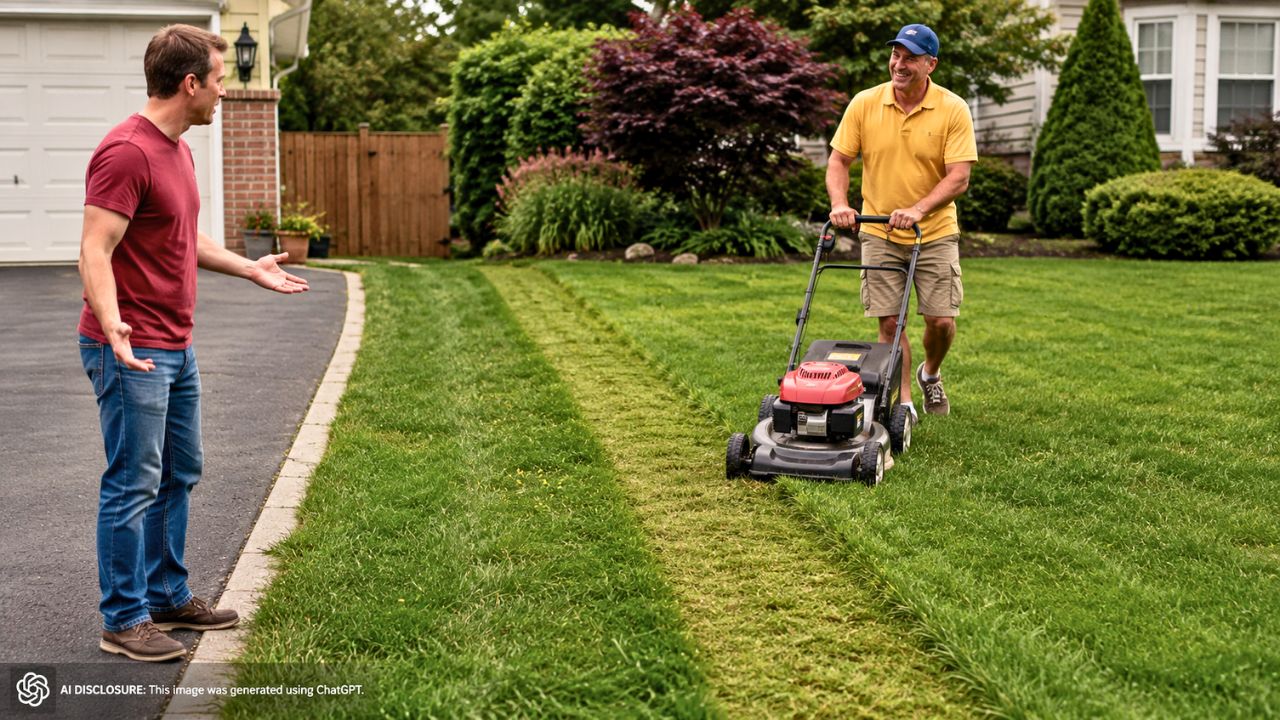
Six months into owning a first house, you start to recognize the normal rhythms of the block. Trash day. Dog walkers. The one neighbor who power-washes everything. What you don’t expect is a friendly older guy next door making a point of mowing a clean, two-foot-wide strip of your lawn every single time he mows his own.
That’s the quiet, persistent weirdness described in the original post: not an accidental drift over the line, not a one-time “I was already out here” favor. One deliberate pass into the new homeowner’s side, stopping at the same invisible boundary like he’s following a script.
The first sign was easy to brush off
At the beginning, it almost reads as neighborly. New homeowner moves in, older neighbor is “super friendly,” the yard gets mowed, and everyone goes on with their lives. If anything, it’s the kind of thing you might tell your friends with a shrug: free mowing, right?
But the way it happens is what keeps sticking in the homeowner’s brain. The neighbor doesn’t wander over while turning around. He does one intentional strip—always the same two feet—then stops dead at the same spot each week. No wave, no “Hey, I noticed your mower’s broken,” no “I like to keep the edge looking clean.” Just the same precise action, over and over.
Over time, that precision stops feeling like helpfulness and starts feeling like marking.
Then the homeowner checked the paperwork
Most people who buy a house get at least one moment like this: you pull out the survey packet and stare at it like it’s a treasure map. In this case, the homeowner did exactly what you’d hope—checked the survey from the purchase.
The result only made it more unsettling. That strip wasn’t a shared border area or a gray zone. It was “100 percent” on the homeowner’s property, with no easement, no shared agreement, no “technically that’s his” complication to explain the behavior away.
Which turns the question from “Is he being nice?” into “Why is he doing this so consistently that it looks like a routine?”
It’s not the grass—it’s what the grass might represent
A two-foot strip of mowed lawn doesn’t cost much. It doesn’t break anything. If anything, it looks tidy. That’s why this kind of thing can sit in the back of your mind for months without turning into a confrontation.
But homeowners know the emotional math of property lines is never just about grass. It’s about precedent. The fear isn’t the strip itself—it’s the creeping idea that if someone treats a piece of your yard like it’s theirs long enough, the neighborhood starts to accept that story.
The homeowner’s friends split into two camps immediately, which says a lot about how this hits people. One side sees a free service: take the win and keep the peace. The other side hears alarm bells: if he’s “claiming your land,” don’t wait until the strip becomes three feet, then four, then suddenly you’re arguing over where the line “has always been.”
Even without anyone raising their voice, this is how small property disagreements start—by becoming normal through repetition.
Why a “friendly” neighbor can still create pressure
The hardest part of these neighbor problems is that the person causing them isn’t acting like a villain. The homeowner describes him as older and pleasant. That makes the behavior more confusing, not less.
When someone is openly hostile, you know you’re in a dispute. When they’re friendly, you second-guess yourself. You tell yourself it’s not worth stirring up trouble. You think, “Maybe he’s just particular about the edge.” You wait for him to mention it.
And then months pass, and you realize you’ve been silently accepting something you never agreed to. That’s where this homeowner is: not angry, not scared, but weirded out. The kind of uneasy feeling that makes you look out the window when you hear a mower start.
It’s also awkward because the fix is simple—talk to him—but the social cost can feel huge. Once you bring up property lines, you can’t unring that bell.
Homeowners reacted like homeowners: document first, talk second
Even from the small slice of reactions included—“free mowing” versus “he’s claiming your land”—you can see the classic homeowner instincts at work. People don’t just think about today’s lawn. They think about what happens when you go to sell, or when you want to put in a fence, or when you landscape that side and the neighbor decides he gets a vote.
The more cautious mindset tends to follow a familiar order of operations: confirm the boundary, keep records, and avoid escalating without facts. This homeowner already did the most important early step by checking the survey from the home purchase.
From there, the tension becomes less about what’s legal on paper and more about what’s happening on the ground every week. Because even if the homeowner never plans to fight over a strip of grass, they also don’t want to train a neighbor to think, “No one’s ever stopped me, so it must be mine.”
On the other hand, plenty of homeowners have lived next to a meticulous neighbor who likes a crisp line and will gladly mow a pass over the boundary just to keep things looking uniform. That’s why some people view it as harmless—until it isn’t.
The next move is small, but it changes the relationship
What makes this story stick is how ordinary it is. No broken fence. No barking dogs. No drainage trench ruining a yard. Just a mower, a two-foot strip, and a routine that has gone on long enough to feel intentional.
The homeowner isn’t looking for a feud. They’re trying to figure out whether this is a normal suburban quirk—an older neighbor’s habit that doesn’t mean anything—or the early stage of a boundary push that’s better addressed now than later.
And that’s the part about homeownership nobody puts on the brochure: sometimes you’re not repairing a roof or replacing a water heater. Sometimes you’re maintaining an invisible line and deciding how much awkwardness you’re willing to carry so your yard stays fully yours.
For now, the strip keeps getting mowed. The neighbor keeps stopping at that same invisible point. And the new homeowner is left staring at a perfectly trimmed edge that looks nice—while feeling anything but relaxed about it.
Like Fix It Homestead’s content? Be sure to follow us.