Homeowner Returns From a Week’s Vacation and Finds the Neighbor Mowed Seven Feet Over the Property Line — Then Sees Just a Foot and a Half Left Beside the House
Photo credit: AI-generated image created using ChatGPT. Illustrative only.
They expected the usual post-vacation chores: mail piled up, grass a little tall, maybe a weed or two that popped while they were gone. Instead, one new homeowner walked around the side of the house and realized their yard had been “improved” without permission—mowed down short, and not just along the edge. A wide strip of their property looked like it had been absorbed into the neighbor’s routine.
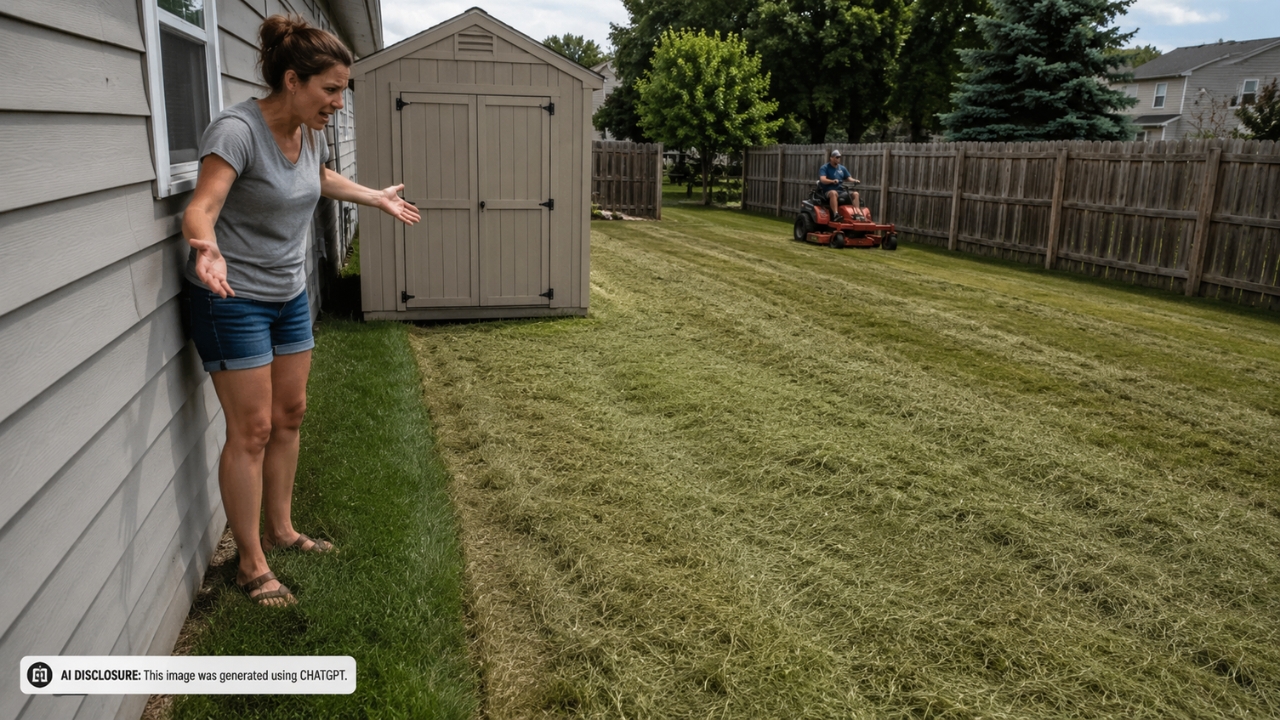
In the original post, the homeowner described coming back from a week away and seeing what looked like seven feet of mowing past the property line. The part that really landed in their stomach was the tight squeeze left behind: about a foot and a half between the corner of their house and shed and where the neighbor had cut. It wasn’t just a neat edge. It felt like a boundary being redrawn with a mower.
The first “helpful” mowing felt like a favor
The couple bought their first house in July and, during the move-in period, the neighbor mowed their whole yard several times. In the moment, that kind of gesture can feel like a welcome-to-the-neighborhood gift—one less thing to manage while boxes are still everywhere.
Once they were settled, the homeowner said they thanked him and told him they didn’t need the help anymore. They had a push mower and trimmer and planned to handle their own lawn from then on. That should have been the end of it: a brief season of neighborly assistance, then everyone back to their own routines.
The line started moving a few feet at a time
Months later, the mowing pattern shifted. The neighbor began creeping a little over the line they’d both been mowing along—two to three feet at first, not a dramatic takeover, more like something you could chalk up to convenience.
The homeowner tried to interpret it charitably. The neighbor had trailers alongside a fence and buildings that run near the property line, just at varying distances. The couple assumed he was cutting a little extra because his equipment was in the way, and that once the trailers were moved, the mowing would go back to normal.
The neighbor did move the trailers. But the mowing didn’t snap back to the old boundary. It continued—more confident, wider, and harder to pretend was accidental.
The vacation week is when it stopped feeling like an accident
The biggest jump happened while the homeowners were away for a full week. When they returned, they said it looked like the neighbor had mowed about seven feet over the property line. The yard wasn’t just trimmed. It was reshaped.
That’s when it got personal in a practical way: the homeowner said they used to be able to pull a car around to the backyard without even touching the neighbor’s lawn. With the newly “shortened” strip beside the house and shed, that access felt threatened. Losing a few feet on paper is one thing; losing the ability to maneuver your vehicle and use your own side yard is another.
In an edit, the homeowner clarified this wasn’t just the awkward “dead zone” between houses where nobody loves trimming. They said the neighbor was coming over his fence onto their property and cutting wide strips “at golf course length” far past the boundary, as if claiming parts of the yard. They also said he had been parking vehicles and trailers on the homeowner’s backyard, turning the encroachment into something you can’t ignore.
Why a mower can turn into a property claim
It sounds ridiculous until you’ve watched it happen: an edge gets cut a little wider, then wider again, and suddenly the visual “truth” of the yard changes. Short grass looks maintained. Maintained looks owned. And once an area starts looking like it’s part of someone else’s regular routine, it’s harder to push back without sounding petty—even when you’re not being petty at all.
That’s what made the homeowner nervous. They had zoning documents that show their surveyed land, though the survey was from previous owners at an unknown date. The couple also shared a real-life limitation that many new homeowners recognize immediately: money is already earmarked for life. They’re saving up to survive the arrival of their first child, and fencing “is not really viable right now.”
A clean permanent boundary—fence, hedge, hard edging—usually costs real dollars. But doing nothing can cost something too, especially when it affects access to the backyard and invites the neighbor to treat the area as staging space for trailers and vehicles.
What people pushed: proof, then a boundary you can’t “misread”
The homeowner said they have talked to the neighbor, which is often the first advice people give. But once a person keeps doing it after the conversation, the next step is less about finding the perfect phrase and more about documentation.
When a boundary is being tested, the boring stuff matters: paperwork, clear reference points, and a way to show what changed and when. A mower can erase lines and create new “natural” edges overnight. Photos and dated notes can keep the story from turning into “I think” versus “you think,” especially if the mowing is happening while the homeowners are out of town.
The biggest practical suggestion implied by the homeowner’s own thinking was a new survey. They mentioned they could have the land surveyed since they don’t hold much acreage. A current survey doesn’t just help with a conversation; it can show exactly where the line is in a way that’s harder to argue with. It also lets a homeowner place stakes or markers with confidence—something simple and visible that says, “This is not a shared space.”
And even without a full fence, a temporary or budget-friendly visual boundary can change behavior fast. People are less likely to “accidentally” mow seven feet over when there’s a clear marker in the path.
A new homeowner’s tight spot: stopping it without escalating it
This is the bind: if the neighbor is already comfortable mowing over the line and parking equipment in the backyard, a polite ask may not be enough. But going from small talk to hard boundaries can make daily life tense, especially when houses sit close and you have to see each other constantly.
The homeowner is also dealing with timing. They’re early into ownership, still learning the property, and planning for a baby. That’s exactly when you want life to get simpler, not more complicated. Yet the side-yard squeeze—down to roughly a foot and a half in the tightest spot—puts pressure on the decision. Limited access isn’t just annoying; it can interfere with maintenance, hauling materials, and basic use of the yard.
For now, the story sits in that uncomfortable middle space: a neighbor who started as “helpful,” a boundary that keeps shifting while the owners are gone, and a couple trying to decide how to draw a line they can afford—without turning the next years of homeownership into a daily cold war over grass.
Like Fix It Homestead’s content? Be sure to follow us.