Homeowners Watch Several Feet of Stormwater Pour From the City’s Drain Inlets Into Their Yard — Then a Court Awards Them $80,441 and Enjoins the City
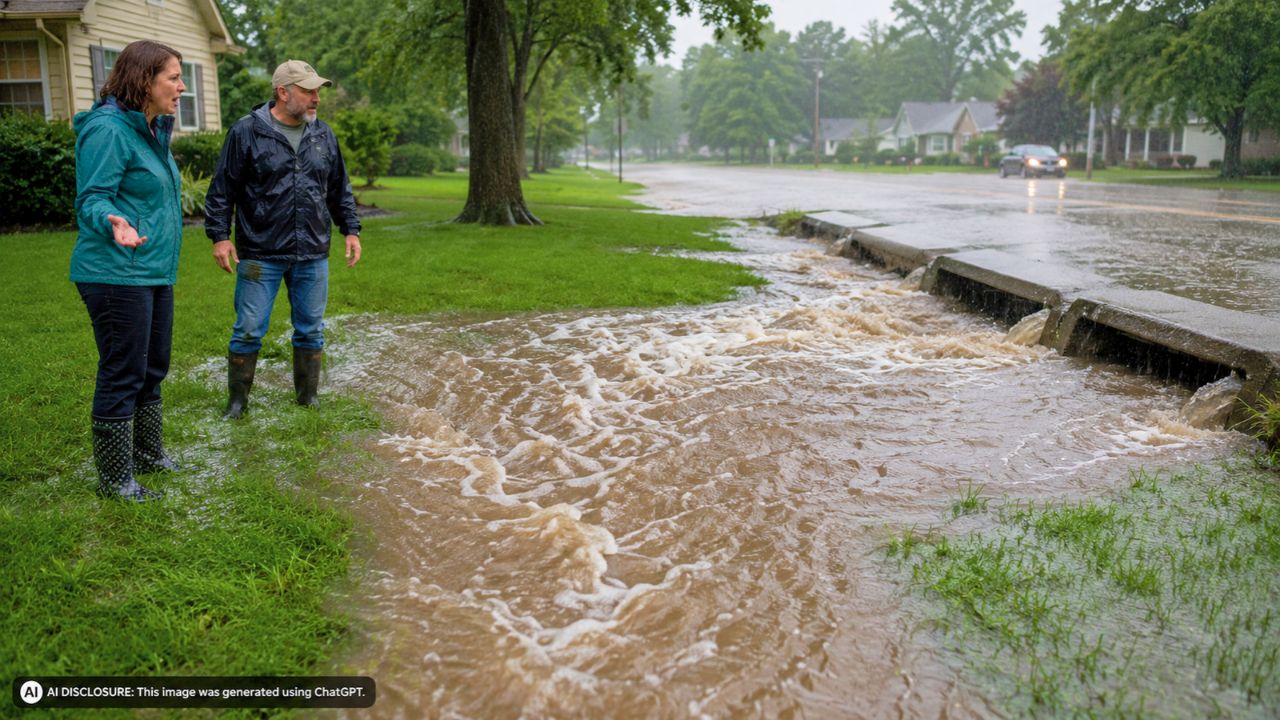
Photo credit: AI-generated image created using ChatGPT. Illustrative only.
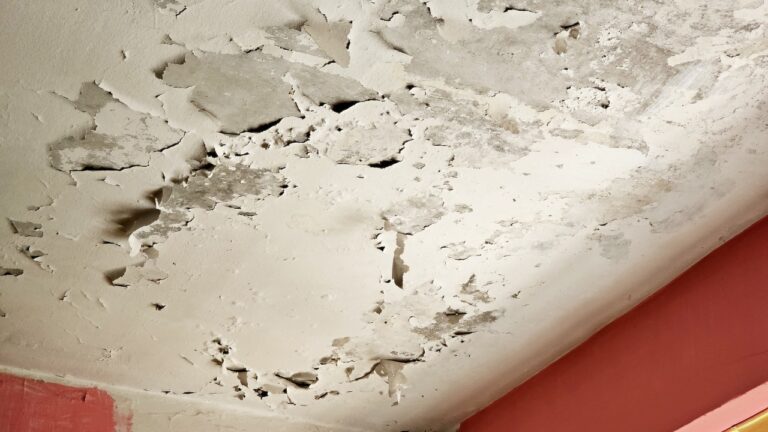
Ten days into owning their Mountain Brook, Alabama, home, Rodney and Mary Leah Miller watched stormwater stack up fast—then surge back out of nearby drain inlets and roll onto their property in several feet. On May 15, 2023, the water pushed into the basement, garage, and across the driveway, leaving behind more than a mess: it left a damage total north of $80,000 and a question every homeowner dreads—how do you stop something you don’t control?
The fight that followed ran straight into the wall between “the city should fix this” and “the city doesn’t have to.” The full back-and-forth is laid out in the source post, including how the Millers briefly won damages and an injunction at the trial-court level—only to have it reversed by the Alabama Supreme Court.
Water didn’t sneak in — it came from the street system
This wasn’t a leaky gutter or a clogged downspout kind of flood. The Millers’ claim centered on the city’s stormwater system becoming overwhelmed, forcing water to “surcharge” back up through drain inlets and spill where it shouldn’t—into their yard and down into their home.
If you’ve ever stood outside during a hard rain and seen a drain gurgle like it’s breathing, you already get the visual. It’s that moment when the system stops pulling water away and starts pushing it back out, and the lowest property nearby becomes the collection point.
The May 2023 flood hit their basement, garage, and driveway. The repair bill they put on it was $80,441.15—real money, and exactly the kind of number that turns a “we’ll keep an eye on it” problem into a “we can’t live like this” emergency.
The neighborhood had a flooding memory that went back decades
One detail that makes this story so tense is that the property’s flooding issues weren’t new. Records showed flooding in the area dating back to the 1950s, and the city had repeatedly brought in engineers over the years to study what was happening.
By 2021 and 2022, the engineering conclusions got more blunt: decades of development had increased runoff and left parts of the drainage system undersized. In other words, it might have been “fine” at one point, but the same pipes and inlets were now being asked to handle a heavier, faster surge of water.
And the home itself had a history. The previous owners reportedly described six flooding events between 2020 and 2022 and claimed hundreds of thousands of dollars in damage. The Millers said the full history of serious flooding was never disclosed to them, though their inspection report did note signs of significant drainage work and suggested the home may have flooded before.
The fix on paper was big money — and came with political blowback
If there’s a classic homeowner frustration, it’s this: the “real fix” is often a giant project that requires someone else’s permission and budget. Here, one proposed solution was a three-phase infrastructure job estimated at nearly $4 million.
But the engineers didn’t sell it as a clean win. The firm advised the city that the cost outweighed the benefit, that the project could worsen flooding downstream, and that it wouldn’t meaningfully solve flooding at the Millers’ particular home because of the property’s low elevation.
Then came the neighbor factor, which always shows up when water is involved. Residents downstream strongly opposed the plan, warning that sending more water toward their properties could cause serious damage. That’s the nightmare tradeoff with drainage: “fixing” one area can feel like redirecting the problem toward someone else’s living room.
The Millers went to court — and the trial judge sided with them at first
After the May flood, the Millers sued the City of Mountain Brook under theories that will sound familiar to anyone who’s dealt with repeat water intrusion: negligent maintenance, nuisance, and trespass. The heart of their argument was that even if the pipes were once adequate, the city knew development had changed the math—and by declining to enlarge or upgrade, the city had effectively failed to maintain the system.
The trial court agreed with them. It awarded $80,441.15 in damages and issued a permanent injunction that prohibited the city from continuing to flood their property.
The judge’s reasoning leaned on the idea that the city operated a stormwater system through an easement behind the property, and that with that came a duty to keep the system from overflowing onto the Millers’ land. For homeowners reading this, that part probably felt satisfying: if you’ve got an easement and public infrastructure moving water, surely someone has to keep it from pouring into your house.
The Supreme Court drew a hard line: maintenance isn’t the same as upgrading
The Alabama Supreme Court reversed the damages award and the injunction, and told the lower court to enter summary judgment for the city on the Millers’ tort claims. The key move was a distinction that sounds technical until you picture the repair bill on your kitchen counter.
The justices acknowledged that once a municipality chooses to build a drainage system, it can be liable if it negligently designs, constructs, or maintains it. But they emphasized Alabama law doesn’t require a city to build a stormwater system in the first place—and deciding whether to substantially enlarge an existing system was treated as the same kind of discretionary government decision.
That meant the Millers needed evidence of ordinary maintenance failure, not just that the system was too small for modern stormwater volumes. Inspections after the flood found no cracks, structural failures, blockages, clogs, or collapsed pipes, and the Millers didn’t produce contrary evidence. From the court’s perspective, the complaint boiled down to: the pipes worked, they’re just undersized.
The court also put weight on the downstream consequences. Ordering an upgrade to protect one home could increase flooding risks for other homeowners who weren’t part of the lawsuit. The justices said those competing interests are for elected officials to balance—not for a court to solve by ordering infrastructure changes that could shift harm onto other properties.
How homeowners reacted: proof, paper trails, and the ugly lesson about “known” flooding
Homeowners tend to read cases like this and immediately translate them into survival tactics. When water is coming from public infrastructure, people focus on documentation because feelings don’t dry out drywall.
The details here practically scream what people say in neighborhood discussions: keep records of prior flooding, keep copies of inspection reports that flag drainage work, and don’t assume “the city knows” means “the city must fix it.” This case also highlights how a home can carry a long flooding history that doesn’t always show up as a clean, understandable disclosure to a buyer—especially when what you’re seeing is evidence of past attempts to manage water, not a neat sentence saying “this basement floods.”
And it leaves a hard tension behind. The Millers experienced a flood almost immediately after buying. They briefly won damages and an order telling the city to stop flooding them. Then the higher court said the city didn’t have a legal duty to do a major upgrade just because the system, over time, became inadequate.
For anyone living downhill from a storm drain, it’s a sobering reminder: sometimes the problem isn’t a broken pipe you can point to. It’s that the whole area has changed, the system is maxed out, and the “fix” lives in budgets, engineering tradeoffs, and neighbors who are terrified the solution will send the water their way instead.
Like Fix It Homestead’s content? Be sure to follow us.