Alaska Cabin Owner Tells Neighbors They Can No Longer Drive Through His Yard — Then a Court Finds He Extinguished Part of Their Easement
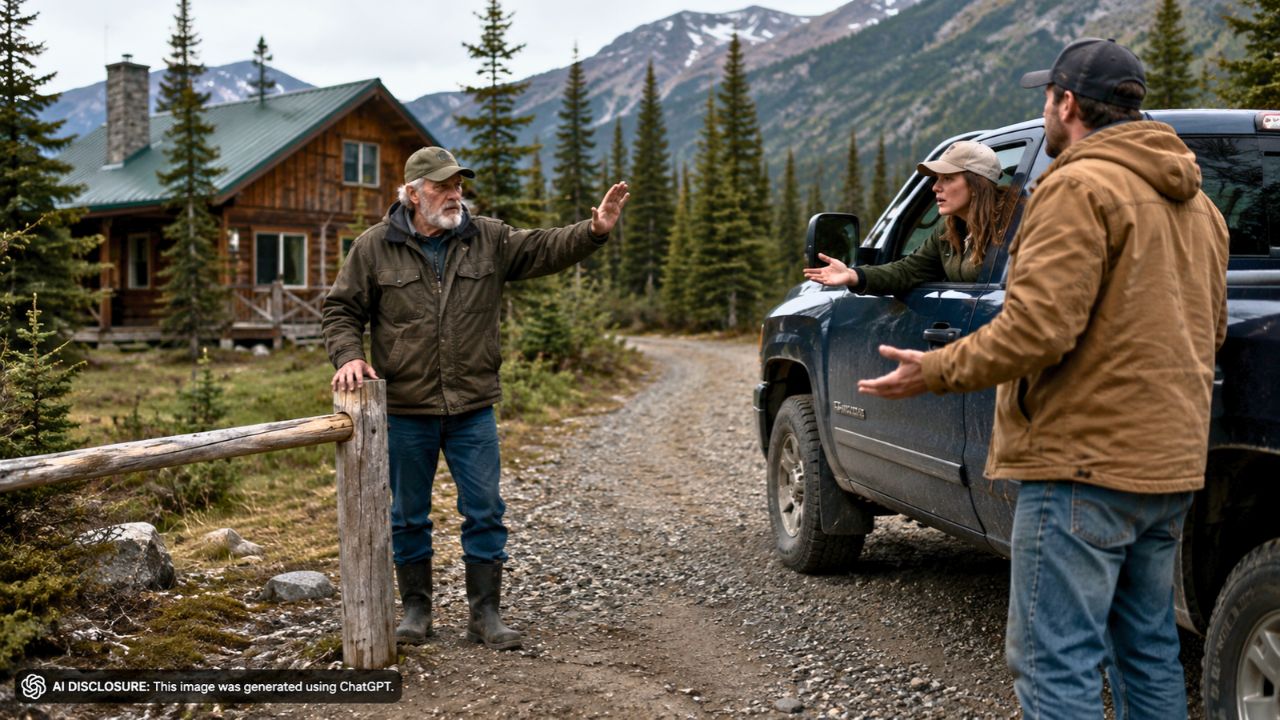
Photo credit: AI-generated image created using ChatGPT. Illustrative only.
It starts the way a lot of rural property headaches start: a “road” that’s really an old trail, a handshake-era agreement nobody thinks about for years, and then one day someone says, “You can’t drive through here anymore.” In this Alaska dispute, that line in the sand turned into a multi-round court fight over whether a neighbor’s access right still existed—and where it could legally go.
The details come out in the court decision, which reads like a slow-motion collision between homestead improvements and an access right that never quite got put to bed. By the time the case reached the Alaska Supreme Court, the question wasn’t just “Is there an easement?” It was “Did the cabin owners erase part of it by building over it—and can a court simply draw a new route around their house?”
An old trail, an even older agreement
Back in 1966, original landowners signed an agreement allowing a road to cross one parcel to reach another. The document described it as a license, and it also said future sales would remain subject to that permission—exactly the kind of language that later turns into a “wait, I thought that was settled” moment when properties change hands.
Not long after, around 1970, the Jigliotti family acquired the property that benefited from that access route. For years, the access trail existed as the practical way to get in and out, cutting across what later became Donald and Deborah Bloom’s land.
Then the ownership changed again. The Blooms bought the burdened property in 1994. And that’s where the real-life homeowner piece kicks in: they didn’t just live there; they improved it.
When the “driveway” becomes someone’s front yard
By the mid-1990s, the Blooms began making major, permanent improvements directly along the historic access trail. According to the case, they built a home, a shop, and other improvements across the route. They also installed water, sewer, and greywater lines beneath the same area.
If you’ve ever lived rural, you can picture it. What had been “the way through” turns into “the yard.” It’s hard to feel safe—or even relaxed—when someone else’s vehicle traffic is effectively passing through your living space, past utilities, near buildings, and across whatever you’ve landscaped or cleared.
But from the other side, access isn’t a luxury. It’s the difference between being able to reach your land with tools, supplies, and vehicles—or parking somewhere else and hiking in. And the record shows that’s exactly what started happening.
“You can’t drive through here” becomes the new normal
The conflict wasn’t a single blow-up. It was repeated pushback over time. The Blooms repeatedly told members of the Jigliotti family they could not drive through the yard along the old trail.
On multiple occasions, the Jigliotti family parked and continued on foot to their property. That’s the kind of workaround people do when they’re trying to keep the peace… but it also quietly changes behavior in a way that can later matter a lot.
Eventually, by 2011, the Jigliottis started using a different section-line easement because crossing the Bloom property kept becoming a problem. That’s a big pivot: a family starts using a different route not necessarily because they agree the old one is gone, but because arguing every time you need access is exhausting.
The trial court: yes, there’s an easement—no, not all of it survived
In 2012, the Jigliotti Family Trust sued to confirm its right to keep using the historic trail. The trial court ruled that the 1966 license was valid and created an easement for ingress and egress. In other words, the access right wasn’t imaginary, and it didn’t vanish just because properties changed hands.
But the court also found something that homeowners don’t always realize is possible: the Blooms had partially extinguished the easement through prescription by constructing their home and other permanent improvements across it. The practical reality—buildings and utilities occupying the route—had legal consequences.
The trial court determined the easement stopped when it reached the cleared area around the Blooms’ home, no less than 25 feet from the house. That detail later became a major point of confusion, because “25 feet from the house” sounds like a buffer rule you can design around. The Supreme Court later said that’s not what it meant.
The Trust also argued it needed an easement by necessity. But the courts weren’t persuaded, because another possible access route existed via a section-line easement, and the Trust hadn’t pursued the permits needed to construct a road there. The necessity claim was dismissed without prejudice, meaning the door wasn’t permanently slammed, but it wasn’t granted either.
The remand mess: the court wasn’t allowed to invent a new route
The Alaska Supreme Court upheld the key finding that the historic easement had been partially extinguished where the Bloom property improvements blocked it. But it sent the case back so the lower court could enter a final judgment accurately describing what easement still existed.
That’s where things went sideways. Instead of mapping the original easement up to where it had been extinguished, the Trust proposed a route that went around the Blooms’ home and stayed more than 25 feet away. The trial court accepted that proposal and entered judgment granting access along the new route.
From a “make it workable” standpoint, that probably sounded like a clean fix. But the Blooms objected, arguing the court had effectively created a different easement—one that hadn’t been litigated at trial.
On the second trip up, the Alaska Supreme Court agreed with the Blooms. The earlier ruling didn’t authorize the trial court to simply reroute the easement around the obstruction. The mandate required a judgment identifying the historical access trail and the specific area where the Blooms extinguished it through prescription.
And that “25 feet” number? The Supreme Court said it had been misunderstood. It didn’t mean a court could draw a brand-new path as long as it stayed 25 feet away from the house. It described the boundary of the area where the old easement had been extinguished.
The practical reactions: survey it, map it, and stop guessing
This is the part that would sound familiar to anyone who’s watched neighbor disputes spiral: the fight starts as a “don’t drive here” argument and ends as a battle of descriptions, boundaries, and what exactly exists on paper.
The Supreme Court vacated the judgment again and sent the case back with instructions to determine and map both the historical trail and the exact location of the prescriptive obstruction created by the Bloom home and surrounding improvements. That’s basically the judiciary saying: stop freehanding it. Put the line on the map.
Attorney fees didn’t go the Trust’s way either. Even though it established a valid access easement existed, it didn’t get everything it wanted because part of the easement was extinguished. The court upheld the decision not to treat the Trust as the prevailing party.
In the end, nobody got the clean “win” that makes life easy next week. The Blooms still face the reality of a surviving historic access right up to the point it was blocked, and the Trust still has to live with the fact that part of what used to be a drivable route has been legally erased by years of permanent construction. The next step is as unglamorous as it is important: a correct, final description of the old trail and exactly where it ends.
Like Fix It Homestead’s content? Be sure to follow us.