Homeowner Finds a Neighbor’s Claim on Two-Tenths of an Acre — Then the Surveyor Returns Two Years Later and Splits the Strip Into Three Disputed Areas
Photo credit: AI-generated image created using ChatGPT. Illustrative only
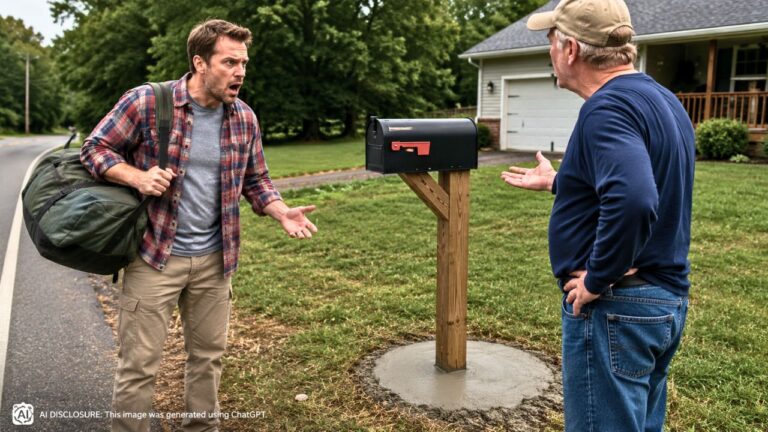
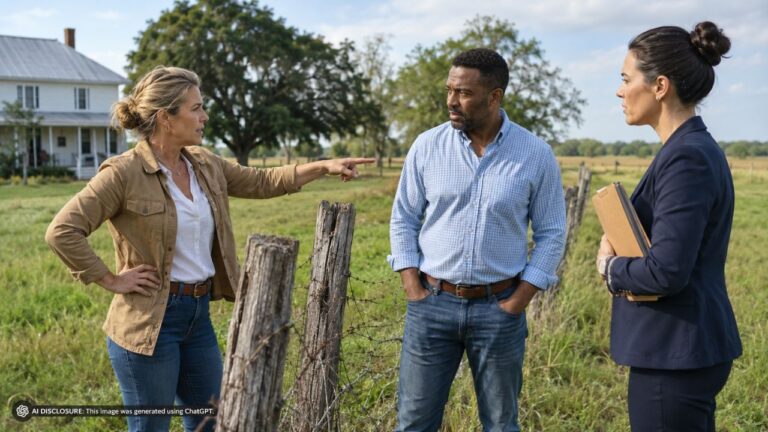
It started the way a lot of rural property-line fights start: a couple buys a place, settles in, and treats the yard like it’s theirs—because that’s what they were told. Then, years later, a neighbor shows up saying a thin strip of land isn’t actually part of the yard at all.
In an Ohio case that reads like a slow-burn neighbor feud, Gerald and Sharon Adams said they’d been using a roughly two-tenths-acre strip next to their home since 1998. Their neighbor, Rickey Flinn, claimed it was his. What made this one messy wasn’t just the claim—it was how a survey later came back and carved the strip into three separate “areas,” each with its own level of argument and proof. The full court opinion is laid out in the discussion.
The yard didn’t look “shared” anymore
The Adamses lived at their property on State Route 152 since July 1998. According to the court record, they said the prior owner (their predecessor in interest, Mr. Males) told them the disputed ground was theirs, and they acted like it from day one.
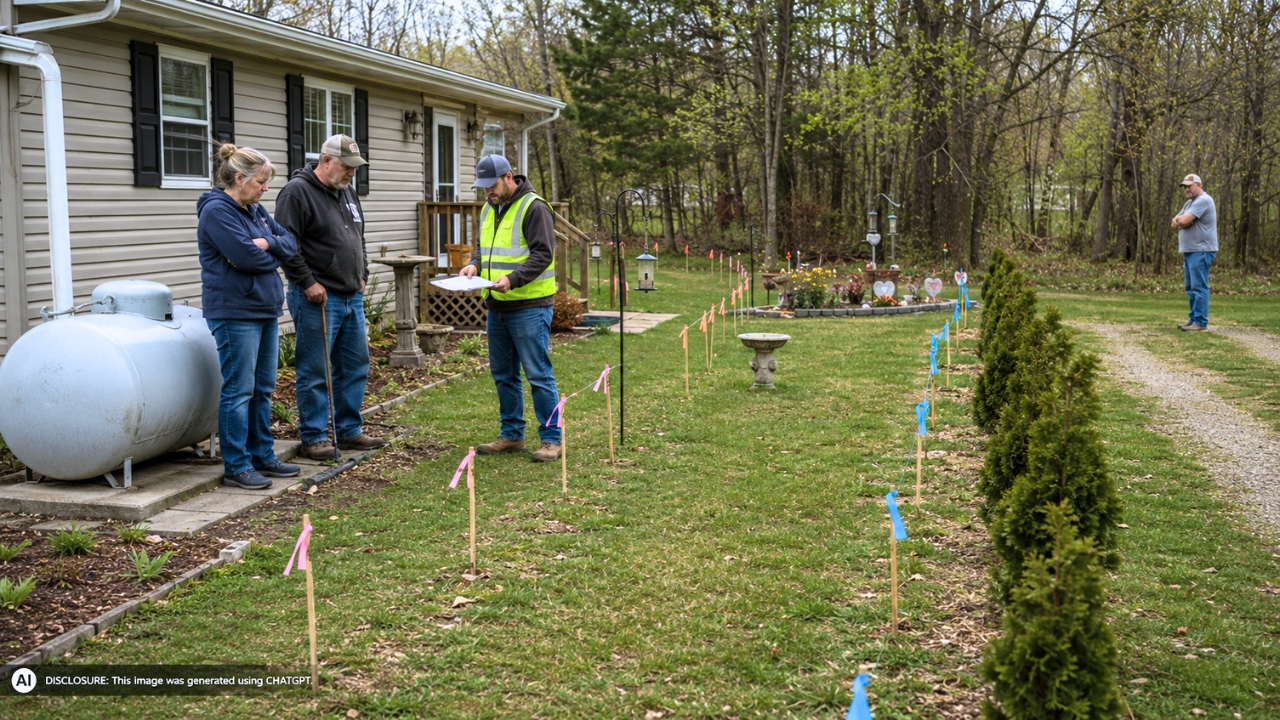
This wasn’t a case of occasionally wandering over a line to trim weeds. The disputed ground included real homeowner infrastructure and long-term “this is part of our home” behavior: a propane tank on a cement slab supplying their house, water lines, grading, retaining walls, landscaping, tree planting and removal, bird feeders and bird baths, mowing, and even a pet cemetery with markers.
By the time the paperwork caught up, the area in dispute totaled about .19 acres—big enough to matter, but small enough to be the kind of strip people ignore until they can’t.
When the neighbor finally pushed back, the paper trail got serious
Flinn got his interest in the adjacent property in January 2016, transferred from his mother. The Adamses said the boundary had effectively been treated as settled for decades, and that Flinn and his predecessor had “acquiesced” to it while all the improvements and maintenance happened in plain view.
In February 2024, the Adamses filed in Jefferson County seeking to quiet title—meaning they wanted the court to declare they owned the strip. They argued adverse possession (ownership gained by meeting specific long-term use requirements), and alternatively raised easement and boundary-acquiescence theories.
Flinn fought back with a counterclaim raising ejection, trespass, conversion, and his own quiet title claim. It’s the kind of escalation that turns a neighbor problem into something you can’t casually settle over the fence anymore.
The surveyor’s first map wasn’t the end of it
The Adamses attached a survey and metes-and-bounds description prepared in 2023 by surveyor Vince Dowdle. But even that didn’t fully calm things down. The trial court ultimately treated the disputed strip as three separate chunks: Areas 1, 2, and 3.
Area 1 was immediately behind the Adamses’ house and included the propane tank plus the landscaping and bird-feeder area—basically, the “this is obviously part of the home setup” portion. Area 2 ran parallel to the driveway and roadway and included evergreens the Adamses said they planted. Area 3 sat behind the house near the treeline and the back edge of the landscaped bed.
That division mattered because the court didn’t treat every square foot the same. It granted partial summary judgment to the Adamses for Areas 1 and 2—meaning the judge decided those parts didn’t need a trial because the evidence was strong enough and there was no genuine issue of material fact left to argue. Area 3, however, went to a bench trial.
Two years later, the survey got redone—and the strip got staked out
This is the part that feels painfully familiar to anyone who has ever said, “Let’s just get a survey and settle it.” The survey didn’t settle it. It became the battlefield.
After the partial summary judgment in April 2025, the court held a property viewing in May. Stakes were placed to mark what had already been awarded (Areas 1 and 2) and what was still in dispute (Area 3). Photos were taken, and the complaint exhibit was marked to show stake locations.
Then, in May 2025, Dowdle surveyed the property a second time and prepared a new metes-and-bounds description for all three areas and a new plat map showing exactly what the court had quieted and what was still headed for trial. The court later found that the new survey accurately described the territories and confirmed the acreage breakdown: Areas 1 and 2 at .1434 acres, and Area 3 at .0508 acres.
If you’ve ever watched neighbors argue about a few feet of ground, you know how “just a small section” can still feel like the whole world—especially when it sits right behind a house.
Area 3 went to trial for one reason: visibility and time
The judge initially said there were genuine issues about Area 3, including how visible the use was and how long the Adamses had used it. That’s the kind of detail that decides adverse possession cases, because the use has to be open and notorious, not hidden or occasional.
At trial, the Adamses testified, along with family witnesses and the surveyor. Their testimony described years of treating the ground as theirs: excavating and grading, trimming and cutting trees and vegetation, clearing and mowing, changing the terrain, repairing a hillside slip, maintaining the pet cemetery, creating flower beds, and installing and maintaining bird feeders and baths.
After hearing it, the court found the Adamses proved adverse possession of Area 3 by clear and convincing evidence and quieted fee-simple title in their favor. On appeal, the Seventh District Court of Appeals affirmed the trial court’s rulings—both the partial summary judgment for Areas 1 and 2 and the post-trial decision for Area 3.
One detail that stood out in the record: Flinn’s own deposition admissions didn’t undercut the Adamses much. He testified he didn’t know where the lines were and couldn’t say when key items were installed. He admitted he didn’t pay for or maintain the propane tank, water line, landscaping, garden, or mowing—and that the Adamses were the ones doing that work.
The reactions you always see in property-line fights
Even without a comment thread attached to the case, you can practically predict the homeowner reactions because the pressure points are so recognizable: “Get it in writing,” “survey it,” “document everything,” and “don’t assume the last owner’s handshake is enough.”
This case also shows the other hard truth: when the “improvements” are permanent—propane tank on a slab, buried water lines, retaining walls, grading—the argument stops being theoretical. People don’t want to move utilities, and they definitely don’t want to concede land they’ve poured money into for decades.
And once a court starts describing your backyard as three numbered areas, you’re no longer arguing about “where the grass gets cut.” You’re arguing about legal descriptions, exhibits, stakes in the ground, and whether 21 years of upkeep was ownership—or just tolerated use.
In the end, the Adamses kept all three sections. But the way it got there—one strip turned into three disputed areas, one survey turned into two, and a backyard turned into a courtroom—captures why property lines are one of the most expensive “small” problems a homeowner can have.
Like Fix It Homestead’s content? Be sure to follow us.