10 Ways People Damage a Generator in the First Year
Photo credit: Harmony Video Production/Shutterstock.com
A generator usually gets bought in a hurry, then parked until the next outage, storm, or job site day. The first year is when most damage happens, not because the machine is junk, but because a few common habits grind it down fast. Treat it like an engine and an electrical tool, and it’ll pay you back for years.
1. Running Old Gas Until It Varnishes
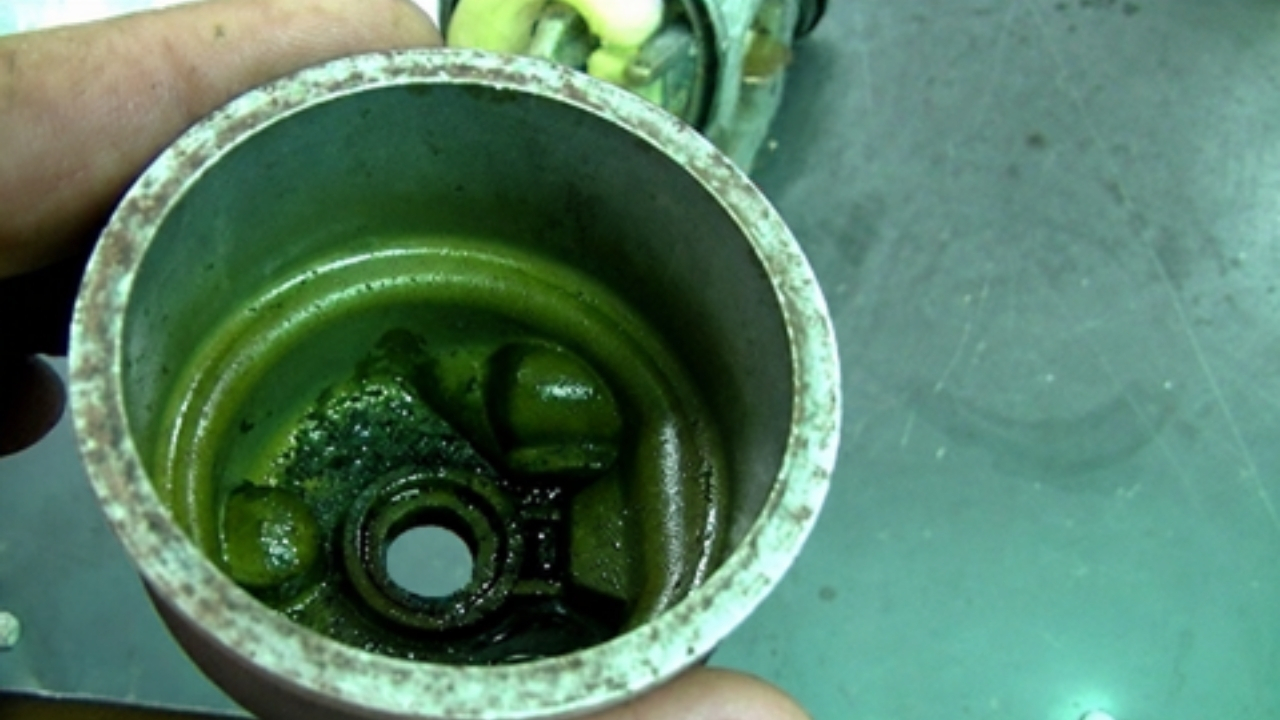
Gasoline doesn’t age gracefully. After a few months, especially with ethanol fuel, it can turn sticky and leave varnish in the carburetor. Then the generator gets hard to start, hunts up and down, or dies the moment you add load.
If you won’t use it often, run the tank close to empty before storage and shut the fuel valve off so the carb bowl can run dry. For longer storage, drain the carb bowl with the little screw (if yours has one) and store fresh fuel in an approved can. Fuel stabilizer helps, but it’s not magic, fresh gas is still the fix.
2. Skipping The Break-In Oil Change
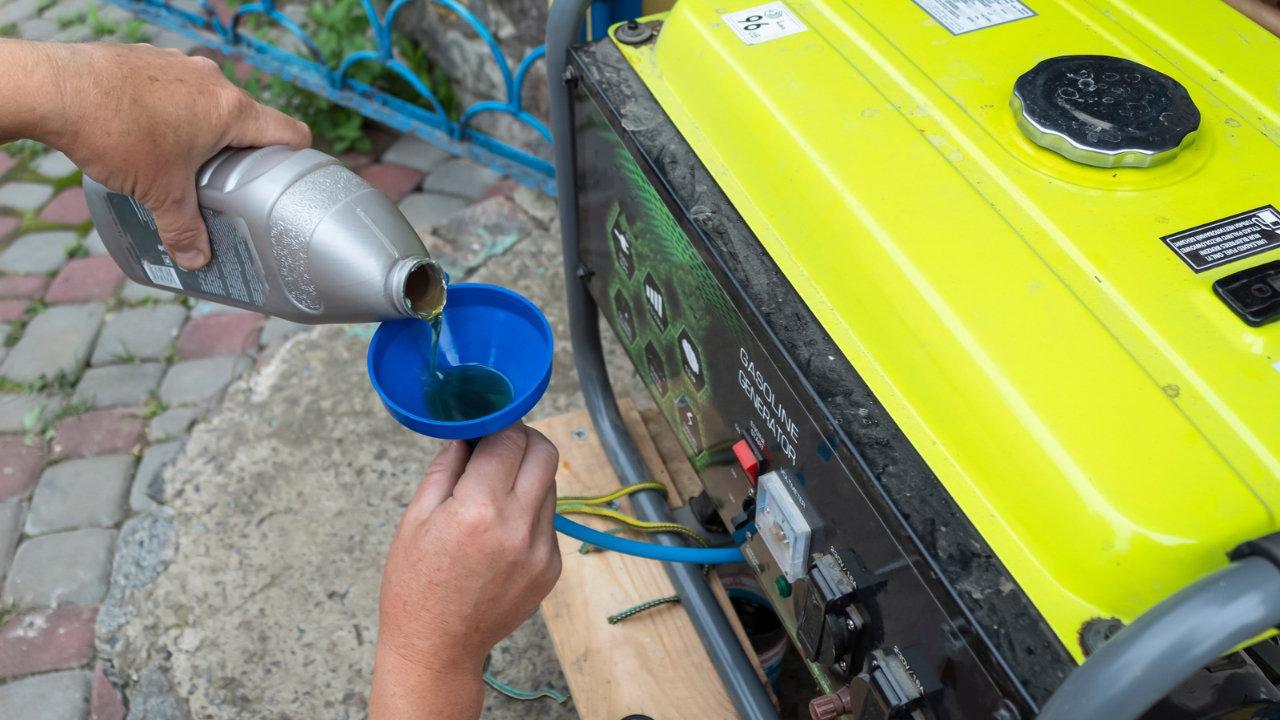
The first few hours of run time make the most metal dust. That grit ends up suspended in the oil, and if it stays there, it works like lapping compound inside the engine. You might not notice anything for months, then it starts using oil or smoking under load.
Check your manual for the break-in interval and change the oil on time, even if it feels silly because the unit “barely ran.” Warm it up first so the oil drains well, and use a funnel and a rag because you will spill. Keep a spare quart on the shelf so you’re not trying to shop during a blackout.
3. Backfeeding A Panel Without Proper Gear
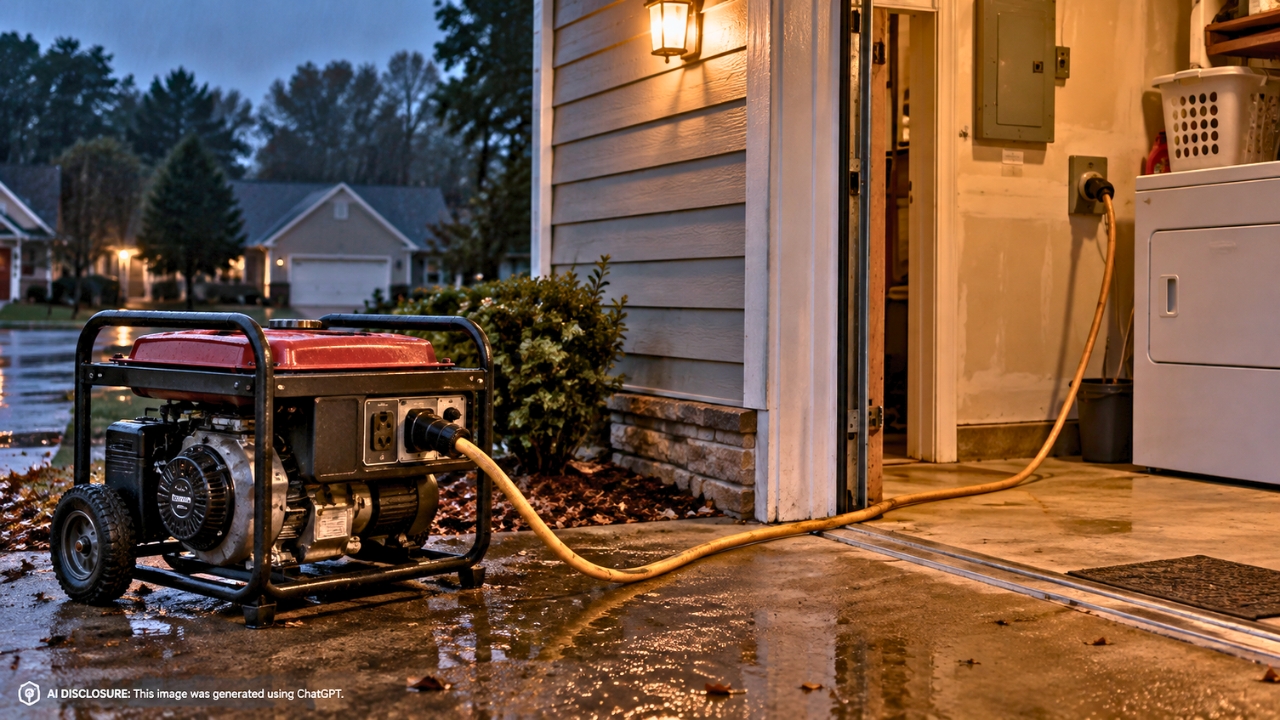
Plugging the generator into a dryer outlet with a homemade cord is a fast way to ruin more than the generator. It can burn up windings, fry appliances with dirty power, and it can energize utility lines where a lineman expects them to be dead. It’s also illegal in a lot of places.
If you want to power house circuits, you need a transfer switch or an interlock kit that’s made for your panel, and this is a job for a licensed electrician in most areas. Permits and local code matter here. Use a proper inlet box and a real generator cord, not a “suicide cord” with two male ends.
4. Running It With Too Little Load

Babying a generator sounds nice, but long idle runs are rough on some units. Many portables run rich at low load, and you’ll see sooty exhaust, smell fuel, and sometimes get a wet, gassy muffler. Over time, carbon builds up and the plug fouls.
Give it something real to do. A couple work lights and a box fan won’t cut it, aim for a steady, moderate load for part of the run. The honest exception is inverter generators, they handle light loads better and throttle down cleanly, but even they benefit from a good exercise run with a decent load now and then.
5. Overloading It Until The Breaker Chats
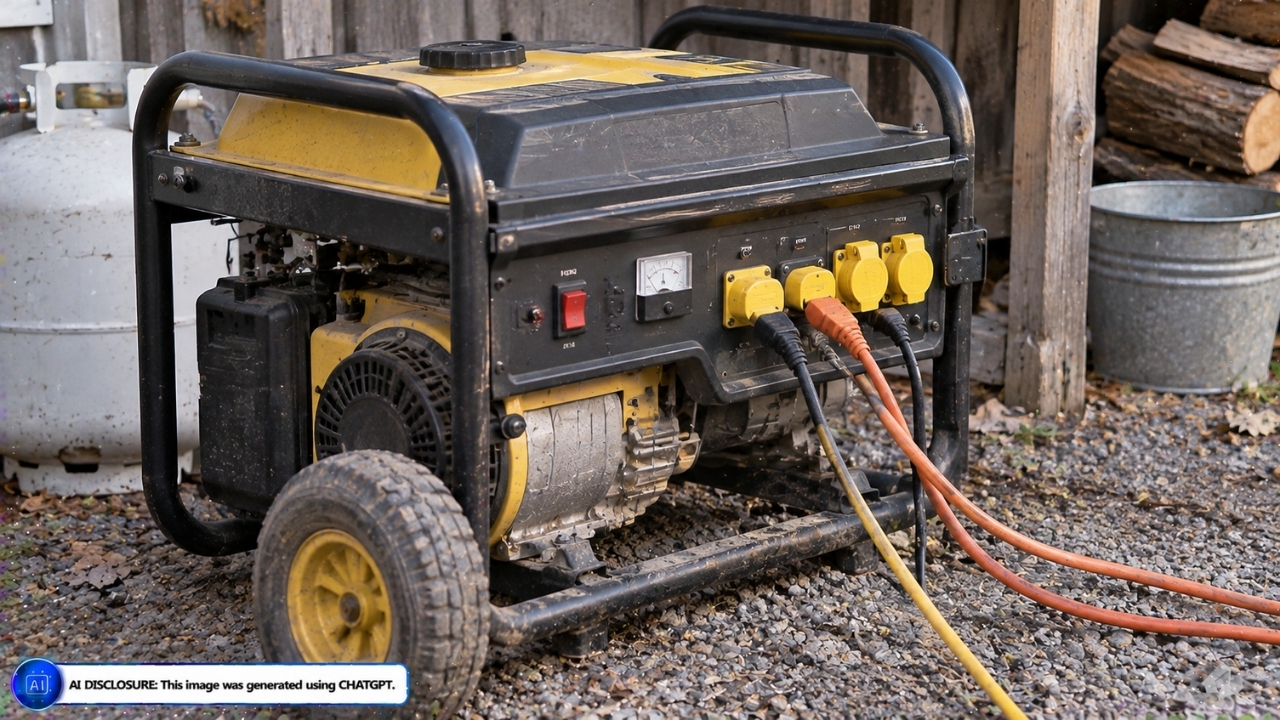
The quickest way to shorten a generator’s life is treating the watt rating like a suggestion. When you pile on space heaters, a microwave, and a well pump at once, the engine lugs down, voltage sags, and the windings heat up. You’ll hear the RPM droop and the lights get weird.
Know your starting watts, not just running watts. Motors, pumps, and some compressors hit hard for a second, and that’s when damage starts. If you need to run a well pump, sump pump, or big fridge, shed other loads first and bring them on one at a time.
6. Letting Rain And Snow Blow In
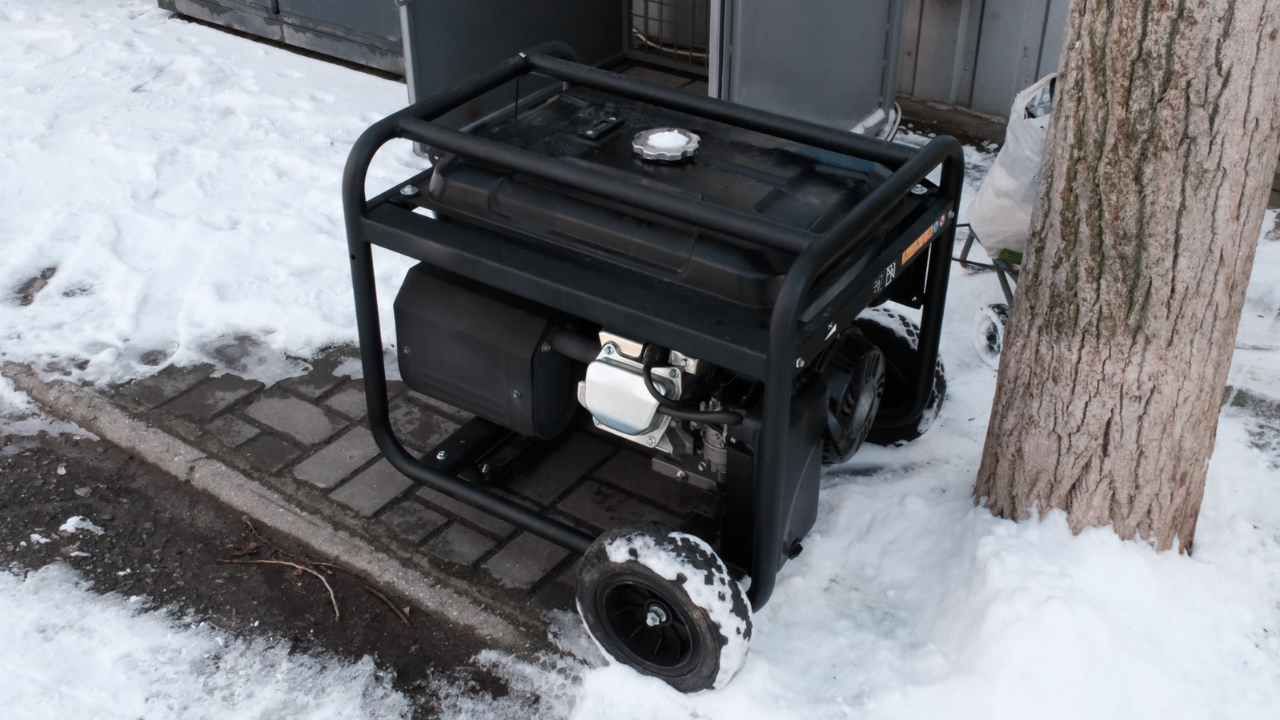
A generator can sit outside in a storm, but it can’t get soaked. Water finds its way into outlets, breaker panels, and the alternator head, then you’re dealing with corrosion and ground faults. Sometimes it runs fine that day and fails the next time, after everything dries and oxidizes.
Set it on a flat pad and get it under something that sheds water, like a canopy or a purpose-built cover made for running, with plenty of ventilation. Never run it in a garage, basement, or near open windows, carbon monoxide is deadly. Aim the exhaust away from doors and soffit vents, and use a CO alarm in the house.
7. Dragging It By The Cord Or Receptacles
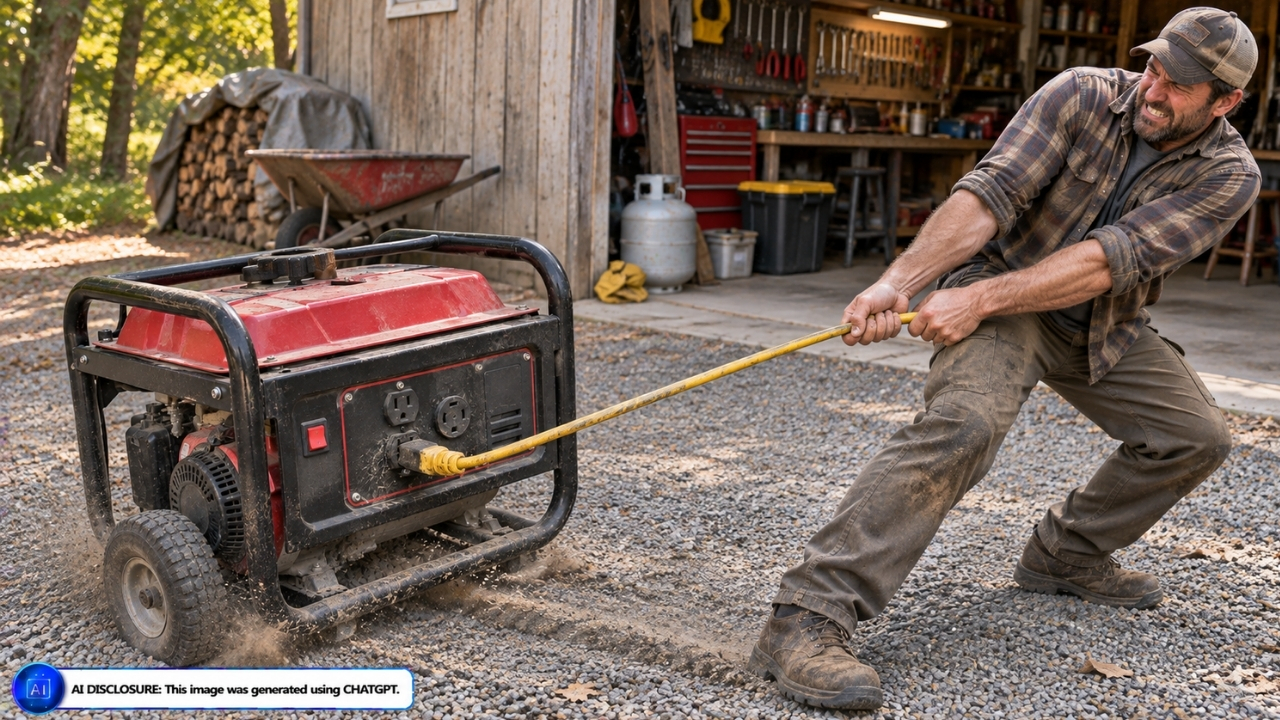
People grab whatever is handy when they’re moving a heavy machine, and that often means yanking on the power cord or the outlet box. The result is loose receptacles, cracked plastic, and wires pulling off terminals inside. Then you get intermittent power and hot plugs that smell like melting insulation.
Move it by the frame handles, or add a wheel kit if yours didn’t come with one. If a receptacle already feels loose, unplug everything and fix it before the next run. If you’re not comfortable opening the end bell or outlet panel, a small engine shop can handle it quick.
8. Storing It With A Dead Battery
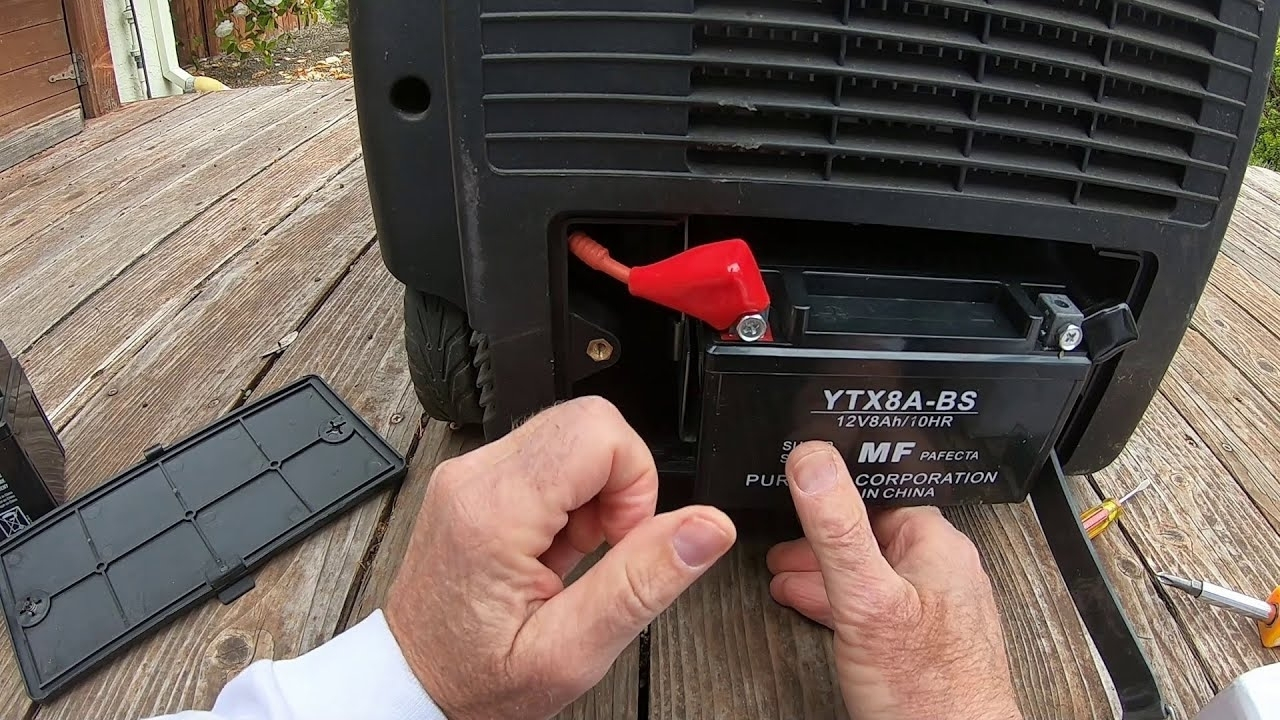
Electric-start models get parked and forgotten, and lead-acid batteries hate that. Let one sit discharged and it sulfates, then it won’t hold a charge when you need it most. You find out at 2 a.m. in an ice storm.
Keep the battery charged with a small maintainer, or start and run the generator often enough that the charging system actually tops it off. Clean the terminals and snug the connections so the starter isn’t fighting voltage drop. If the battery is in a spot that freezes, check it more often because cold kills weak batteries fast.
9. Using The Wrong Extension Cords
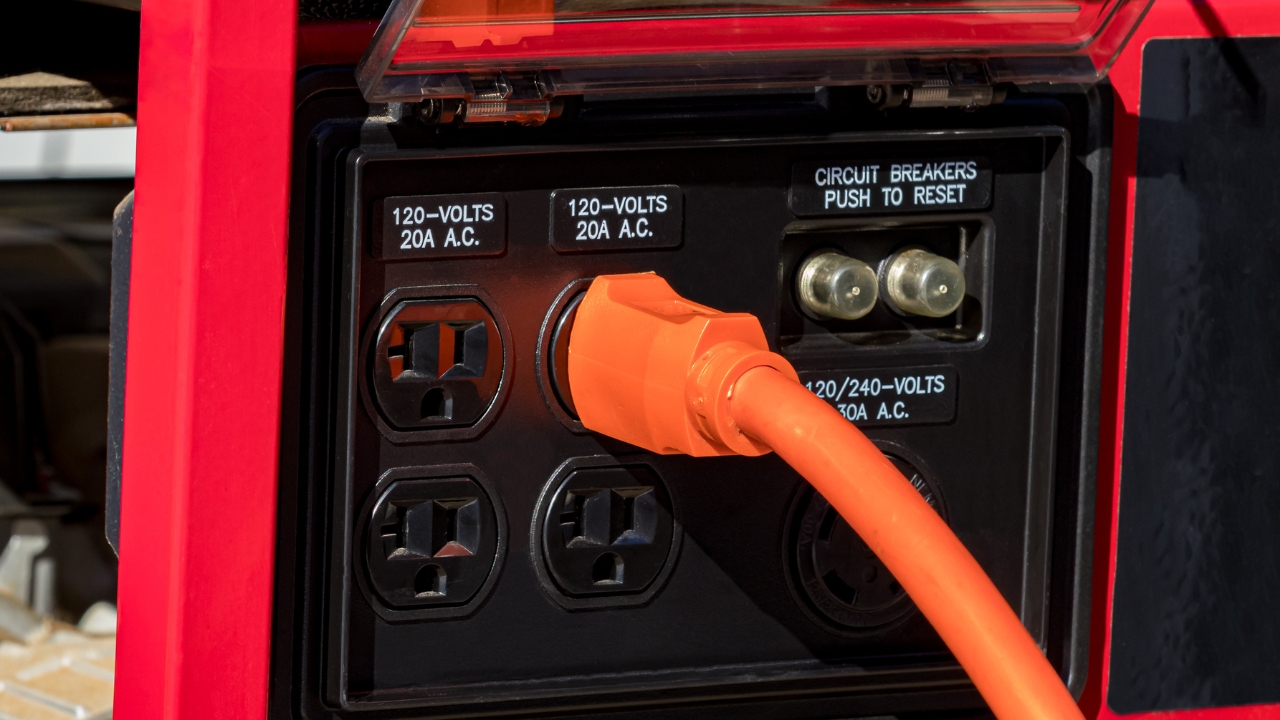
Skinny, long cords waste power as heat. You’ll see dim lights, motors that buzz, and cords that feel warm in your hand. That heat doesn’t just hurt the cord, it makes the generator work harder and can cook the outlet and plug ends.
Use short, heavy cords, 12 gauge for lighter loads and 10 gauge when you’re moving real current or going longer distances. Keep cords fully uncoiled so they can shed heat. If you’re feeding a subpanel or inlet, use a properly sized generator cord, not a pile of household extension cords chained together.
10. Forgetting The Air Filter In Dust Season
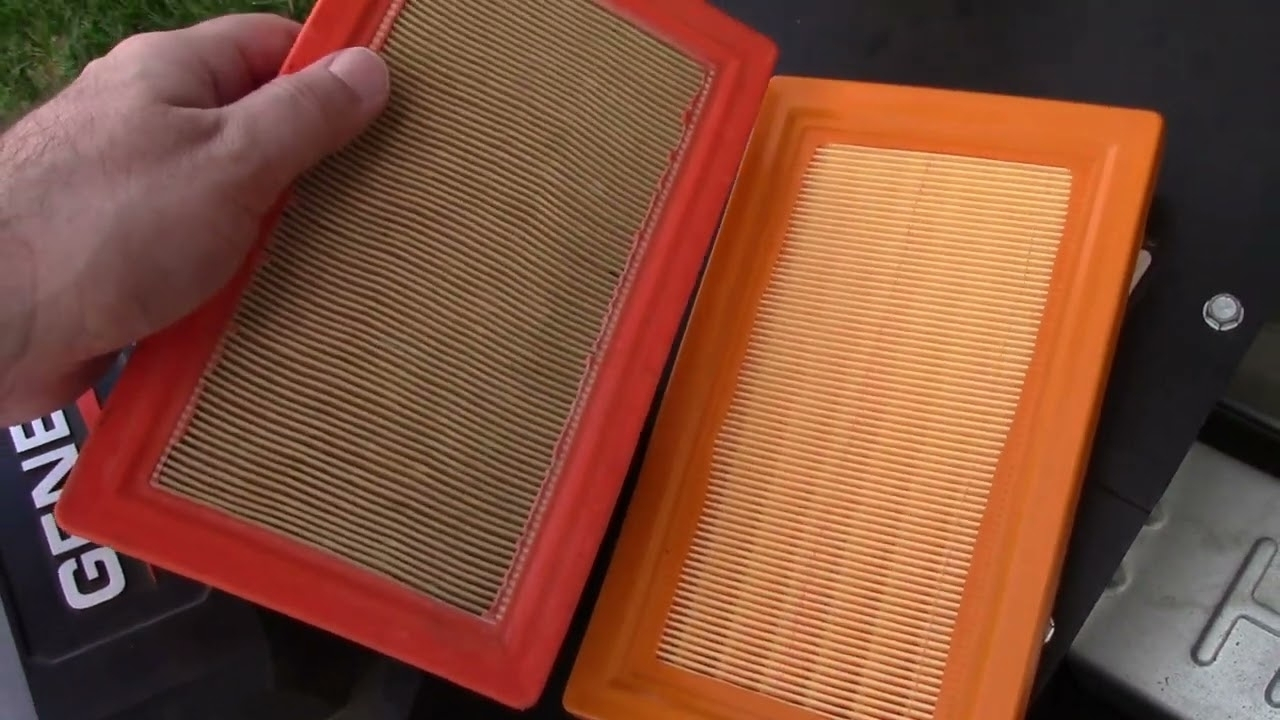
Late summer mowing, harvest, and dry gravel driveways turn the air into grit. A clogged air filter makes the engine run rich and lose power. A torn or missing filter is worse, it lets dust into the cylinder, and that’s slow, expensive wear.
Check the filter more often when you’re running it near chaff, sawdust, or dirt roads. Foam filters need oiling, paper filters need gentle tapping or replacement, not blasting with shop air that tears them. Keep a spare on the shelf, they cost a few bucks and save an engine.
A generator that starts on the first pull is mostly about boring habits done on calm days. Put a reminder on your calendar for a monthly exercise run, keep fuel and oil supplies where you can find them, and fix the small stuff before the next outage makes everything feel urgent.
Like Fix It Homestead’s content? Be sure to follow us.