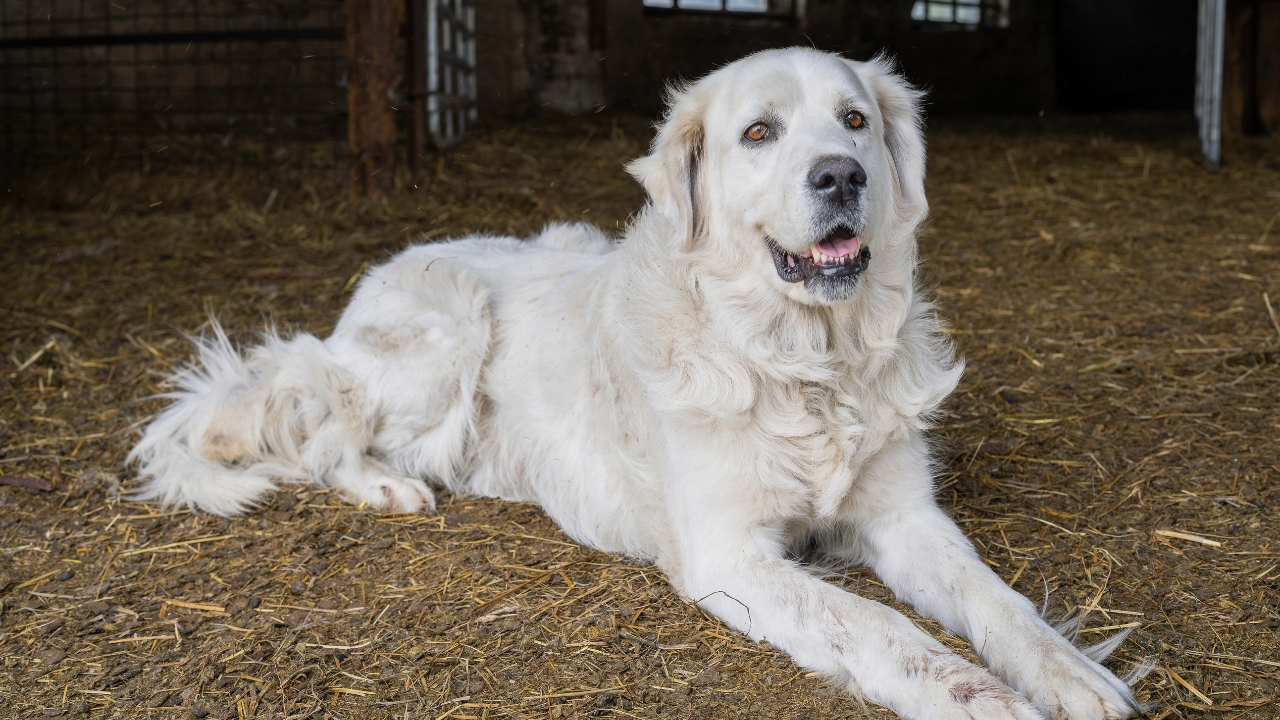
10 Winter Habits That Keep a Barn Dog Healthy
Photo credit: KajaHiis/Shutterstock.com
Cold snaps and long nights change how a barn dog lives, even if the job stays the same. Winter problems tend to show up as little things you shrug off, until you’re thawing a hose at 6 a.m. or dealing with sore paws and a cranky dog. A few steady habits keep small issues from turning into a vet visit, a wrecked kennel, or a dog that stops wanting to work.
1. Feeding A Little More At Night

In winter, a working dog burns fuel just staying warm. If ribs are starting to show or the dog is begging hard, bump the calories a bit and watch body condition week to week. Split food into two meals if you can, with the larger one in the evening so the dog has energy through the coldest hours.
Don’t just dump extra kibble and call it good. Keep treats honest, and adjust down during warm spells or if the dog is stuck inside for a few days. If weight drops fast, appetite changes, or the coat goes dull, call a vet, because cold weather can hide a real problem.
2. Keeping Water Liquid All Day
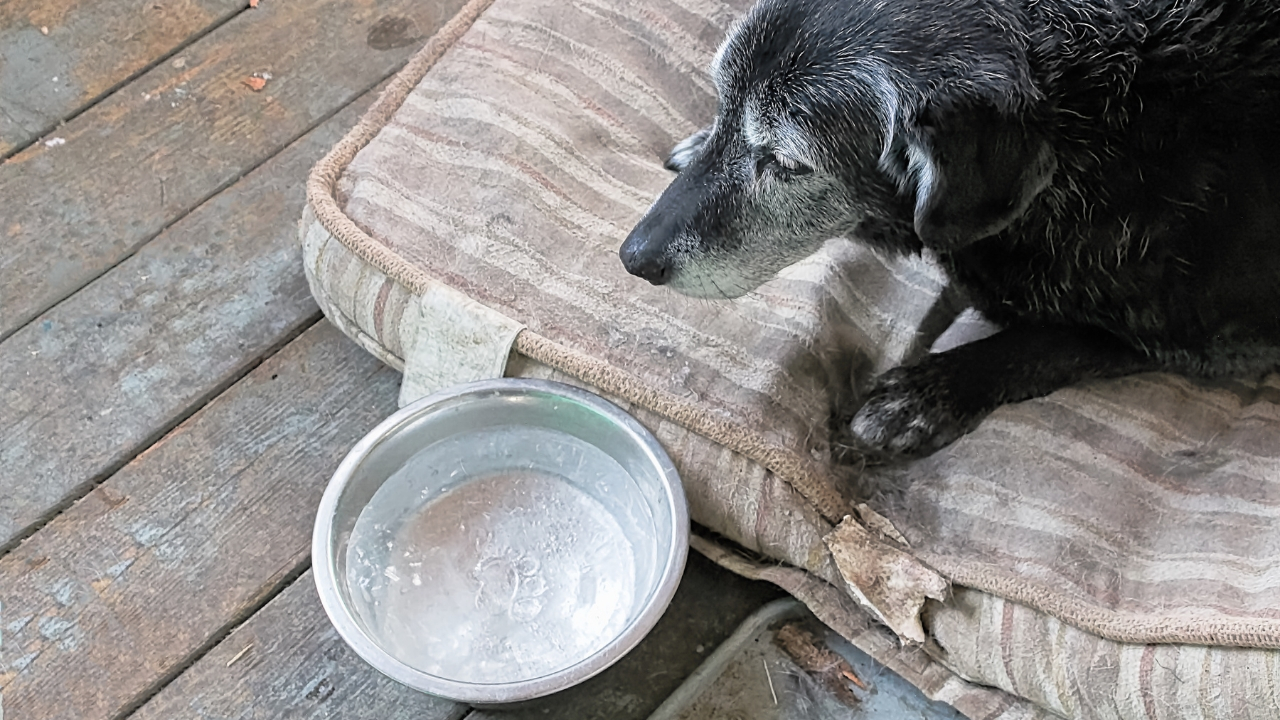
Dehydration sneaks up in winter because the dog isn’t panting and you aren’t thinking about water. Ice on top of the bowl means the dog either drinks less or works at it until teeth and lips are sore. Swap water morning and evening, and scrub slime off the bowl so the dog doesn’t turn up its nose.
A heated bowl can be worth it if you’ve got safe power and a dog that won’t chew cords. Run the cord where it’s protected, use a GFCI outlet, and check it daily for nicks. If power is sketchy, a heavy rubber tub and frequent refills beats a fancy setup that fails mid-freeze.
3. Bedding That Stays Dry, Not Pretty
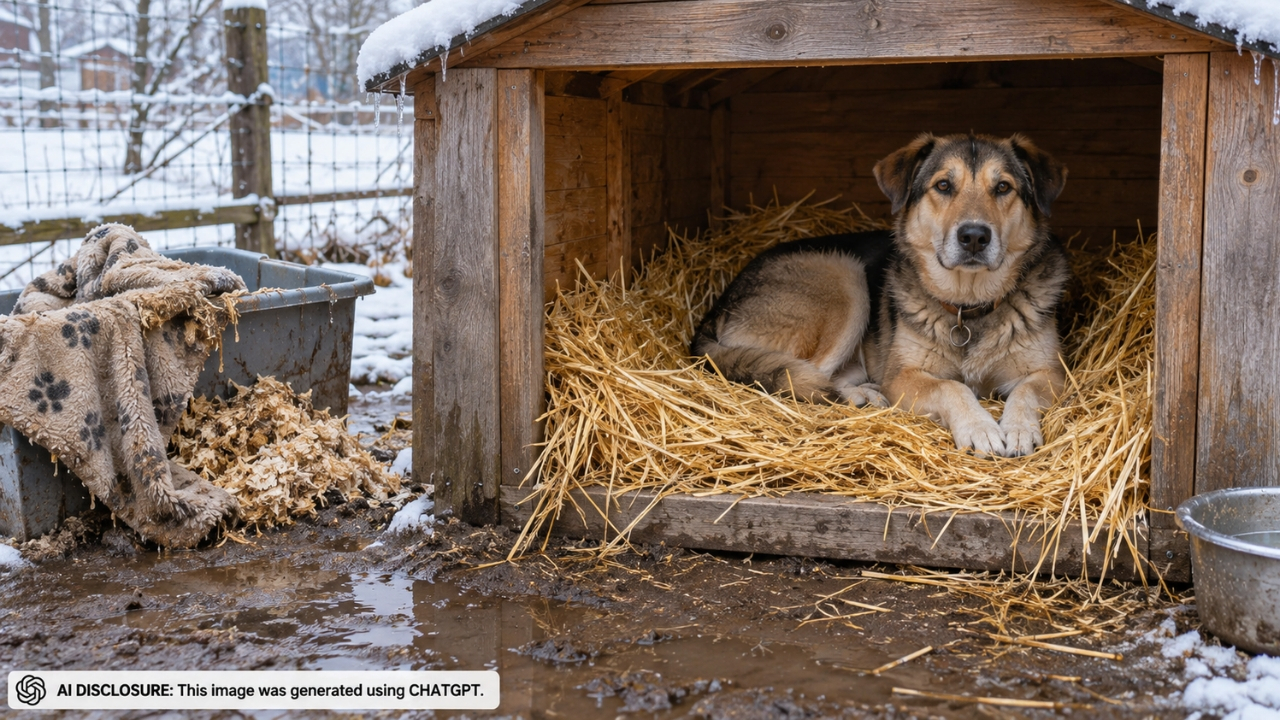
Wet bedding is a heat thief. Straw works well because it traps air and the dog can nest into it, but only if you keep it dry and deep. Toss out damp spots before they sour the whole kennel, and start over after a thaw, because that’s when everything turns to swamp.
Wood shavings look tidy, but they pack down and hold moisture in a way straw doesn’t. Fleece blankets are fine for an indoor crate, but outside they turn into a frozen sponge unless you swap them constantly. If you want washable bedding, use it only where it will actually get washed.
4. Blocking Wind Without Sealing Airflow
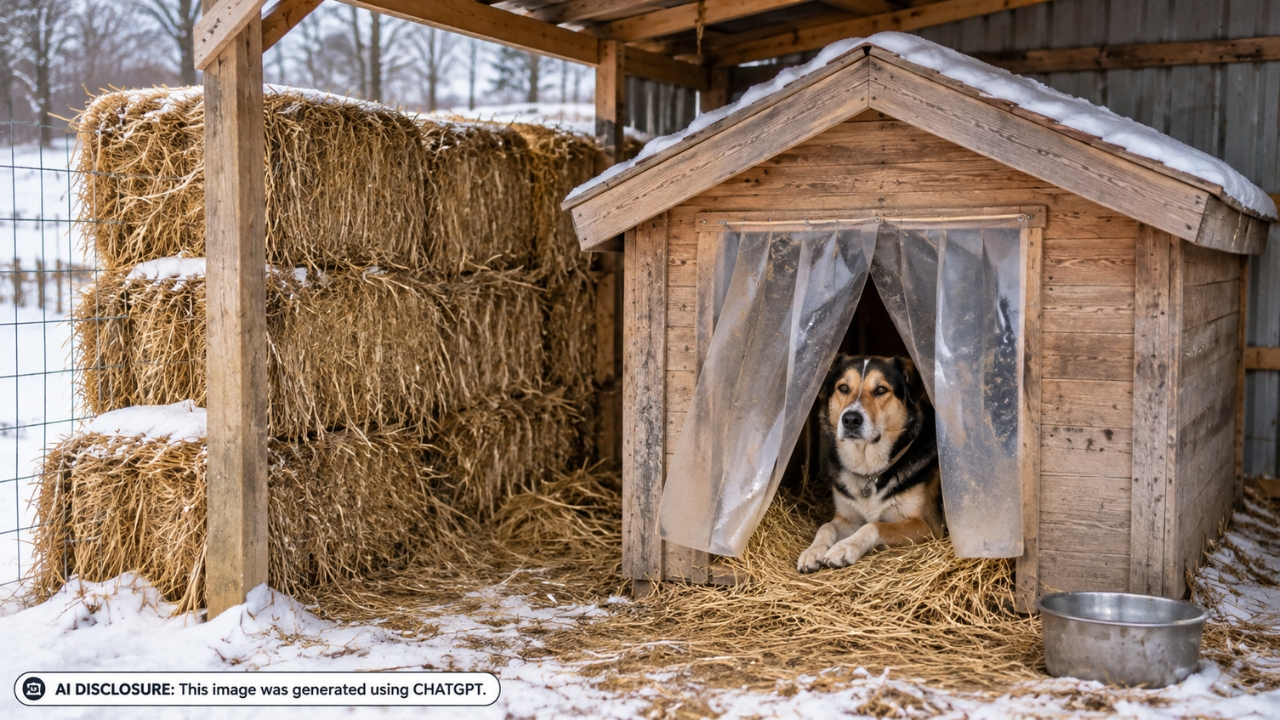
Wind cuts through a barn aisle and pulls warmth right off a dog’s body. Hang a flap over the doghouse door, stack square bales as a windbreak, or set the kennel so the opening faces away from the prevailing wind. You’ll notice the difference on the first hard north wind.
What you don’t want is a tight, sealed box with no fresh air. Stale, damp air makes coughing more likely and grows funk fast. Give the dog a draft break, not a plastic-wrapped cave.
5. Checking Paws After Every Ice Walk
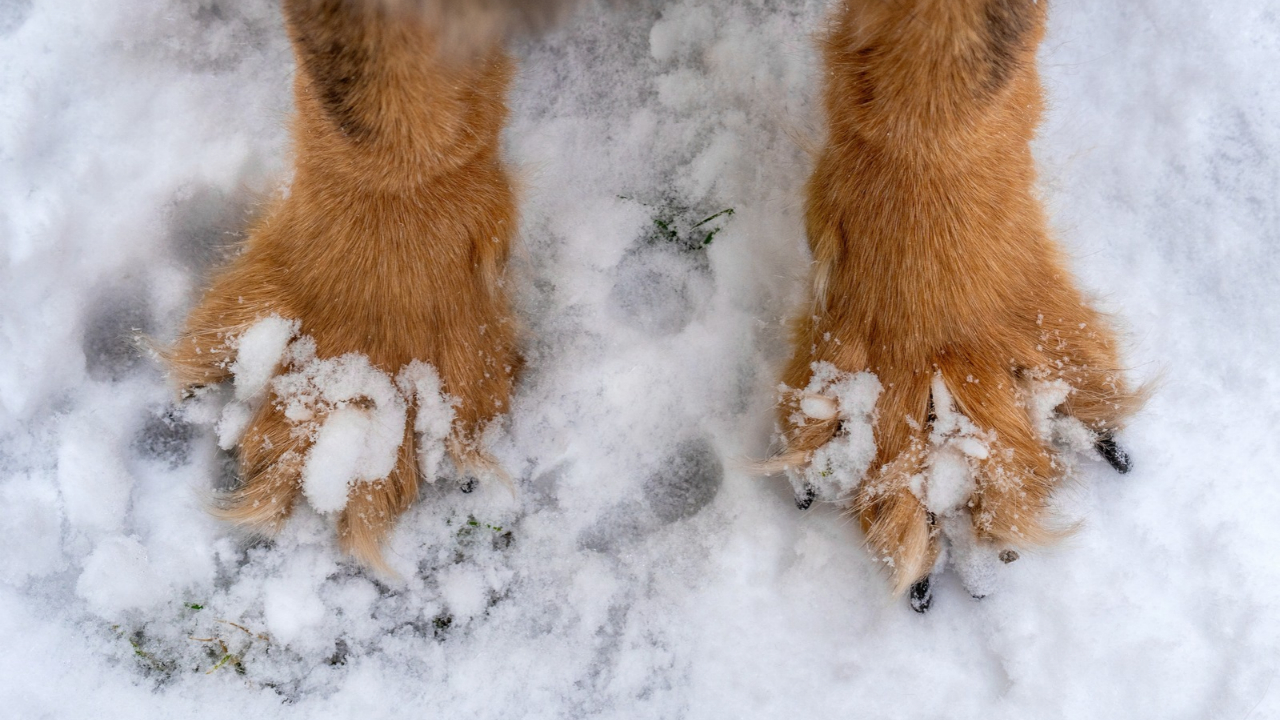
Ice balls between toes and crusty snow packed into pads can make a tough dog limp like it stepped on a nail. Take 30 seconds after chores to look at each foot, especially if the dog runs through slush, manure, or gravel. If you see cracks, redness, or the dog keeps licking one paw, deal with it that day.
Skip the scented “spa” balms. Plain paw wax can help before turnout, and trimming excess fur between pads reduces snow packing, but don’t go digging with scissors if you can’t see what you’re doing. If there’s swelling, bleeding, or the limp lasts into the next morning, call a vet.
6. Keeping Salt And Antifreeze Locked Up
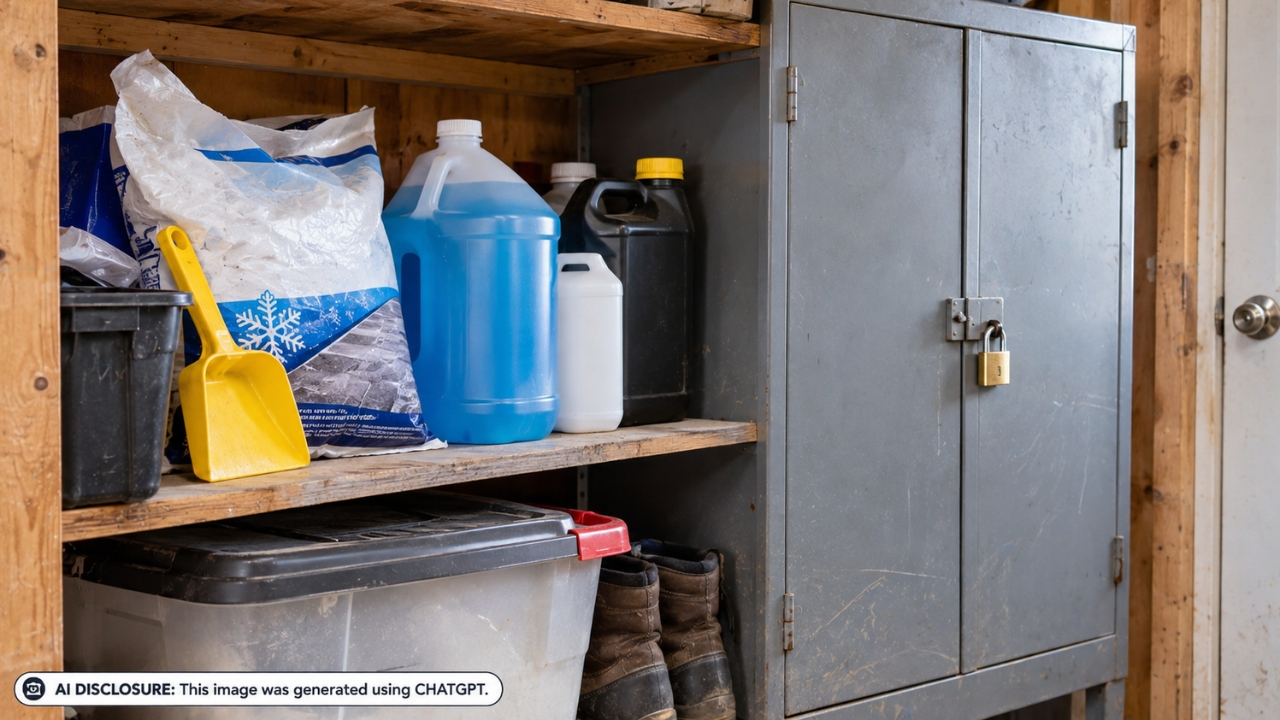
Winter is when toxic stuff ends up right where a curious dog can reach it. Leaky jugs of antifreeze, spilled de-icer, and open salt bags in the mudroom are a bad mix with a barn dog that licks paws and eats weird things. Store it all up high or behind a latched door, and clean drips right away.
Even “pet safer” ice melt still isn’t dog food. If the dog tracks de-icer onto bedding, shake it out and replace the bedding. If there’s any chance the dog got into antifreeze, don’t wait and see, call an emergency vet.
7. Using Light For Better Evening Checks

Dark comes early, and that’s when you miss problems. A headlamp by the back door makes it easy to check eyes, ears, paws, and coat without wrestling the dog under a single dim barn bulb. It also helps you spot a loose board, sharp wire, or broken latch before the dog finds it the hard way.
This is also when you notice weight loss. Hands on ribs tells you more than a quick glance in winter coat.
8. Moving The Dog Before It Gets Stiff
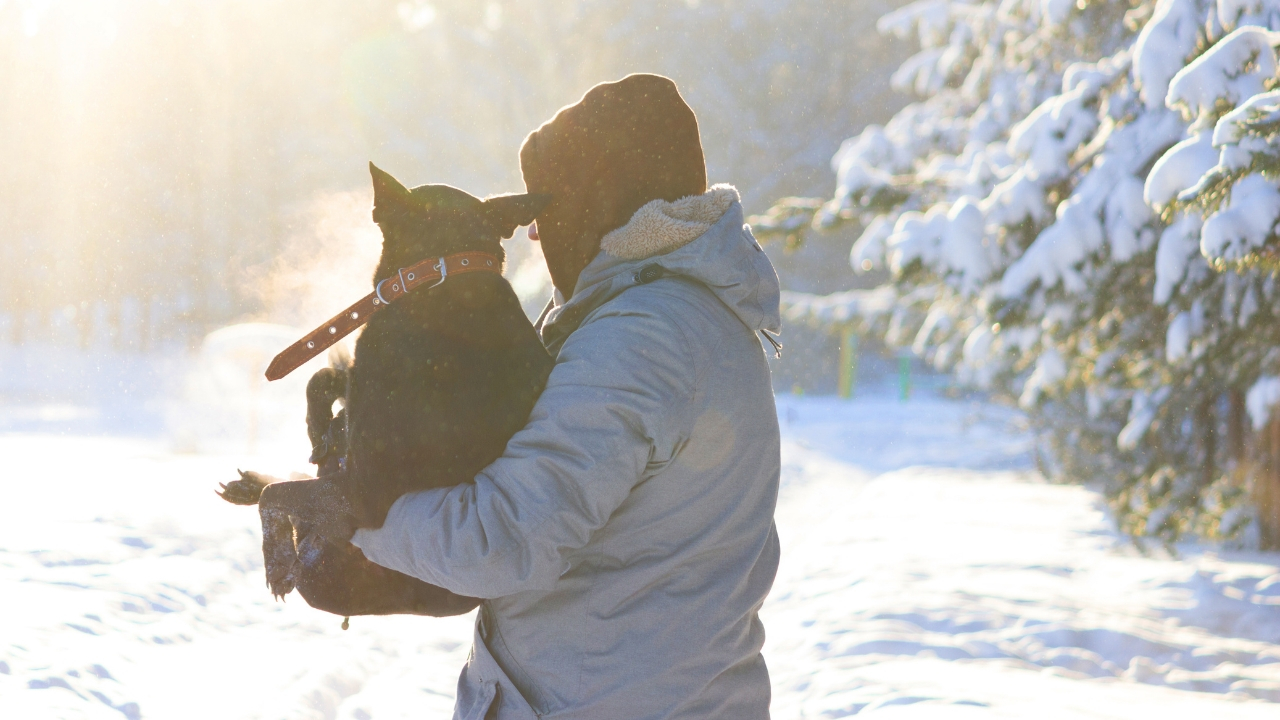
A barn dog can go from nonstop motion to long stretches of waiting around when the weather turns mean. Stiff joints show up after the dog stands up and takes those first few short, tight steps. Build in a couple short walks during chores, and don’t make the only exercise a full-speed run on frozen ruts.
Older dogs need a slower warm-up and a dry place to rest off cold concrete. If you use a coat, use it for thin-coated dogs, seniors, and dogs that stand around watching, not the ones already sweating through chores. The cheap option is fine here, a basic, well-fitting dog coat beats an expensive one that rubs shoulders raw.
9. Fixing Drafty Kennel Floors And Doors
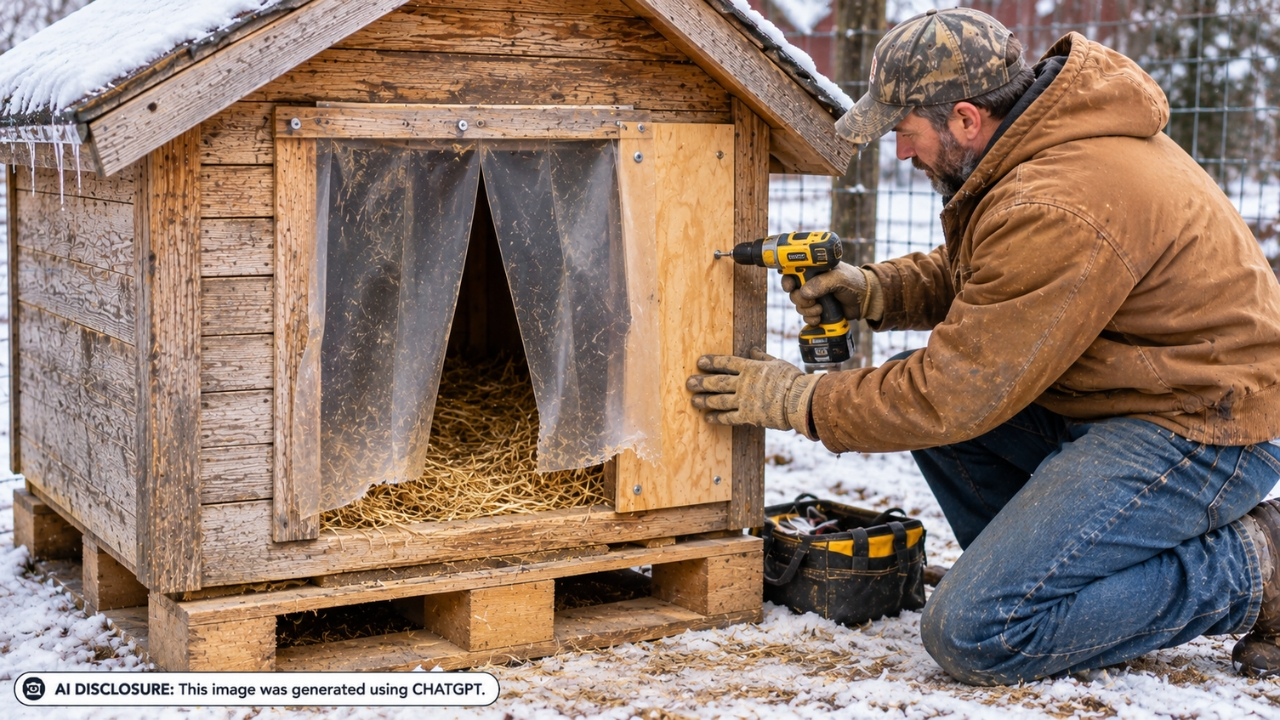
Most doghouses fail at the floor. Cold wicks up from frozen ground, and a dog can’t fluff bedding enough to beat it. Set the house on pallets or 2×4 runners, and add a thick, solid floor so bedding stays dry and off mud.
Doors matter too. A warped door flap or a chewed corner turns the inside into a wind tunnel, and the dog will start sleeping outside the house instead. Patch chew spots with a simple screwed-on sheet of plywood or replace the flap before the next cold front.
10. Keeping Parasite Control On The Calendar
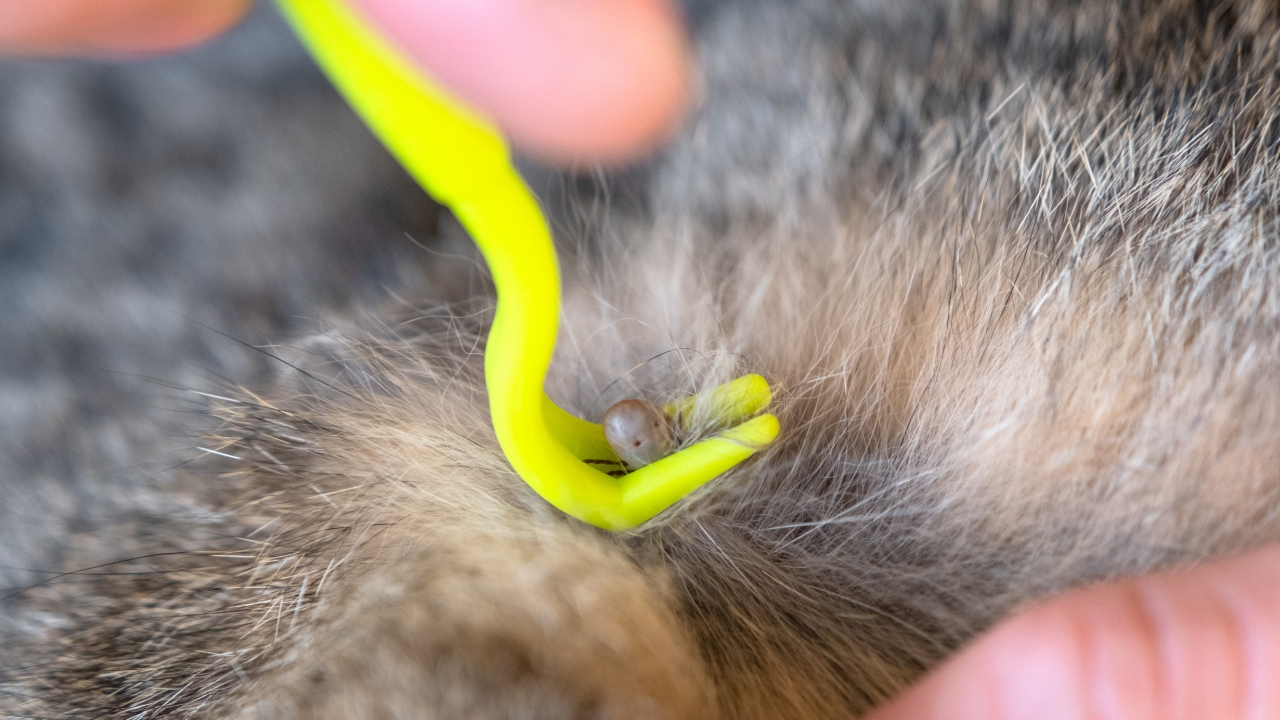
Winter makes people slack on fleas, ticks, and worms because bugs “aren’t out.” Some parasites don’t care about snow, and barn dogs find mice, manure piles, and warm spots where pests hang on. Stay on whatever schedule you and your vet picked, and mark it on the feed room calendar so it doesn’t drift.
The odd exception is a deep-freeze stretch where insects are truly gone and your dog is mostly indoors. Even then, don’t guess if your area stays mild or you’ve got livestock and wildlife traffic. It’s a lot cheaper to prevent than to chase an infestation in February.
Winter care works best when it’s boring and consistent. Keep a small “dog kit” by the barn door with a towel, a spare bowl, a headlamp, and a couple basic tools so you actually fix the little stuff while it’s still little. The dog will do its job either way, but these habits keep it comfortable enough to keep doing it.
Like Fix It Homestead’s content? Be sure to follow us.