New Homeowner Finds the Neighbor Has Been Mowing and Maintaining a Strip of the Property — Then the Neighbor Says They Have Treated It as Their Own for Over a Decade
Photo credit: AI-generated image created using ChatGPT. Illustrative only.
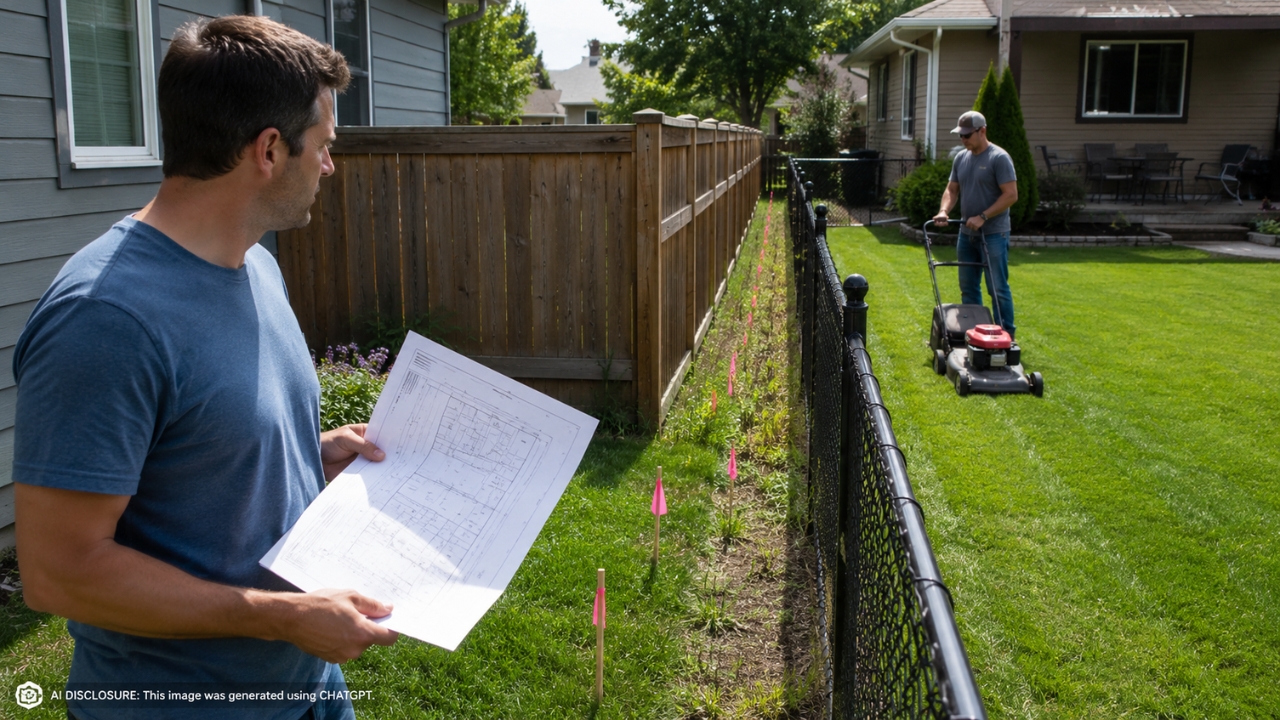
Six months into owning their first home, a new homeowner thought they’d lucked into a quiet street and a friendly older neighbor. Then came the weekly pattern: every time the neighbor mowed his own lawn, he would make a very deliberate pass two feet onto the new owner’s side—same strip, same stopping point, like there was an invisible border only he could see.
In the original post, the homeowner said it wasn’t an accident or a wide turn with the mower. The neighbor didn’t wave, didn’t mention it, didn’t joke about “helping out.” He just cut that exact slice and stopped, every time, at the same invisible line.
The first sign was easy to brush off
At first, the homeowner assumed it was simple kindness—an older guy doing what older guys sometimes do: keeping things tidy and neighborly. A two-foot strip of grass doesn’t feel like a threat when you’re busy figuring out a new house, new routines, and all the small surprises that come with moving in.
But the consistency made it feel less like generosity and more like habit. The neighbor wasn’t drifting over while mowing. He was intentionally crossing the property line for one pass and then stopping with precision, as if he’d done it a thousand times before.
That’s the kind of detail that sticks in your brain. It’s not the size of the strip; it’s the certainty.
Then the homeowner checked the paperwork
Instead of guessing, the homeowner did what a lot of people don’t bother to do: they pulled out the survey from the home purchase. The result wasn’t ambiguous. That two-foot strip was “100 percent” on the homeowner’s property, with no shared boundary area, no easement, no weird carve-out that would explain the neighbor treating it differently.
That should have been the end of the mystery. If the survey says it’s yours, it’s yours.
But property lines on paper and property lines in daily life are two different things. Some neighborhoods run on handshake agreements from ten or twenty years ago. Some run on whoever has been maintaining what, and for how long, without anyone challenging it.
A tiny strip of grass can turn into a big deal
The homeowner said the mowing itself didn’t really bother them. What bothered them was what it implied: does the neighbor genuinely think that grass belongs to him? Is he testing boundaries? Is he setting up a “this has always been mine” story if it ever comes up?
This is where the tension creeps in for new homeowners. You don’t want to be the person who moves in and immediately starts policing everything. At the same time, you don’t want to ignore something that turns into a bigger problem later—especially when the behavior is so specific it feels intentional.
And once you’ve noticed something like this, it’s hard to unsee it. Every mow becomes a reminder that someone else is acting like they have a say over your land.
“Free mowing” versus “he’s claiming it”
Even the homeowner’s friend group split the way people always split on these stories. Some saw it as a bonus: free lawn care, no harm, don’t create drama. Others saw it as the first step in a slow-motion boundary push: today it’s two feet, next year it’s a garden bed, a fence, or a sprinkler line that “accidentally” ends up on the wrong side.
That split is what makes this kind of neighbor behavior so tricky. If the neighbor is simply trying to keep a clean edge near his own yard, confronting him could feel petty. But if the neighbor is quietly treating the strip as his, staying silent can feel like giving permission.
The homeowner’s question was straightforward: is this normal suburban life, or is it something that needs to be addressed now while it’s still small?
Why the neighbor’s “routine” matters more than the grass
A strip of lawn is rarely just a strip of lawn. It’s access, control, and precedent.
If someone treats part of your property like it’s theirs, it can change how future disagreements play out. It can also affect very practical things: where a future fence goes, where landscaping gets installed, who feels entitled to step onto the property, or who thinks they can store things “just for a minute” on the edge of the yard.
It also puts the homeowner in an awkward spot with maintenance. If the homeowner wants to seed that area, water differently, lay down mulch in a bed, or install edging, the neighbor’s mowing pattern turns into interference—an unspoken veto. Even if the neighbor is friendly, the behavior creates a silent expectation: “This strip is part of my routine.”
And routines are hard to break, especially ones that have been happening long before a new buyer showed up.
The next move is a conversation nobody wants
The homeowner hasn’t described a blowup or a formal dispute—at least not yet. The stress here is in the pause before the confrontation, when you’re deciding whether to bring it up and how.
There’s also the social math: if you say nothing, you keep the peace but may feel like you’re letting something slide. If you say something, you might get an easy explanation—or you might learn the neighbor has been mentally counting that strip as his for years and doesn’t like being challenged.
The homeowner’s best clue is the precision. People who are casually helping don’t usually stop on a dime at an “invisible line.” People who believe a line exists often do.
For now, the new homeowner is stuck in that familiar first-house limbo: wanting to be friendly, wanting to be smart, and realizing that sometimes the biggest homeowner headaches don’t start with a leaking pipe. They start with a mower blade crossing a line just a little too confidently.