Alaska Homeowner’s New Survey Says the Neighbor’s Retaining Wall Crosses the Line by 14.6 Square Feet — Then He Demands Removal and ‘Compensation’
Photo credit: AI-generated image created using ChatGPT. Illustrative only.
Nothing turns a normal weekend into a full-time stress project like a neighbor’s structure sitting close to your property line. In Anchorage, one homeowner became convinced his neighbor’s retaining wall wasn’t just “close,” but actually over the line—by a measured 14.6 square feet—and he wanted more than a fix. He demanded the wall come out and asked to be paid for it.
The details come from the discussion of Humphrey v. Reges, an Alaska Supreme Court case that reads like a cautionary tale about surveys, boundary assumptions, and how quickly a small strip of land can turn into a five-figure problem.
A wall, a fence line, and a number that wouldn’t let go
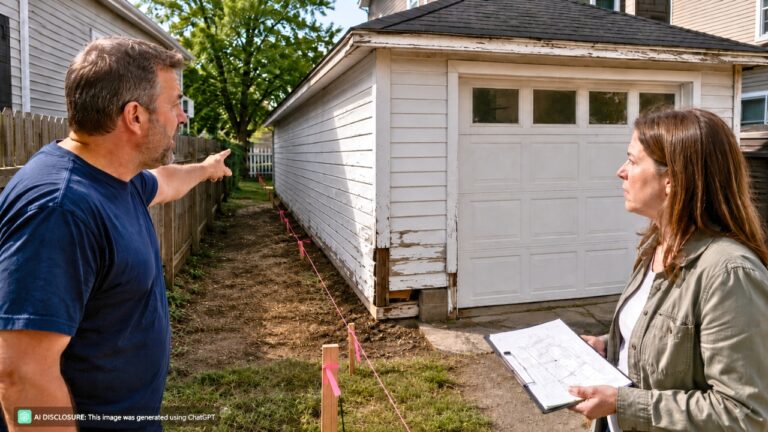
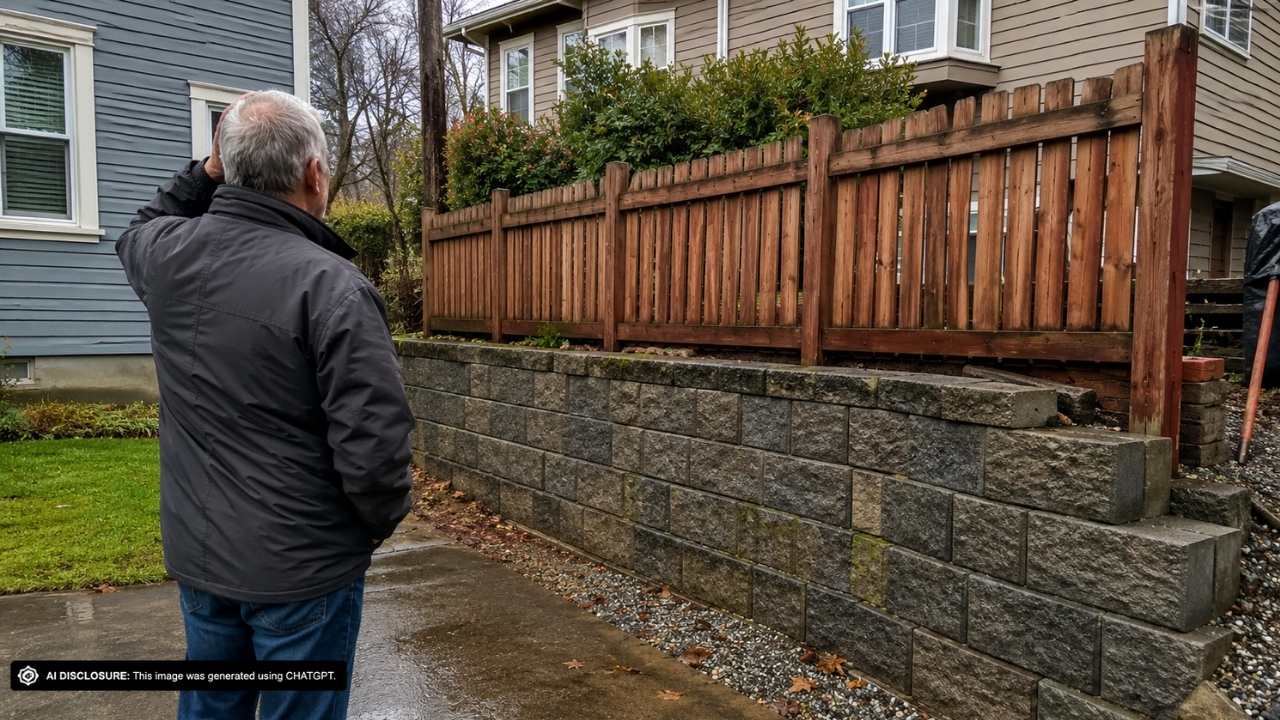
Dion Humphrey owned one lot. Robert and Mala Reges owned the one next door. The flashpoint was a retaining wall and fence line—exactly the kind of thing people stop noticing after the first season unless they’re staring at it every day and thinking, “That’s on my side.”
Humphrey said the Regeses’ retaining wall crossed onto his property by about 14.6 square feet. If you’re picturing a huge bite out of a yard, the testimony later put it in a much smaller frame: an employee involved with a 2023 survey said it looked like about two inches of “overage” along 33 feet of fence line.
Two inches doesn’t sound like much until it’s your two inches, attached to a heavy wall, and you’re thinking about drainage, stability, resale, and the principle of the thing. That’s how these disputes start: you don’t just see concrete—you see a future headache.
When “prove it” becomes the whole fight
The Regeses didn’t just disagree. They denied the wall encroached at all, saying it was fully on their lot. And they also had a backup argument: even if a tiny slice crossed the boundary, they said they’d occupied that strip long enough to gain rights through adverse possession.
At trial, the measurement details got oddly intimate. The survey employee testified that fences commonly straddle property lines and called it unusual to be asked to calculate an encroachment that small. Homeowners who’ve lived next to older fences will recognize that feeling—lots of neighborhoods have “close enough” lines until somebody pays for a survey and suddenly the ground has a new meaning.
Humphrey wasn’t asking for a small adjustment. He wanted removal of the retaining wall and compensation. That’s the kind of demand that takes a neighbor issue and turns it into a full legal war, because removing a retaining wall isn’t like shifting a planter. It’s cost, labor, disruption, and risk.
The paperwork snowball and the court’s patience running out
Humphrey represented himself, and before trial he filed a steady stream of motions—about evidence, about wanting a jury trial, about judicial notice, and even recusal. The trial court repeatedly explained that some filings were untimely or procedurally improper.
But he kept pushing for a jury trial even after the court ruled his request was too late. Eventually, the judge sanctioned him $25. That’s not a life-changing amount, but it’s a bright warning light: the court is telling you, in dollars, to stop ignoring the rules of the road.
Then the bigger issue became less about the wall and more about whether the trial could even function. Humphrey repeatedly interrupted the judge, opposing counsel, and witnesses. He argued while the judge explained procedures and spoke over people despite repeated warnings.
The court tried stepping up responses instead of jumping straight to the harshest option. The judge threatened to bring in judicial officers or move the trial online. Humphrey was moved to videoconference, later allowed back into the process, and then put back on video again when the interruptions resumed.
Getting removed from your own trial (yes, that happened)
Even after being moved to remote video, Humphrey continued interrupting and repeatedly unmuted himself. The judge warned him that continued disruptions would mean removal. Eventually, she followed through and ejected him from his own civil trial.
This is the part that makes homeowners sit up, because it’s not just a legal technicality—it’s the nightmare version of “I’m fighting for my property” turning into “I can’t even stay in the room.”
Humphrey wasn’t completely shut out. He was still allowed to submit a written closing argument afterward, and he could get a recording of what happened once he was removed. But in practical terms, he lost the ability to react in real time as testimony and arguments unfolded.
On appeal, Humphrey argued that removing him violated his due-process right to be heard. The Alaska Supreme Court used the case to answer something it hadn’t decided before: whether a judge can remove a disruptive litigant from a civil trial. The answer was yes—if repeated misconduct makes it impossible to continue fairly.
The justices emphasized the escalating steps and multiple warnings. They said the judge showed “commendable respect and patience” and acted within her authority.
The result: the wall stayed, and the bill came due
When the dust settled, Humphrey lost on the core property issue. The trial court found the retaining wall was entirely within the Regeses’ property. And even if there had been a slight encroachment, the court ruled the Regeses had continuously occupied the disputed strip long enough to establish rights through adverse possession.
The court also awarded them a prescriptive easement over any portion of Humphrey’s property underneath the wall and fence. For homeowners, that phrase matters: it’s the legal system essentially formalizing continued use, so the argument doesn’t just linger forever.
Then came the financial gut punch. Because the Regeses were the prevailing parties, the court ordered Humphrey to pay $37,566.70 in attorney’s fees. That number changes the story from “neighbor dispute” to “major household financial event.”
He appealed other issues too, but the Supreme Court said most went nowhere because he failed to adequately brief them. Even self-represented litigants still have to lay out legal theories and support them with enough authority and explanation for the other side and the court to respond.
The homeowner reactions write themselves
If you’ve ever watched a property-line argument play out, you can predict the practical reactions people have to a case like this. First: get proof, but understand what the proof is really saying. An alleged 14.6-square-foot encroachment that gets described in testimony as roughly two inches over 33 feet is the kind of detail that can inflame a dispute while still being hard to “feel” on the ground.
Second: once lawyers are involved, the money meter is running whether you’re right or wrong. Asking for removal and compensation puts the other side in a position where “let’s just be neighborly” stops being an option, because they’re now defending the wall, the land, and the precedent.
And third: court is not a kitchen-table argument. This case shows how quickly conduct can become the story, and how badly that can backfire—up to and including being removed from your own trial.
In the end, the wall stayed put, the boundary finding went against the homeowner who sued, and the attorney-fee award landed like a second disaster after the first. For anyone staring at a fence line and thinking about ordering a survey, it’s a reminder that the real danger isn’t always the concrete—it’s how expensive it gets once the dispute hardens into a legal position neither side can afford to abandon.
Like Fix It Homestead’s content? Be sure to follow us.