Homeowner Asks Who Pays to Trim a Neighbor’s Seventy-Five-Foot Tree That’s Grown Over the Fence for Twenty Years — Then the Neighbor Sells the House Before the Question Is Ever Settled
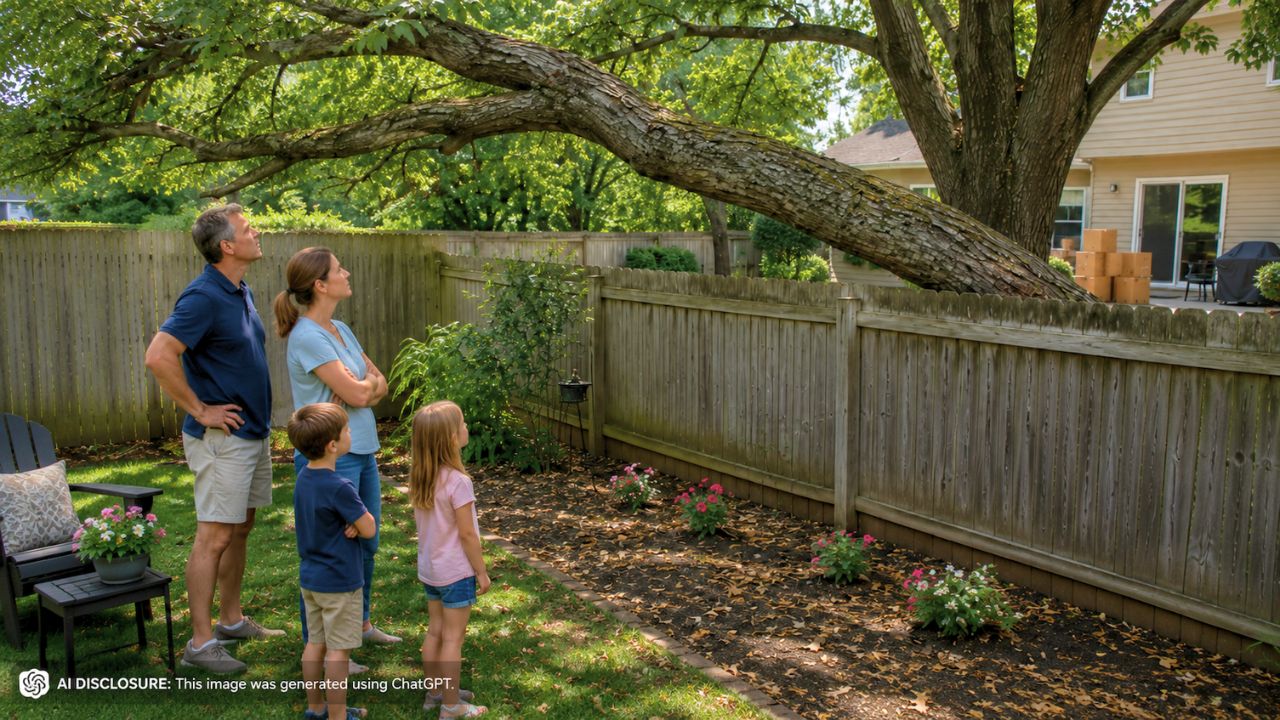
Photo credit: AI-generated image created using ChatGPT. Illustrative only.
It starts as a little extra shade, a few leaves over the fence, the kind of thing you ignore because you’ve got your own list of weekend chores. Then one day you look up and realize the “little” problem is a 75-foot tree and a huge limb that feels like it’s moved in with you.
That’s where one homeowner found themselves in the original post: a massive branch—estimated at around 30% of the tree’s volume—now hanging over their yard after two decades of growth. The branch is shading out the annuals they try to plant every year, and every fall it dumps what they described as an “unholy mess” across their side of the fence.
A tree planted “not that far” from the line, and then time did what it does
The tree wasn’t a mystery. The neighbor planted it roughly six feet from the property line about 20 years ago, close enough that the homeowner could see where this might end up if nobody stayed on top of trimming.
But trees grow quietly. Year after year the canopy creeps outward, and unless you’re paying for regular pruning—or you’re the kind of neighbor who loves talking about branches at the mailbox—it’s easy to let it slide. Now it’s not just a few twigs overhanging the fence. It’s a major limb that changes the light in the yard and changes the workload on the ground.
The day-to-day cost wasn’t the leaves—it was losing the yard they wanted
The homeowner wasn’t complaining about aesthetics. They wanted to grow annuals, and the shade from that giant branch is killing them off every year. That’s not just frustrating; it turns gardening into a repeating expense with nothing to show for it.
Then comes the cleanup. A big overhanging limb can turn one yard into the neighborhood’s collection tray, piling up leaves, small branches, seed pods—whatever the tree drops in that season. Even if you don’t mind raking, there’s a difference between normal fall yardwork and being responsible for the consequences of a tree you didn’t plant.
At a certain point it stops feeling like “nature” and starts feeling like you’re maintaining someone else’s landscaping decision.
The question everyone eventually asks: who pays for the arborist?
Once the homeowner decided they wanted the big branch gone, the next obstacle wasn’t the saw—it was the bill. They weren’t talking about a quick DIY trim with a ladder. This is a 75-plus-foot tree with a huge limb, the kind of job that sends most people straight to an arborist.
And that’s where the tension sits: is it the tree owner’s responsibility because the tree is rooted on their property, or is it the neighbor’s responsibility because the limb is over their yard?
That question matters because a professional trimming on a mature tree isn’t usually cheap, and it’s not something you casually schedule without knowing whether you’re about to eat the whole cost. It also matters because removing a limb that large can feel personal, even when it’s not. One person sees it as reclaiming their yard; the other might see it as someone hacking up their tree.
The homeowner’s post also hints at something else: they’re already irritated at how this got to this point. When annoyance meets a four-figure-feeling project, everybody starts keeping score.
Then the neighbor sells the house, and the timing gets awkward fast
Just as the homeowner is trying to figure out how to handle the trimming, the neighbor sells the home. The new owner is moving in within days, which adds a whole new layer to a problem that was already delicate.
Instead of a long-running neighbor relationship—where you can at least say, “Hey, we’ve been dealing with this for years”—now it’s a first impression. The homeowner doesn’t want to greet the new person on the block with an expense discussion, especially one that could sound like a demand.
But the branch didn’t get put on hold because there’s a moving truck in the driveway. The shade still blocks the garden. The fall mess is still coming. And the longer the homeowner waits, the more it looks like they’re letting the issue ride until it becomes a bigger argument.
The sale also raises a practical question: if the previous neighbor was the one who planted the tree and let it grow, does that history matter now that there’s a new owner? The tree—and the branch—stayed. The relationship didn’t.
Most homeowners who’ve been here focus on two things: property rights and not killing the tree
When people talk about overhanging branches, the advice usually narrows to a few practical points, and you can hear those concerns hiding inside the homeowner’s question.
First: the difference between what you want to do and what you’re allowed to do. A lot of homeowners believe you can trim anything that crosses into your yard, but trimming “anything” and trimming a limb that’s 30% of the canopy are two different moves. One is routine maintenance. The other could change the tree’s health and shape, and if it goes badly, it can turn into a bigger, uglier problem than some dead annuals.
Second: the risk. Even if the goal is simple—get the shade off the garden—big cuts high up are where accidents and property damage happen. The homeowner is already thinking “arborist,” which is a sign they’re taking the scale seriously. A mature tree doesn’t forgive mistakes, and neither do roofs, fences, or parked cars.
And third: paperwork and timing. With a new neighbor moving in, anything verbal can get fuzzy fast. If there’s going to be a shared plan or a shared cost, most experienced homeowners prefer it in writing, even if it’s just a straightforward agreement about what’s being cut, who’s hiring the professional, and who’s paying.
The branch is still there, and the next conversation will set the tone
For the homeowner, the frustration is obvious: this tree didn’t become a behemoth overnight, and they feel like they’ve been living with the consequences of a choice made on the other side of the fence. But the timing couldn’t be worse. The neighbor who planted it is gone, and the new owner is about to walk into a problem they didn’t create, either.
That’s the uncomfortable truth about property drama—sometimes nobody feels responsible, even when the issue is real and hanging right over your yard. The homeowner’s garden plans, their cleanup, and their sense of control over their own space are all tied up in a single limb. And now, the first “hello” to the new neighbor might end up being, “We need to talk about your tree.”
Like Fix It Homestead’s content? Be sure to follow us.