Homeowner Puts Up Snow Stakes to Stop a Neighbor From Crossing the Line — Then Learns He Once Ripped Out the Survey Monuments in Front of a Witness and Said He Didn’t Care
Photo credit: AI-generated image created using ChatGPT. Illustrative only.
It started with the kind of boundary creep some homeowners try to ignore: garbage cans on the wrong side of the line, shortcut foot traffic across the yard, even snowmobiles cutting through like it was a shared trail. But once winter hit and the plow problem showed up, one homeowner decided “ignore it” wasn’t a plan anymore.
In an update shared in the discussion, the homeowner described how a few cheap snow stakes turned into the first real “no” the neighbors had heard—and how a casual chat with an elderly neighbor uncovered a much uglier detail: the adjoining owner had allegedly ripped out the iron survey monuments in front of a witness and said he didn’t care.
The first sign was easy to brush off
Before the stakes went in, the pattern was already there. The neighbors were using the yard in small, annoying ways—setting their trash cans onto someone else’s grass on garbage day, walking across the property to reach their shed, and treating the space like a convenient access lane.
That kind of thing can feel petty to confront at first, especially when it’s not one single dramatic act. It’s a drip-drip of entitlement. The homeowner’s list made it sound less like an occasional mistake and more like a routine that had gotten comfortable.
Then came winter. Plowed snow doesn’t just disappear; it piles, freezes, and sits there like a physical record of where someone thinks the boundary is.
Snow stakes: a tiny install with a big message
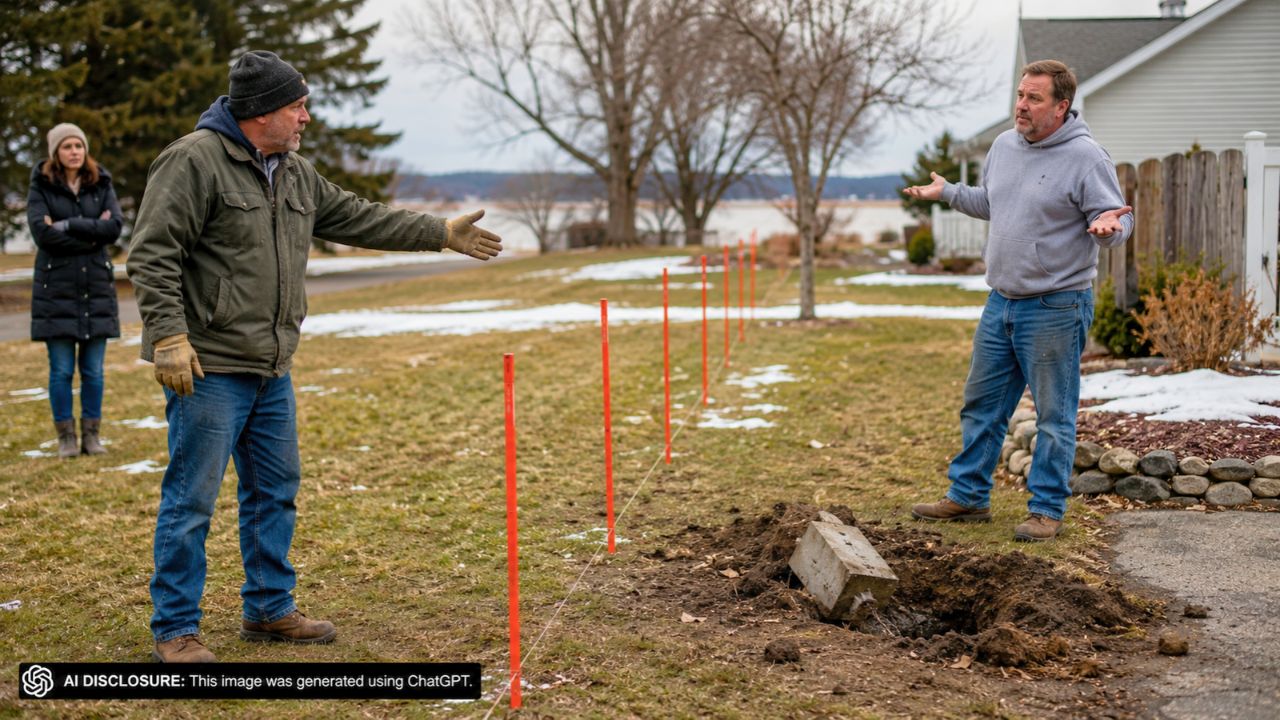
The day after the original post, the homeowner and spouse put up snow stakes along the neighbor’s driveway. The goal wasn’t decorative. It was to stop the neighbor from plowing snow over the line and into their yard.
The timing turned out to be perfect. A major snowstorm hit soon after, and the stakes were already in place. With fences on hold because of the weather, the stakes became a temporary fence—just visible enough to force a choice: stay on your side, or make it obvious you’re crossing.
That’s what made the next garbage day so revealing. The neighbors didn’t stop. They walked all the way around the stakes and placed their cans in the homeowner’s yard anyway, like the boundary marker was a suggestion instead of a line.
The proof hunt began—and it got weird fast
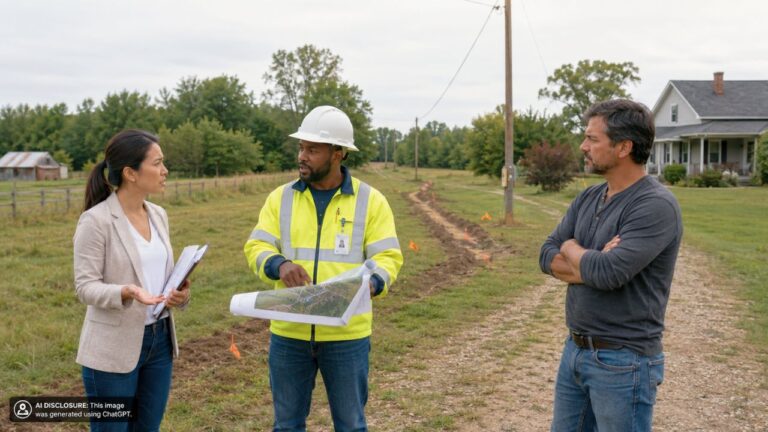
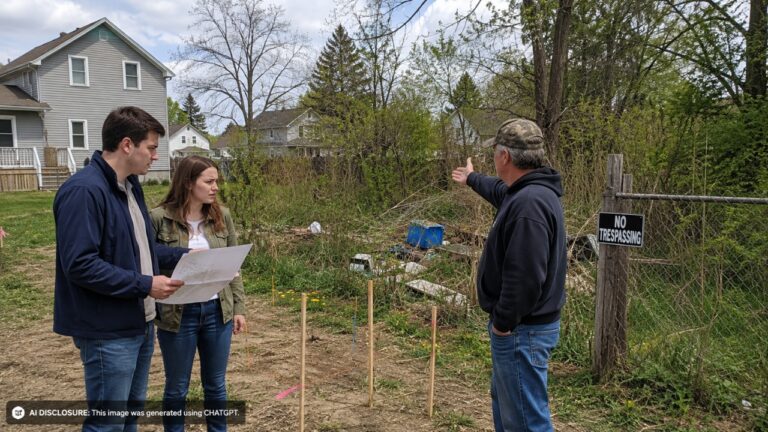
Because the conflict was clearly not going to resolve itself, the homeowners started doing the responsible (and expensive) thing: collecting information. They reached out for quotes on property surveys, trying to get something official to lean on before the argument escalated further.
In the middle of that, they talked to a second neighbor behind their backyard—described as a “very nice spicy elderly woman”—and that conversation flipped the whole story. The older neighbor had a copy of a prior survey from when she cared for a previous resident of the home.
Then came the detail that changes how you hear everything else: she said the adjoining owner had ripped out the iron monuments set by the survey, right in front of her, and said he didn’t care. That’s not a misunderstanding. That’s someone refusing the basic concept of a boundary.
With that survey in hand, the homeowners measured. The result matched what they suspected: their property line ran right up to the neighbors’ fence and shed. Even the neighbor’s gravel driveway appeared to be a few inches into their yard, though the homeowner noted it might have settled over time.
Confrontation, but not with who they expected
After the garbage-can move around the stakes, the homeowner’s husband went over after work and laid out a clear message about property lines and crossing them. It wasn’t a fun conversation, but it sounded like the kind of direct talk that homeowners often try to avoid until they’re fed up.
And then—twist—the person at the door wasn’t even the neighbor. It was a house sitter. The actual owners were on vacation.
That detail matters because it shows how long the behavior had been normalized. The house sitter apparently felt comfortable repeating it too, or at least didn’t see it as a big enough deal to stop. It also meant the message didn’t land where it needed to, at least not immediately.
When the neighbors returned, the husband was outside mulching leaves when the male neighbor came out and confronted him specifically about the snow stakes. The homeowner didn’t witness the exchange firsthand—she was inside with the kids—but she heard yelling.
Afterward, her husband said it was settled: they wouldn’t be coming onto the property anymore.
The shed excuse fell apart once the gate was noticed
One of the strangest parts of the original problem was the shed access. The neighbors were cutting across the homeowner’s yard to get to their shed, as if there was no other way.
But once the confrontation happened, the homeowner noticed something she’d never seen used: a fence panel by the shed that functioned as a gate. It opened directly to the shed. In other words, there was a built-in access point from their own side the entire time.
That detail makes the earlier behavior look less like necessity and more like habit—maybe even a quiet power move. When you have a gate and still choose someone else’s yard, you’re not solving a problem. You’re taking space.
It also tightened the homeowner’s resolve: if there’s no practical need, there’s no reason to “be nice” about ongoing trespass.
People pushed documentation, surveys, and city calls
In homeowner circles, the practical advice tends to be blunt: mark the line, document everything, and get it in writing. This update read like a checklist of those instincts kicking in—snow stakes now, survey quotes, measurements, and bringing in the city where zoning might matter.
The homeowner did contact the city zoning department about the shed, since it was sitting right on the property line. A zoning officer came out to assess it. But that route didn’t produce leverage: because the area was zoned mixed use, there were no setback laws that would force the shed to move. The shed, at least for now, is staying put.
That’s the part that can surprise people who assume “too close to the line” automatically violates code. Sometimes it does. Sometimes it doesn’t. And when it doesn’t, the homeowner is left dealing with behavior instead of buildings.
Still, the mix of a prior survey copy, fresh measurements, and visible boundary markers changed the dynamics. Even without a new fence yet, it sounds like the neighbors finally realized they couldn’t keep acting like the yard was communal.
For this household, winter turned into a forcing function: a few stakes, a storm, and a garbage-day test that exposed how far the neighbors were willing to push. The yelling may have ended the immediate crossings, but the detail about ripped-out monuments hangs in the background—because once you learn someone “didn’t care” about the official markers, you don’t forget it. You just start building your boundaries in ways that are harder to pull out of the ground.
Like Fix It Homestead’s content? Be sure to follow us.