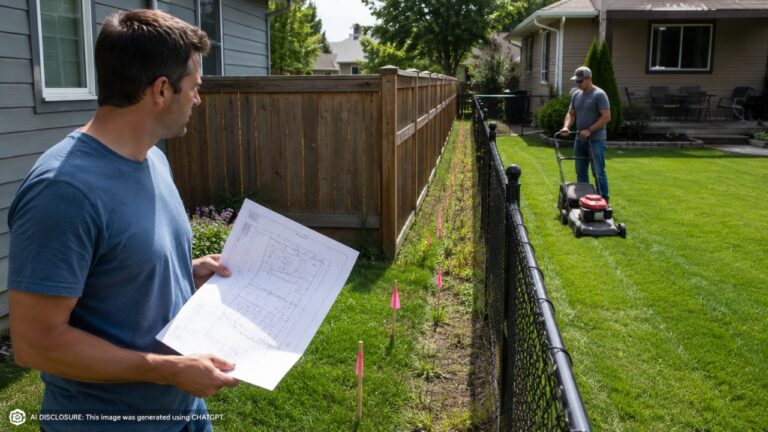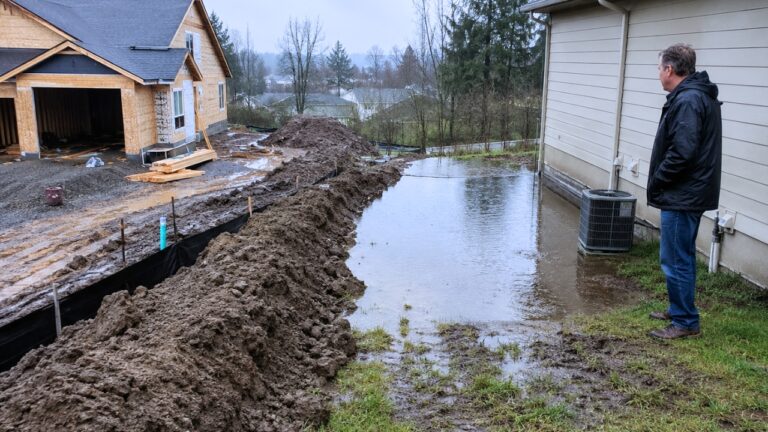
Homeowner Who Let an Old Neighbor Run a Dog Fence Two Feet Onto Her Land Twenty Years Ago Finds the New Owners Piling Pallets and Rebar Against Her House — Then Worries They’ll Try to Claim the Strip for Good
Photo credit: AI-generated image created using ChatGPT. Illustrative only.
Twenty years is a long time for a small favor to sit quietly in the background. For one homeowner, it started with a neighborly “sure” about a dog fence and ended with strangers stacking pallets and rebar against her house—on the sliver of land she technically still owns.
In the original post, she explains that her next-door neighbor once asked permission to run a dog fence a couple feet past the actual line, right up near her house, because a narrow walkway along the boundary would look odd. She agreed back then. Now, after years of dog damage and a change in ownership, she’s worried the new neighbors will treat that strip like it’s theirs permanently—and make her pay dearly if she tries to take it back.
A two-foot favor that turned into a permanent “dog run”
When the first neighbor moved in, the setup sounded simple enough: a side yard next door that the neighbors didn’t use, and a strip of dirt—about two feet wide—that belonged to the homeowner, running up to her house.
The neighbor wanted a place for a dog and proposed building a fence. Either the fence could follow the true line, leaving the homeowner with a tight, awkward passage, or it could shift over those extra couple feet so the fence could run close to the homeowner’s house. The homeowner was younger, more sympathetic, and didn’t love the idea of a random fence parallel to her home, so she allowed it.
That’s how a temporary-friendly agreement turns into a new normal. A fence goes up, the property visually “changes hands,” and after a few seasons, everyone forgets what the paperwork says and starts living by what they see.
The dogs didn’t just bark—they chewed up the house
The fence wasn’t the end of it. It became the start of years of friction tied to the dog run that sat against the homeowner’s side of the line.
She describes the next-door property as “nothing but a problem,” with the dog—and eventually multiple dogs—causing real damage: eating trim and even chewing up phone lines. Those aren’t cosmetic annoyances. Trim damage can become water entry. Chewed lines can become repeated service calls. And once an animal has regular access right next to a structure, there’s always the worry of scratching, digging, and wear that you don’t notice until it’s expensive.
Even if the fence was put up with the best intentions, it positioned the neighbor’s daily life—pets, traffic, mess—against the homeowner’s exterior. Over time, the homeowner wasn’t just sharing a boundary. She was sharing her house wall.
New owners, new behavior: pallets and rebar against the siding
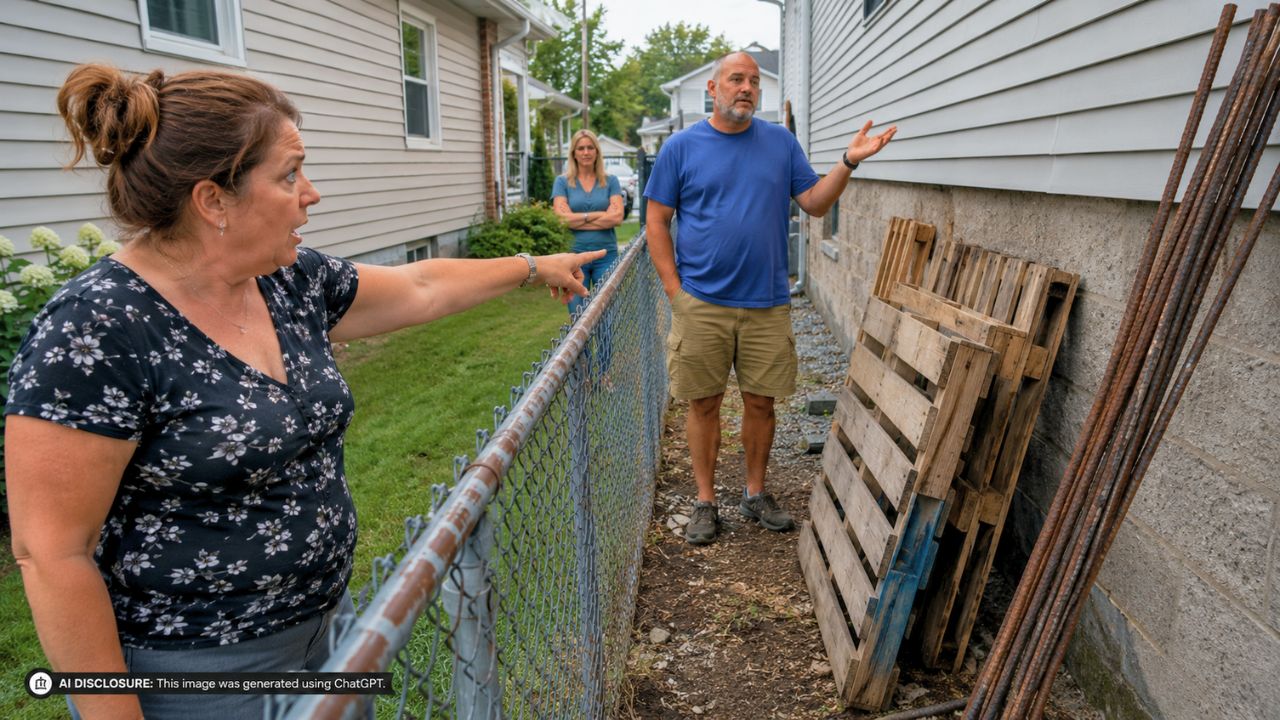
The neighbor sold the house more than five years ago. The new owners, described as a couple with deep pockets, were not interested in the old “friendly understanding.” What the homeowner noticed wasn’t a conversation about boundaries—it was contact with her home.
She says they pile random items against her house: pallets, rebar, and other “stuff” she doesn’t want touching her property. Anyone who’s owned a home knows how quickly that can go sideways. Wood pallets against siding can trap moisture, invite insects, and scuff paint. Metal rebar can scratch finishes, dent trim, and create safety hazards if it shifts. And once the neighbors get comfortable using that narrow strip as a storage lane, it becomes a habit that’s hard to break.
The kicker is that the neighbors “have no idea” it’s not theirs—at least in the homeowner’s view. But from the outside, the fence makes it look like their space. The fence is the story the land is telling, whether or not it’s the true one.
The real fear isn’t today’s mess—it’s tomorrow’s property claim
What’s gnawing at the homeowner isn’t just the pallets. It’s what happens next time the house sells, or when she tries to sell her own place.
She’s worried the neighbors might attempt some kind of “annex” claim—her shorthand for the fear that a long-used strip could become a permanent loss. Even without getting into legal jargon, the anxiety is relatable: if you let someone treat your land like theirs for years, can they eventually argue it’s theirs? And if you go to correct it now, do you invite a fight you can’t afford?
That money piece matters. She believes they could “bury” her financially if they chose to escalate. That’s the trap in a lot of property-line conflicts: you can be right and still feel stuck, because being right sometimes requires surveys, letters, and professionals—none of which are free.
Meanwhile, the fence remains in place, continuing to reinforce the idea that the neighbors’ use is normal. Every season that passes makes the visual story stronger: their fence, their dog run, their storage lane, their access—right up against someone else’s house.
Most reactions centered on proof: lines, photos, and paperwork before emotions
While the post itself is short, it’s the kind of problem that typically draws the same practical drumbeat from homeowners who’ve been through boundary headaches: don’t start with a shouting match; start with documentation.
In disputes like this, people tend to focus on getting the basics in order—what the deed says, what any existing survey shows, and whether the fence placement is documented anywhere. The reason is simple: feelings don’t move fences; clear boundaries do. And if the neighbors truly “have no idea,” clarity can sometimes fix what confrontation would only inflame.
Another common theme in these kinds of threads is recording the condition of the home. When someone is stacking materials against your siding, it’s not just a property-line issue—it’s a damage timeline issue. A few photos taken regularly can make it much easier to show what was happening and when, especially if the homeowner later finds rot, scratches, or pest problems where the items were stored.
And because the homeowner is worried about resale, many homeowners would also think about what a future buyer’s inspector might flag: a fence tight to a wall, limited access for maintenance, evidence of pets near the foundation line, and any exterior wear where stored objects rubbed or trapped moisture.
A quiet strip of dirt that now controls access to her own wall
There’s a gritty day-to-day reality underneath all the legal and financial fear: the homeowner has a house wall she can’t fully control anymore.
If a fence is two feet onto her land and runs right up near the structure, that affects basic homeownership tasks. Painting, replacing trim, checking for pests, cleaning debris—those become harder when a neighbor’s fence dictates your access. And when the neighbors use that enclosed lane as a storage zone, it’s not just inconvenient; it’s a risk to the home’s exterior.
That’s why the pallets and rebar feel like a turning point. Dogs were one kind of damage—chaotic and aggravating. Piling construction-like materials against the house feels deliberate, or at least careless in a way that could lead to costly repairs.
The homeowner is left watching a two-foot “favor” evolve into a lived-in claim. Not on paper, maybe—but in daily practice. And those are the conflicts that are hardest to unwind, because every fix threatens to turn into a feud.
For now, she’s stuck in that uncomfortable homeowner limbo: knowing the strip is hers, seeing it used as if it’s not, and trying to figure out how to protect her home without triggering the kind of expensive fight that makes people regret speaking up at all.
Like Fix It Homestead’s content? Be sure to follow us.