Homeowners Find the Neighbor’s Fence, Gate, and Garden Unmoved Since 2003 — Then the Court Rules Only Four Things Can Ever Extinguish the Easement
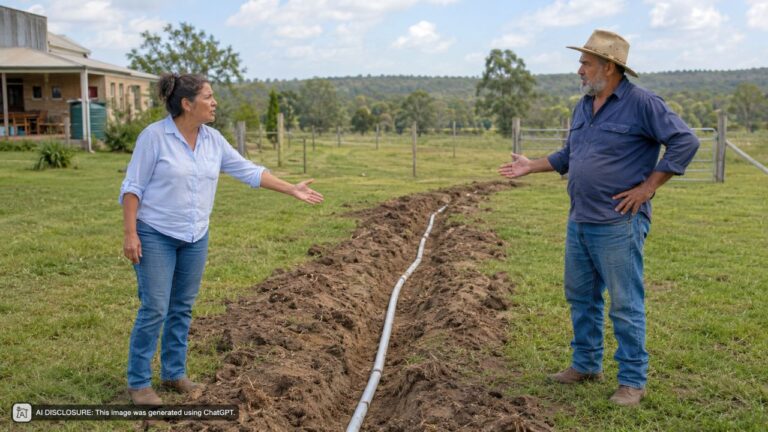
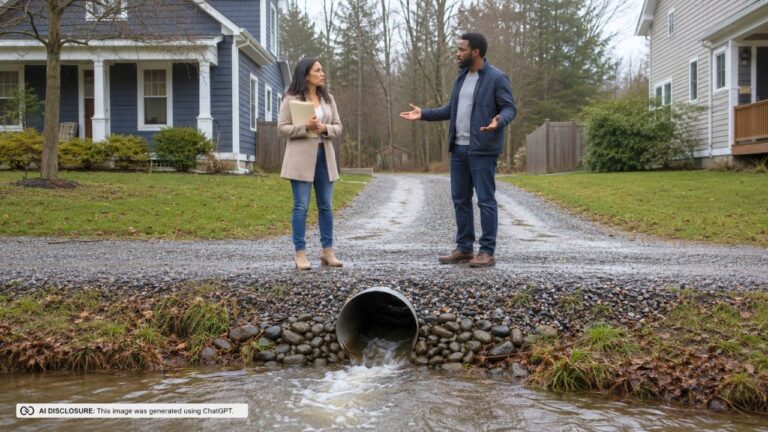
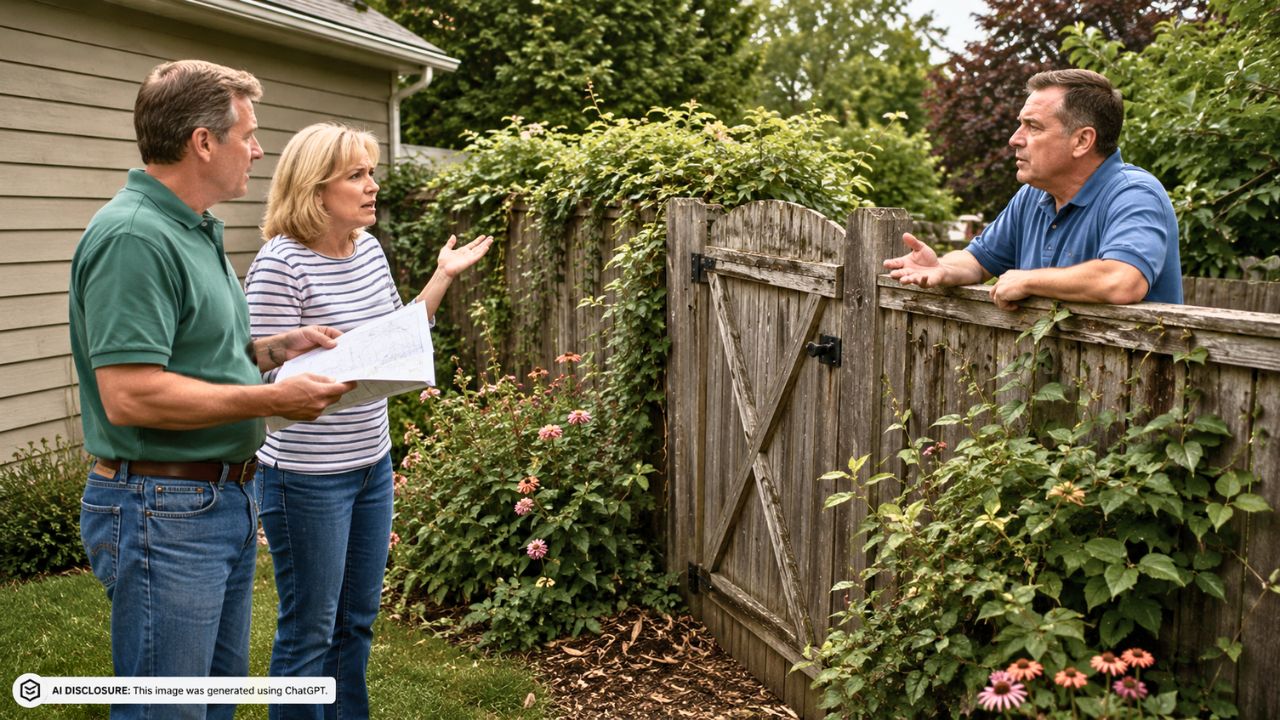
Photo credit: AI-generated image created using ChatGPT. Illustrative only
Buying a house next to a shared driveway sounds like one of those “nice to have” quirks—until you realize that skinny strip of pavement controls who can reach the back of their property, where the gates are, and what can be built without starting a neighborhood war.
That’s what unfolded on Oakwood Avenue in Staten Island, where a recorded driveway easement from 1926 turned into a modern-day lawsuit. The details come from the original post of the decision in Carp v. Shapiro, and it reads like the kind of property dispute that starts with “it’s been that way forever” and ends with “see you in court.”
A shared driveway that’s older than anyone living there
The homes sit at 205 and 207 Oakwood Avenue, with a mutual driveway between them. Back in 1926, an express easement was recorded giving both properties the right to use that driveway—on foot or by vehicle—to pass to the rear of their lots.
That kind of setup can work smoothly for decades when both sides treat it like a neutral zone. But shared access also means shared expectations: who can pass, how often, and what “counts” as using it.
By the time this dispute popped, the easement wasn’t some forgotten technicality. It was the legal backbone for access to the back of both homes.
The fence, gate, and garden that never “moved an inch” after 2003
Ursula Shapiro bought 205 Oakwood Avenue in 1965. When she purchased it, there was already a fenced and gated backyard, along with a garden, and she and her family used the driveway easement to reach the rear entrance of the house and that backyard area.
In 2003, the neighboring owners (the plaintiffs) bought 207 Oakwood Avenue. From that point forward, Shapiro’s fence, gate, and garden stayed where they were—no sudden expansions, no creeping property-line takeover described in the record, no dramatic reshaping of the yard.
Meanwhile, one of the plaintiffs, Lillian Wentworth Carp, regularly used the shared driveway herself to drive to and from her garage behind 207. So this wasn’t a case where the driveway became overgrown and irrelevant. The shared-driveway life was still happening.
But the pressure point wasn’t whether the driveway existed. It was whether Shapiro’s right to use it could be erased.
When “she doesn’t use it” turns into “she gave it up”
The plaintiffs sued asking the court to declare that Shapiro’s easement had been extinguished by abandonment. That’s the homeowner version of trying to take an old recorded right and turn it into a dead letter—so future access, future projects, future arguments all tilt one way.
People assume abandonment is basically the same as nonuse: if a neighbor doesn’t drive back there much, if they mostly go through their front door, if you don’t see tires on the driveway, the right should “fade out.”
New York doesn’t treat it that way. The appellate court emphasized that an express easement isn’t wiped out just because it’s “no longer necessary” or because the owner doesn’t use it much. In real-world terms, the law isn’t interested in how busy the driveway looks from the curb.
Instead, the fight comes down to something far more slippery to prove: whether the easement holder intended to permanently abandon the right.
The court’s line in the sand: intent, plus an unmistakable act
To prove abandonment, the party attacking the easement has to show two things: an intent to permanently abandon the easement and some clear act—or failure to act—showing the owner no longer claims any rights in it.
And it can’t be “maybe.” The conduct has to be unequivocal. The court isn’t looking for vibes like “they didn’t seem to care.” It’s looking for behavior that clearly communicates: “I am done with this forever.”
That’s the piece the plaintiffs couldn’t supply. The appellate court said the record had no evidence that Shapiro intended to abandon her rights in the shared driveway.
So even if the plaintiffs felt like the driveway was effectively theirs, or that Shapiro’s use didn’t look like what they expected, that isn’t the same thing as legal abandonment.
Summary judgment: the lawsuit ends without the easement getting erased
The trial court granted Shapiro summary judgment—meaning the court decided there wasn’t a real factual dispute requiring a trial on the abandonment claim. The plaintiffs’ request to extinguish the easement failed.
On appeal, the Appellate Division, Second Department affirmed. The case was sent back for entry of a formal judgment declaring that Shapiro’s easement over the shared driveway remains valid.
For homeowners reading this, the practical takeaway is blunt: old recorded rights can be surprisingly durable. If your plan is to “wait out” an easement because the neighbor doesn’t use it much, the law may not reward that assumption.
And if you’re the person with the easement, it’s a reminder that you don’t necessarily lose a recorded right just because your habits change over time—so long as there’s no clear, permanent surrender.
The homeowner reactions: “Get it in writing” energy
This kind of case tends to spark the same practical reactions from seasoned homeowners and property-watchers. Not because everyone loves lawsuits, but because shared driveways are where everyday life collides with permanent paperwork.
The first reaction is usually documentation-focused: pull the deed, pull the recorded easement, and understand what it actually grants. Too many neighbor disputes start with someone assuming the driveway is “shared” only in a casual sense, when it’s really defined by a recorded property right.
The second reaction is about proof and standards. People hear “abandonment” and think it means “not used.” But courts often want clear, unmistakable evidence of intent. That gap—between common sense assumptions and legal proof—is where homeowners burn years and money.
And the third reaction is the quiet one: if you buy a property with a shared-access feature, you’re not just buying a house. You’re buying a relationship with whatever was signed, recorded, and agreed to long before you showed up, even if the fence line and gate look like they haven’t changed since the early 2000s.
In the end, the driveway on Oakwood Avenue stayed what it had been on paper since 1926: a mutual path to the rear of two neighboring homes. The fence, gate, and garden didn’t need to move for the fight to happen—because the real battlefield was whether a recorded right could be quietly declared dead. The court said no.
Like Fix It Homestead’s content? Be sure to follow us.