Family Has Mowed and Fenced a Fifteen-by-Two-Hundred-Foot Strip of Their Yard for Thirty Years — Then the Neighbor’s Family Demands $7,000 to $8,000 or Threatens to Sell It to a Stranger
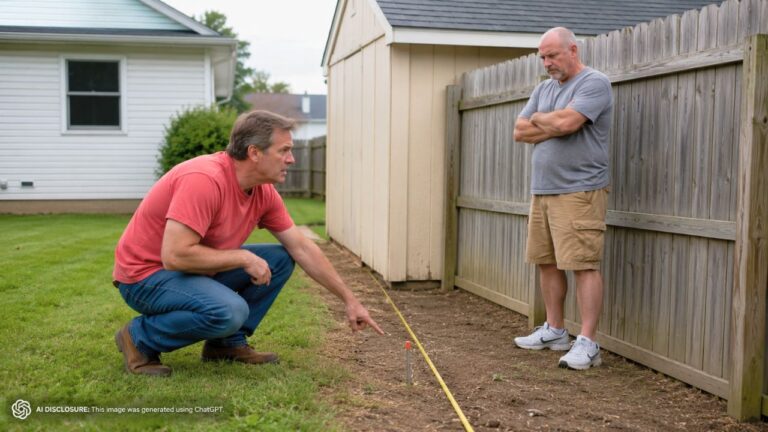
Photo credit: AI-generated image created using ChatGPT. Illustrative only.
The fence has been in the same place for decades. The grass inside it gets mowed. The trees get trimmed. Kids and dogs have treated it like part of the only backyard they’ve ever known. And now, after more than 30 years of routine, a Texas family is being told they need to come up with thousands of dollars—or risk losing a long, skinny chunk of that yard to whoever shows up with cash.
In the original post, the homeowner explains that his girlfriend has lived on the property her entire life. Her dad built the house in the mid-1980s and later left her the place. But from the beginning, there was a snag: a nearby neighbor refused to sell the deed to a strip of land—about 15 feet wide and 200 feet long—that sits inside their fence line.
A strip of land that never felt “borrowed”
This isn’t a case of someone “accidentally” mowing an extra few feet beyond a marker. The strip is substantial—basically a long lane running the length of the yard. It has been fenced in with the rest of the property for 30+ years, and the family has maintained it the whole time.
The twist is that the neighbor—despite refusing to sell—has continued paying the property taxes on that strip. The poster describes the taxes as “not much,” but the paper trail matters. It means, on the county’s books, the strip still belongs to the neighbor’s side, no matter how long it’s been behind someone else’s fence.
For the family living there, the fence line became reality. Backyards are lived-in spaces, not legal descriptions. When your kids and dogs play there every day, it stops feeling like “extra” and starts feeling like the yard itself.
Everything changed when sickness brought the siblings in
The neighbor is now very sick, and that’s when the pressure started. According to the post, the neighbor’s siblings are pushing the family to purchase the strip. The family was told it was appraised at $7,000 to $8,000.
That number hit like a threat, not an offer. The homeowner says it feels like they’re being shaken down, especially because they live in a poor neighborhood and don’t have much money to throw at a problem that, functionally, didn’t exist yesterday.
But the real fear isn’t just the price tag. It’s the idea that the neighbor’s family could sell it to someone else—someone who doesn’t care that it’s fenced, or that it’s been treated as part of another home’s yard for most of a lifetime.
Why a “skinny lot” can still cause major damage
People who haven’t dealt with property lines hear “15 by 200” and assume it’s unusable. But a strip like that can be a lever. It can be access. It can be a bargaining chip. It can be a headache that keeps coming back.
The homeowner describes the consequences in plain terms: if the strip is sold off, they could be cut off from “our whole yard” where the kids and dogs play. Even if the house itself stays untouched, the everyday livability changes overnight. A backyard can be the difference between staying put and feeling trapped.
And the fence is the pressure point. A stranger who buys that strip could demand entry to “their” land, which is currently inside someone else’s enclosure. That means arguments about gates, locks, liability, and whether the fence has to come down or move. It’s not hard to see why $7,000 suddenly feels like a ransom note when the alternative is constant conflict.
The homeowner’s questions show how quickly this goes from neighbor drama to real-world panic: What rights do we have in Texas? Can we hire a real estate lawyer for less than what they’re asking? Could we refuse a potential buyer access because it’s within a long-established fence line?
Paper boundaries don’t care about routine
The most frustrating part of these yard-line fights is how unfair they feel. If you’ve maintained a piece of ground for 30 years—mowed it, trimmed it, treated it as yours—common sense says you should have a claim. But property ownership runs on documents, surveys, deeds, and tax records, not memory.
In this case, the homeowner already knows one ugly fact: the neighbor has been paying the property taxes. That detail alone tells you the strip hasn’t quietly merged into the property in an official way. It’s been used like part of the yard, but carried on the books as someone else’s land.
That’s why the fear of a third-party buyer isn’t irrational. Once a parcel is being actively marketed, every messy detail that neighbors could ignore for years suddenly becomes urgent. Buyers ask for plats. Title companies ask questions. Survey pins matter again. And a fence that “has always been there” turns into a line item that someone wants corrected.
What people urged: proof first, talking second
The homeowner didn’t include a long comment thread in the material shared here, but the question itself hints at the responses you typically see when these disputes come up: don’t rely on the fence; rely on paperwork. People tend to push homeowners toward getting a survey, pulling deed records, and speaking with a real estate attorney before negotiating with family members who have dollar signs in their eyes.
It’s not because neighbors are always wrong. It’s because once siblings are involved—especially when someone is sick—everything can turn transactional fast. A handshake understanding can evaporate in a probate file. A “we’ve always done it this way” arrangement becomes “pay us or we’ll sell,” because the next generation doesn’t have the same history, or doesn’t care.
The homeowner also asked a question that pops up in a lot of fence-line disputes: can we just refuse access since it’s behind our fence? That’s the kind of move that feels satisfying in the moment—and then backfires if a legal owner shows up with documents and demands entry. Even if the fence has been there for decades, shutting someone out of land that’s recorded in their name can escalate things quickly.
A yard problem that turns into a life problem
What makes this so tense isn’t just the threat of losing grass. It’s the timing and the imbalance. The family using the land isn’t sitting on extra money, and the people making demands don’t have to live with the daily fallout.
For more than 30 years, the strip blended into normal life—fence, mowing, trimming, kids playing. Now it has a price tag, and it’s being treated like an asset that can be flipped out from under them. The homeowner’s fear is simple: if they don’t pay, someone else might, and the backyard they rely on could be cut in half by a sale they can’t stop.
In neighborhoods where yards are small and outdoor space matters, that’s not a minor inconvenience. It’s the kind of change that rewrites how a family uses their home—one narrow strip of land at a time.
Like Fix It Homestead’s content? Be sure to follow us.