Homeowners Find Their HOA Signed Away an Easement for a Public Trail Across Private Common Land — Then They Sue the Village to Cancel the Project
Photo credit: AI-generated image created using ChatGPT. Illustrative only.
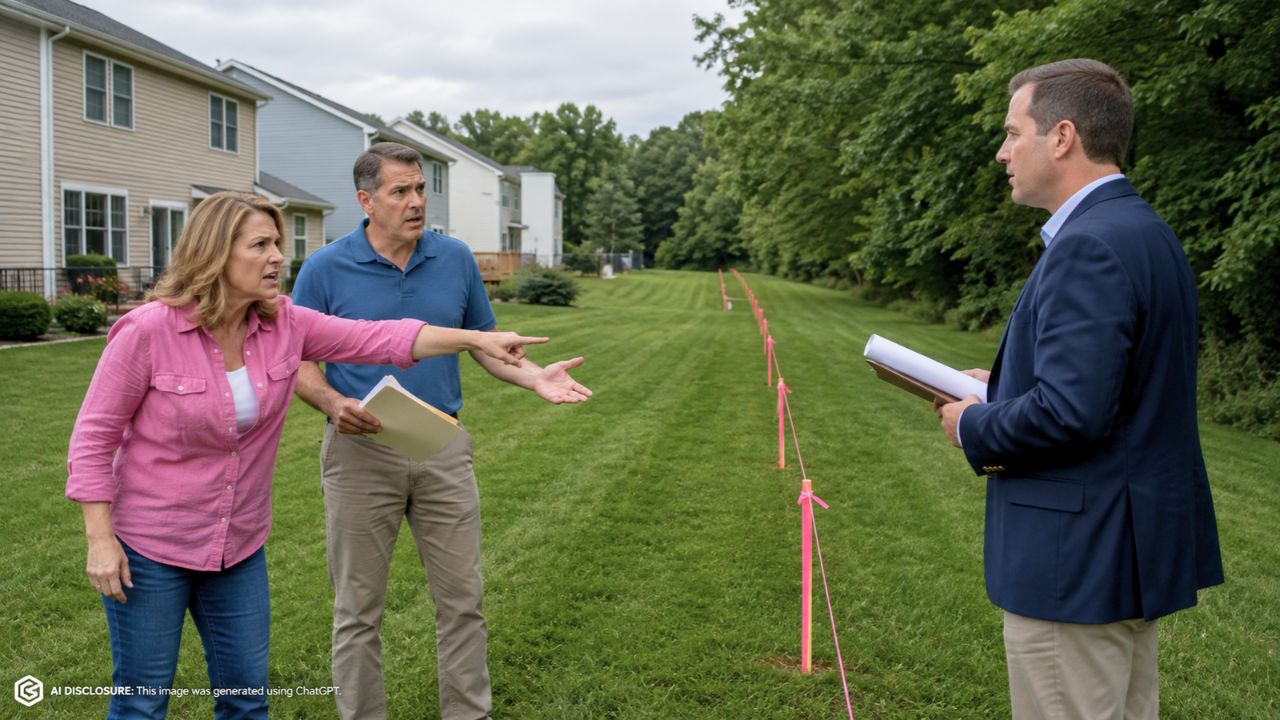
It starts the way a lot of neighborhood surprises start: somebody hears “there’s going to be a path,” assumes it’ll be along a road shoulder, and then realizes the line on the map cuts straight through the place everyone treats like their backyard. In Marvin, North Carolina, one family says the Village of Marvin is planning a trail through the Marvin Creek neighborhood—across private HOA common land that residents thought was protected from public use.
And the part that really lit the fuse is the paperwork. Tori Comiskey and her husband say the neighborhood HOA handed village leaders an easement to build that path, but the couple claims the HOA board didn’t actually have the authority to do that under the community’s own rules, as described in the source post. Now the Comiskeys are suing the village, asking it to give the easement back and cancel the project.
The “common area” didn’t feel like public space—until it might become one
HOA common land is a weird category of “owned by everyone and no one.” Residents pay for it, walk it, and look at it every day, but it’s not the same as a city park. In many neighborhoods, those green strips and wooded buffers are the last thing keeping homes from feeling like they’re stacked on top of each other.
That’s why a public trail proposal can land like a cold splash of water. A path isn’t just gravel and a line on a plat. It can mean strangers behind houses, more foot traffic near back fences, and a new reason for neighbors to argue about lighting, trash, and where the boundary of “private” really is.
Comiskey put it bluntly: “It says it really clearly in our covenants that no public use on our private HOA common area.” That sentence is basically the whole fight. If the covenants say no public use, residents feel like the board can’t sign something that turns private land into a public connector—no matter how nice the trail looks in a presentation slide.
When the easement showed up, it wasn’t just about a trail anymore
From the homeowners’ perspective, this stopped being a “do we like trails?” discussion and turned into “who gave away what, and were they allowed to?” The Comiskeys say the HOA gave the village an easement, but they argue the board lacked legal authority to convey it.
That’s the kind of detail that makes neighbors start reading bylaws the way people read medical test results—word by word, with a sinking feeling. Because if the HOA can sign away a slice of private common land once, residents start wondering what else can be signed away later.
Comiskey acknowledged she didn’t want the trail to begin with, but she framed the lawsuit as bigger than personal preference. “At the end of the day, we’re really protecting the private property right of everybody here in the neighborhood,” she said.
That’s a familiar pivot in HOA battles. Even people who love greenways get nervous when the mechanism is “the board did it quietly” or “the paperwork doesn’t match the rules.” You can disagree about amenities all day. Authority is different. Authority is the foundation.
A year of meetings and posts, then the nuclear option
Comiskey said opponents spent more than a year fighting the village at meetings and on social media. That timeline matters. A lot of homeowner disputes burn hot and fast, then cool off when people get tired. A year means it didn’t cool off.
It also suggests the usual pressure valves didn’t work—public comment, emails, lobbying board members, trying to rally neighbors. When those don’t stop a project, residents often move to the only lever that forces a pause: court.
The Comiskeys didn’t just sue the HOA or the board; they sued the Village of Marvin to “give the easement back,” banking on the argument that the agreement the village made with the HOA president “was never valid.” Comiskey added, “If they didn’t know at the time, they know now. And when you know better, you do better.”
That line reads like something said after months of trying to be patient. It’s the point where the dispute stops being neighbor-to-neighbor and becomes homeowner-versus-institution.
The practical fallout people worry about when a public path hits private edges
Even before a shovel goes in the ground, a planned trail can change how people live in their homes. If the route runs near lots, residents start thinking about visibility, fencing, and whether their “quiet side” becomes the side that gets foot traffic.
Then there’s maintenance and liability anxiety—whether justified or not. People ask who cleans it, who patrols it, and who gets blamed if someone falls, dumps trash, or wanders off the path. They picture contractors staging equipment, trees coming down, drainage changing, and that one low spot that already puddles turning into a permanent mess once the ground is disturbed.
That’s why easement language matters so much in the real world. Homeowners don’t experience easements as abstract property rights. They experience them as: lights in my window, voices behind my fence, and somebody else deciding what happens on land I pay for.
In Marvin Creek, the dispute is also about internal neighborhood trust. When residents think the covenants promised “no public use,” and a public-use easement appears anyway, it leaves people wondering whether the board read the documents, ignored them, or believed it had power it didn’t.
The reaction pattern: “Show me the documents” before “show me the shovels”
When these disputes play out in homeowner circles, the most common advice isn’t dramatic. It’s procedural: get the covenants, get the bylaws, get the easement document, and figure out who signed what and under which authority.
That’s essentially what the Comiskeys are doing, just at maximum volume. Instead of settling it in a meeting room, they’re asking a court to treat the easement as invalid and stop the project.
On the HOA side, the association told the reporter it couldn’t say anything because it hadn’t seen the lawsuit yet. The village wouldn’t discuss pending litigation. That’s the frustrating part for neighbors watching from the sidelines: once lawyers get involved, the conversation tends to shut down publicly, even as the anxiety stays loud in the neighborhood.
Meanwhile, Comiskey said the HOA is considering rewriting its bylaws. That detail lands like an admission that the community’s governance documents either weren’t strong enough, weren’t clear enough, or weren’t followed—and now everyone’s trying to patch the roof while it’s raining.
For the Village of Marvin, the lawsuit buys time but also forces a choice: defend the easement and the project, or walk it back and absorb the political hit. For homeowners, it’s months (or longer) of living with uncertainty—wondering if the next letter in the mailbox is about a court date, a construction schedule, or a surprise vote.
And until it’s settled, the common land sits there the same as always—quiet, green, familiar—except now every neighbor walk comes with a mental overlay of where the trail might go, and who might be walking it next.
Like Fix It Homestead’s content? Be sure to follow us.