Homeowner’s New Survey Confirms an Original Boundary Stake Was Correct All Along — Then Learns the Neighbor’s Concrete Garden Edging Sits Two and a Half Feet Onto the Land After Blaming “Neighborhood Kids” for Moving the Marker
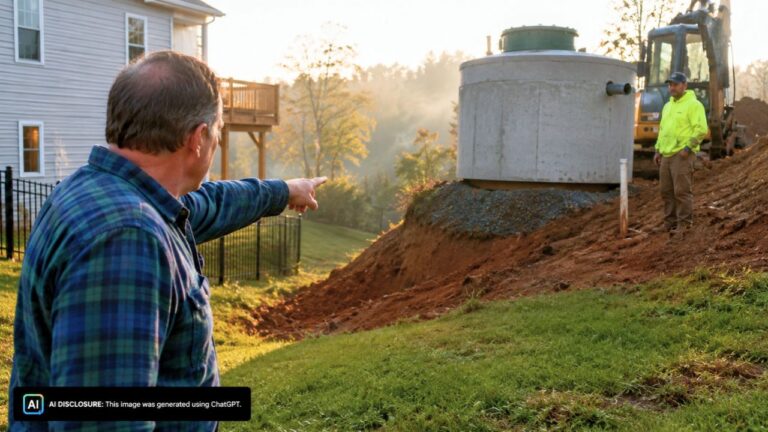
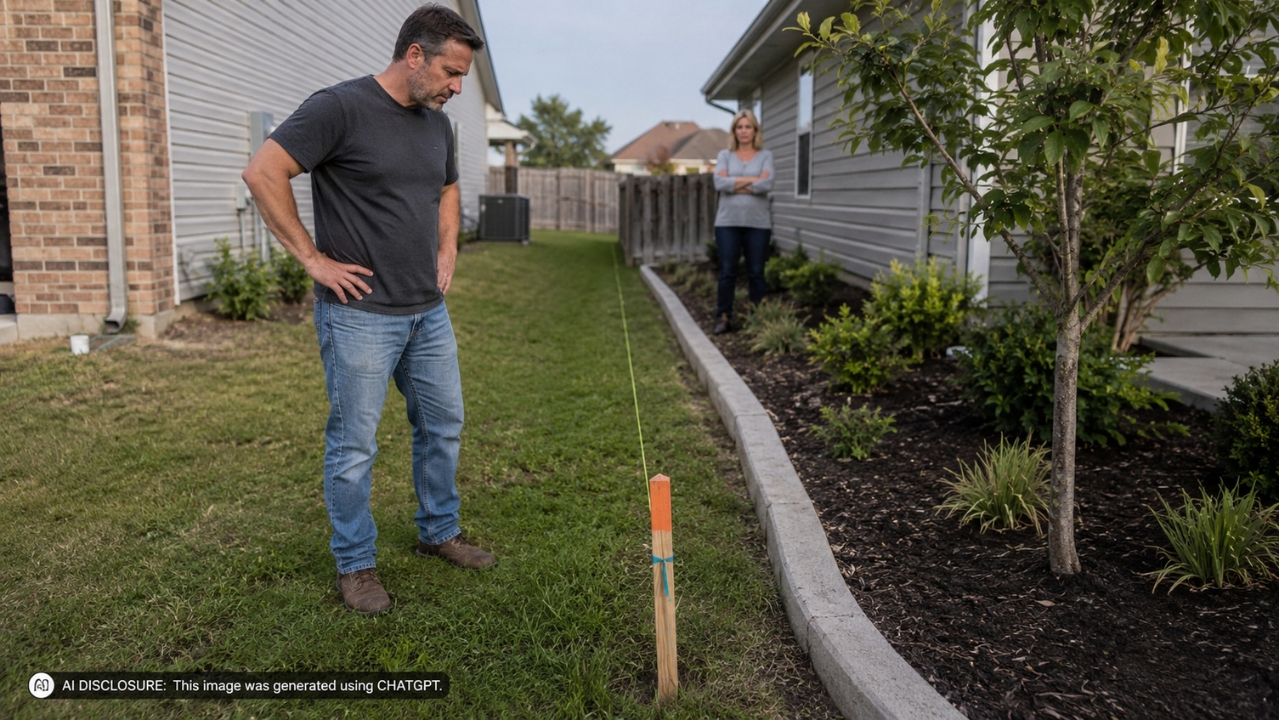
Photo credit: AI-generated image created using ChatGPT. Illustrative only.
It started the way a lot of property-line headaches start: a neighbor hired a crew, and suddenly there was something “permanent” sitting near the edge of the yard. In the original post, a homeowner said their neighbors had concrete edging installed around garden beds and trees—clean, tidy, and meant to last.
But the moment the forms went in and the concrete set, the neighbor’s story hardened too. The homeowner said the neighbors insisted “neighborhood kids” probably moved the survey stakes because a tree was close to the line. The homeowner didn’t buy it. The contractor, meanwhile, didn’t measure—he “guessed” where the property line landed.
A “guess” got poured in concrete
The homeowner described a shared property line stretching 132 feet—long enough that a small error doesn’t stay small for long. This wasn’t a loose pile of mulch that could be raked back. Concrete edging is the kind of improvement people install specifically because they don’t want to fuss with it again.
That permanence is what made the contractor’s approach feel risky. When a crew eyeballs a boundary, it puts the burden on the two homeowners to sort it out later—after money has already been spent, materials are already in place, and nobody wants to admit they should have slowed down.
And because the edging wrapped around garden beds and trees, it wasn’t just a straight strip that could be “nudged” over. Landscaping tends to sprawl: beds expand, plantings mature, edging becomes the new normal, and the “temporary” placement becomes the accepted line in people’s heads.
The survey stakes weren’t the problem
To avoid a drawn-out argument based on memory and assumptions, the homeowner brought in a surveyor a few weeks later to place new stakes. That’s when the whole narrative flipped. The surveyor’s work showed the preexisting stake was in the correct location all along.
Then came the punchline nobody wants: the neighbor’s new edging and garden bed were about 2.5 feet over the actual property line. It wasn’t inches. It wasn’t “close enough.” It was enough distance that you’d notice if you were mowing or trying to use that strip of yard.
At that point, the issue wasn’t whether kids had moved anything. The issue was that a contractor had “guessed” and the guess ended up being a significant bite out of someone else’s land—now marked by concrete.
Landscaping turns into a land claim faster than people think
The homeowner wasn’t looking for a fight. They said they didn’t want to be mean, especially with a long shared boundary and the reality of living next to each other. But they were also thinking a few moves ahead: what happens if you let it sit?
The fear wasn’t just losing a couple feet of grass. It was the idea that time and inaction can turn a mistake into a “that’s how it’s always been” story, especially when a visible structure is involved. The homeowner specifically worried about adverse possession—basically, the nightmare scenario where someone’s long-term use and improvements help them claim rights over land that isn’t theirs.
Even if a legal claim never materializes, the day-to-day consequences are real. That strip can become a new path for access, a place for plantings, a reason for a future fence to be placed wrong, or a complicating factor when either property gets sold and the next buyer brings their own survey and questions.
The awkward part: it’s already “finished”
Concrete edging is a finish detail. People install it after planning, after spending money, after they’ve told themselves the project is finally done. That’s why boundary mistakes around landscaping get personal fast—because the fix feels like an accusation.
If the homeowner approaches the neighbors, it’s not just, “Hey, can you move this?” It’s, “Hey, your contractor put your improvements on my property, and now it needs to come out.” That can trigger defensiveness, especially when the neighbors already floated the idea that the marker must have been moved.
And there’s the practical mess: removing concrete edging can damage surrounding soil, plant roots, and any irrigation lines that might be under or near the bed. Even if everyone agrees to correct it, it’s still disruptive, and somebody has to pay.
Most people pushed proof and paperwork before emotions
The homeowner’s post wasn’t long, but the underlying playbook is familiar in property-line disputes: start with documentation, not volume. They already did the most important early step by getting a surveyor to re-stake and confirm where the line actually is.
In disputes like this, people often focus on keeping everything calm and factual: a copy of the survey, photos of the stakes, photos of the edging as installed, and a written record of when the work happened. Not because anyone wants to “build a case,” but because neighbors’ memories tend to diverge the moment money and pride get involved.
There’s also a basic fairness question baked in. The homeowner didn’t hire the contractor. They didn’t approve the guess. But they’re the one who has to live with the encroachment unless they confront it—and the longer it sits, the more it starts to look intentional.
A long property line means this won’t be the last test
One detail the homeowner included—132 feet shared—matters because it hints this isn’t a one-time interaction. Today it’s concrete edging around a tree. Next year it could be a fence, a shed corner, a drainage swale, a row of shrubs, or a replacement stake that “doesn’t look right” to someone who got used to the wrong line.
That’s why this kind of conflict is so exhausting. It’s not only about the 2.5 feet. It’s about whether the two households can agree on reality when the stakes—literal and figurative—are in the ground.
For now, the homeowner is left standing between two bad options: say nothing and watch the encroachment become normal, or bring it up and risk turning a neighborly relationship into a long, tense standoff. The only thing that seems clear from their update is that the land marker wasn’t the thing that moved—someone’s boundary assumptions did, and concrete made it harder to walk back.
Like Fix It Homestead’s content? Be sure to follow us.