New Homeowner Orders a Land Survey and Finds the Neighbor’s Concrete Driveway Crosses Entirely Over the Property Line — Then the Neighbor Says No One Told Them Where the Line Was
Photo credit: AI-generated image created using ChatGPT. Illustrative only.
It’s one thing to learn a fence is a few inches off. It’s another to be told an entire paved driveway—the kind that looks permanent and “always been there”—is sitting completely on your land.
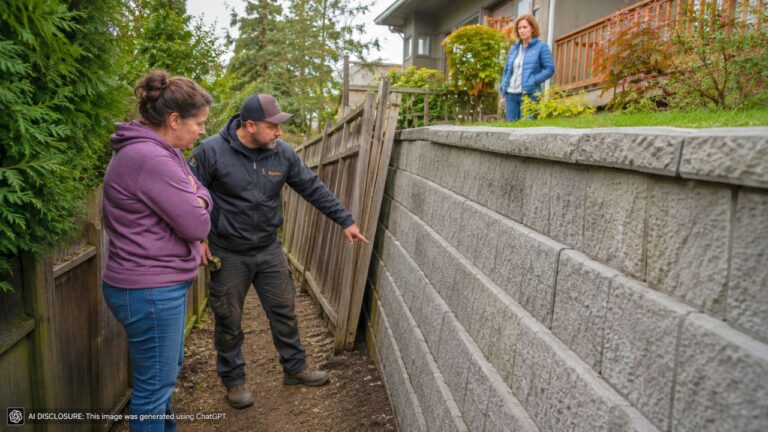
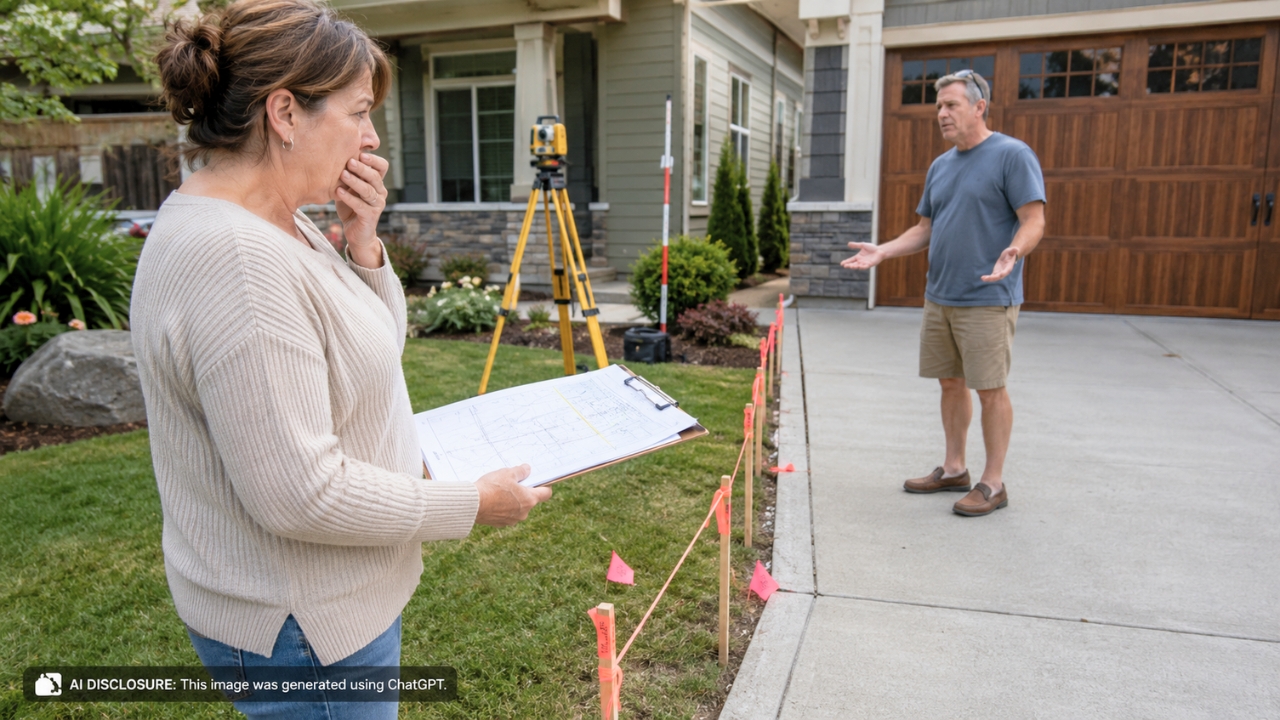
That’s the surprise one new homeowner described in the original post after ordering a land survey and watching the stakes jump from paperwork to pavement. The surveyors reportedly disclosed that the neighbor’s paved driveway is fully on the poster’s property, even though the home dates back to the 1980s.
A survey turned a quiet boundary into a very real problem
The homeowner wasn’t out looking for a fight. They had a practical reason to care about access, explaining that they actually need to get to their own property by way of the driveway in question.
That’s where the tension starts: a driveway isn’t just concrete. It’s daily use, vehicle wear, snow shoveling, deliveries, visitors, drainage, and the assumption—often unspoken—that somebody “owns” it.
When a survey says the driveway is entirely over the line, it forces a decision fast. Ignore it and live with the awkwardness. Or acknowledge it and risk turning an everyday neighbor relationship into an all-consuming property dispute.
The driveway “belongs” to one house, but the ground says otherwise
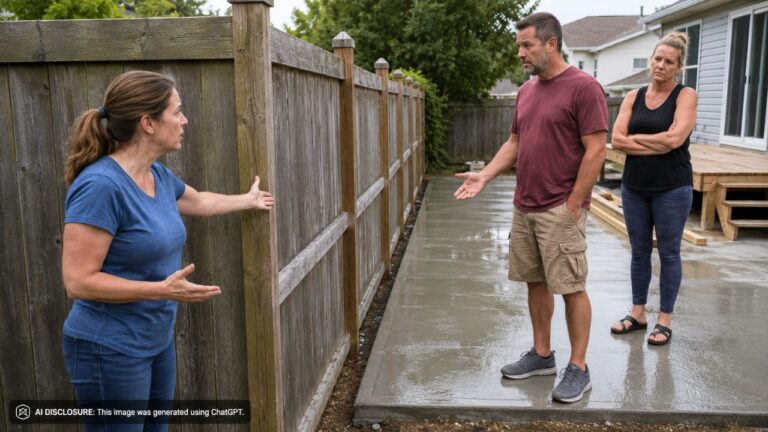
The details are simple but explosive. The driveway is paved, it serves the neighbor, and the survey indicates it’s on the poster’s land. The house being built in the 1980s adds another layer: this isn’t a fresh mistake that happened last month during a rushed remodel. It’s something that may have been accepted, assumed, or overlooked for decades.
In older neighborhoods, that’s how these things survive. A previous owner doesn’t want trouble. A neighbor maintains the pavement. People treat the layout like it’s official because it’s been that way for so long.
But once a new owner shows up and pays for a survey, the “we’ve always done it this way” logic runs headfirst into a drawing with measurements.
Access needs made it harder to just let it slide
This wasn’t only about fairness or principle. The homeowner said they actually need access to their property via that driveway. That changes the flavor of the dispute.
If you need that route for your own use—whether it’s to reach a side yard, a gate, a garage, or an area you can’t otherwise reach with equipment—then the driveway stops being the neighbor’s convenience and starts being your functional path, too.
And if the neighbor treats it like exclusively theirs, the practical consequences can get messy quickly: blocked cars, “no parking” demands, snow piled in the wrong spot, or improvements made without asking. Even when nobody is being malicious, shared access without a clear agreement tends to create new friction every season.
The big question: can a homeowner claim equal use of a driveway on their land?
The homeowner’s question cuts straight to the point: if the driveway is on their property, can they claim equal usage rights?
That question sounds obvious at first—your land, your right to use it—but driveways live in a special category of “things people rely on,” and reliance can become its own kind of leverage. When a neighbor’s daily access depends on a strip of concrete that crosses a line, the resolution usually isn’t as clean as “move it tomorrow.”
And from the homeowner’s perspective, equal use is the least dramatic option. It avoids demanding demolition. It avoids a sudden blockade. It aims for coexistence: if it’s on my property and I need it, then I should be able to use it, too.
But equal use can also be the kind of arrangement that’s fine for a month and miserable for a decade if it isn’t put into writing and understood the same way by both households.
When neighbors say “no one told us,” the past becomes part of the argument
Driveway disputes often turn on a sentence that sounds harmless until you hear what it implies: nobody told us where the property line was.
On its face, that’s a plea for grace. It frames the driveway placement as accidental—something inherited from a prior owner or a prior generation. And if the driveway has been there since the 1980s, it’s easy to see how a neighbor might feel blindsided being told their normal setup is suddenly “wrong.”
But that explanation doesn’t fix the current reality. The land is still the land. The homeowner still has a survey. And the homeowner still needs access. The longer the driveway has existed, the more emotionally “owned” it can feel to the person using it—even if the paperwork says otherwise.
That’s what makes these conflicts so tense: one side is holding measurements, the other is holding decades of routine.
Most reactions in these disputes focus on documentation, not volume
Even in a short post like this, the direction homeowners tend to lean in driveway-line messes is predictable: document everything, keep it calm, and don’t rely on verbal understandings.
The survey is already a critical piece, because it anchors the dispute in something more solid than memory. From there, the practical next steps people usually talk about are the ones that reduce risk—making sure the survey is properly marked, keeping records of communications, and thinking carefully before making physical changes that could escalate a neighbor’s response.
It’s also the kind of problem where the “fix” isn’t just a repair. It’s a decision about future property use: whether to pursue a formal agreement for shared access, whether to require changes, and how to protect the ability to use your own land without turning the driveway into a daily confrontation.
None of that makes for a fun move-in season. But it’s exactly the kind of surprise that can come bundled with a new set of keys.
For this homeowner, the concrete is already poured and the habits are already set. The survey didn’t create the driveway problem—it just made it impossible to pretend it wasn’t there. And once you need that driveway yourself, it stops being a quirky boundary detail and becomes part of how you live on your property every day.
Like Fix It Homestead’s content? Be sure to follow us.