Homeowner Watches Contractors Cut Down Several Trees on the Wrong Property — Then the Neighbor’s Husband Says His Wife Never Checked the Line
Photo credit: AI-generated image created using ChatGPT. Illustrative only.
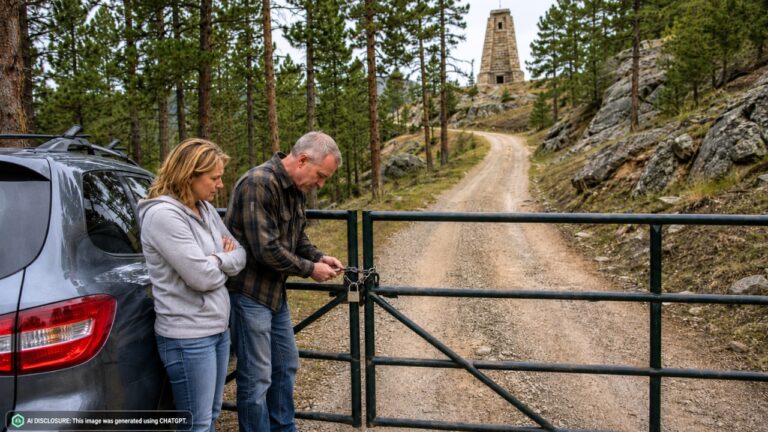
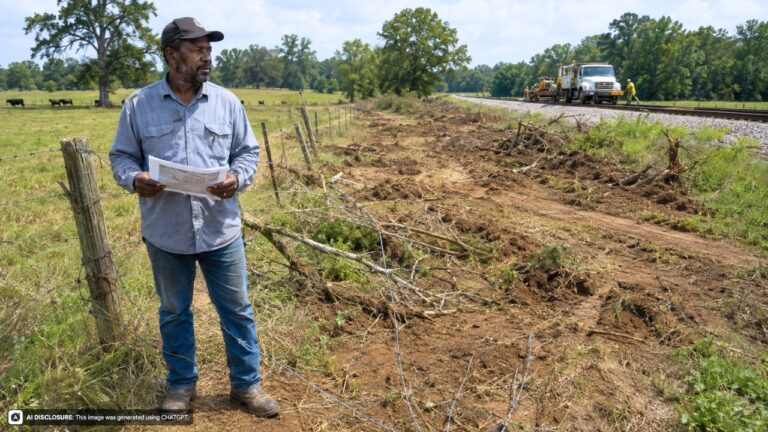
A rural homeowner in Idaho stepped outside and saw a bulldozer where it didn’t belong—on his land, headed downhill through trees that weren’t up for negotiation. What started as a neighbor’s access problem quickly turned into a property-line nightmare with fresh stumps, rutted ground, and a growing feeling that the contractors were making decisions first and asking questions never.
In the original post, the homeowner explains that the neighboring property needed equipment access to re-engineer and fix a failing retaining wall. But permission was never clearly granted for the route they took—especially not for cutting trees—and the damage didn’t stop when he asked them to.
The access request that wasn’t really a request
The neighbor’s goal, according to the homeowner, was to get heavy equipment through to address a retaining wall issue. The problem was the path: contractors came through the homeowner’s property with a bulldozer without first asking permission.
When the homeowner noticed the bulldozer, he confronted the neighbor. She told him she “meant to ask permission and forgot.” He says he gave limited consent: he would allow the bulldozer to come down the hill from his property, but not to go back up the same way, because he didn’t want the hill torn up.
He also says he drew a firm line on trees: whatever route they chose, they did not have consent to cut down any of his trees. That boundary didn’t hold for long.
The moment it turned into a tree-cutting dispute
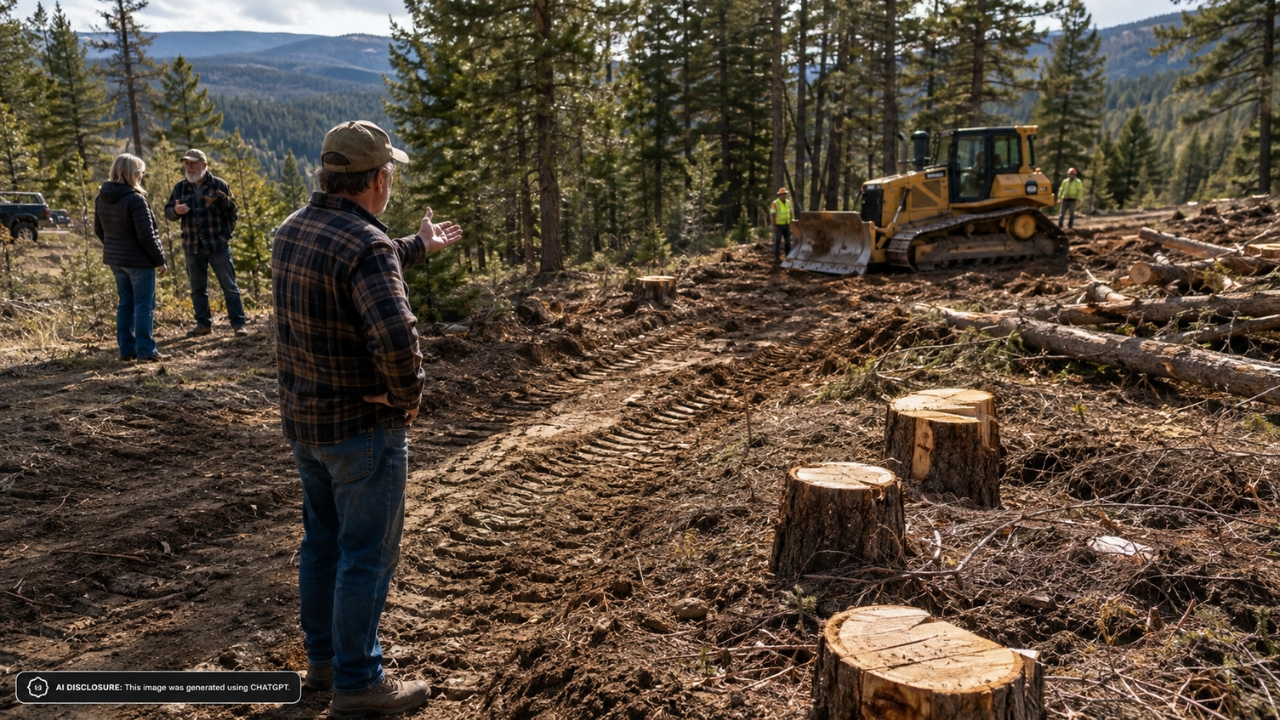
The homeowner reports that several trees were cut down anyway, with many of them “20 to 50 feet across the property line” on his side. He describes the affected area as the portion of his 20-acre property that sits next to the neighbor’s shop—an area where he says the contractors were working “easily 30 feet and beyond” over the line.
The homeowner believes no survey was done and that the neighbor may not actually know where the line is. From his perspective, this wasn’t a close call—he says he knows his boundaries and that property lines are established.
That’s where the practical homestead reality kicks in: once trees are on the ground, you’re not arguing about hypotheticals anymore. You’re looking at stumps, disturbed soil, and the heavy equipment tracks that made it possible.
A husband steps in—and an offer that didn’t match the damage
After the initial confrontation, the homeowner says he and his wife met with the neighboring property’s husband. He came across as unaware of what had been happening and told them his wife had been working with the contractors.
The husband’s explanation was simple: they didn’t realize they were over the line and onto the homeowner’s property. The homeowner told him he was unhappy and did not want the bulldozer coming back out through his land, and the husband agreed.
Then came the “offering.” The husband said that if he could make an offering, it would be to have someone come cut the downed trees into rounds and give the wood to the homeowner.
Anyone who’s lived with wooded acreage knows why that lands poorly. Firewood is not the same thing as mature trees in place—especially when the trees came down without permission and the soil disturbance is still unfolding.
Four days of silence, then the bulldozer came back anyway
The homeowner says there were four days with no contact. Then, on Thursday, the husband texted: they had checked all available ways out with the bulldozer, and were told they could only exit back the way they came in.
So the contractors went back out through the homeowner’s property again. The husband apologized and said that going forward they would stay off the homeowner’s land. He also said he was willing to put a dump truck of dirt over the entry point where the equipment left the road on the homeowner’s property, to “help fix things.”
On paper, that might sound like an attempt to repair. In real life, it reads like one more decision made after the fact—especially when heavy equipment has already chewed up ground and there’s no clear agreement about what “fix” means or who decides it’s finished.
The update that made it feel like trespass, not a mistake
On the morning of August 10, the homeowner and his wife went down to inspect. What they found didn’t match the story that the bulldozer exited the same way it came in.
The homeowner says there is an old road or trail that runs 400+ feet up into his property before turning and heading down along his property line near a different neighbor. He believes the contractors drove the bulldozer up that path “at least four or 500 feet” onto his land, then turned and bulldozed a flat spot that covered up a natural spring on his property.
From there, he says they drove down along his property line and may have crossed onto yet another neighbor’s property. He also notes there were two trespassing signs posted at the entrance to that road, and that those signs have been up for more than three years.
That’s the kind of detail that changes the whole tone. A single mistaken pass through the wrong area is one thing. Using an internal trail, traveling hundreds of feet in, and altering ground around a spring feels like a deliberate choice—especially when the homeowner says the access point was clearly marked with no-trespassing signs.
What people told him to do next: document first, then call pros
The homeowner’s own next steps were already forming: he said he planned to talk to an arborist and an attorney on Monday. He also planned to take photos and considered filing a police report, even while acknowledging it might not lead to much.
In disputes like this, the practical advice tends to be consistent: lock down the facts while the evidence is still fresh. Photos of stumps and disturbed soil. Wide shots that show where the equipment traveled. Close-ups that show direction of travel, track marks, and proximity to recognizable landmarks. And if there’s a spring involved, documenting water flow and ground changes before anyone “fixes” it with a load of dirt.
The homeowner also mentioned he wanted to speak with the other neighbor whose property may have been crossed before contacting the neighbor “that’s in violation.” That’s a very rural calculation: once multiple parcels are potentially involved, it can turn into a chain reaction of competing versions of the same day.
For now, the homeowner is left with cut trees, damaged ground, and a spring that he says was covered by bulldozing—plus a neighbor offering firewood rounds and dirt as if the main problem is aesthetics. The bigger tension is that the contractors clearly had a plan for moving equipment, and that plan didn’t seem to include staying on the correct property line.
Like Fix It Homestead’s content? Be sure to follow us.