New Landowner Finds a Neighbor Determined to Clear an Entire Fence Row of Trees — Then an Arborist Confirms Three of the Trees Sit Fully on the Wrong Side of the Line
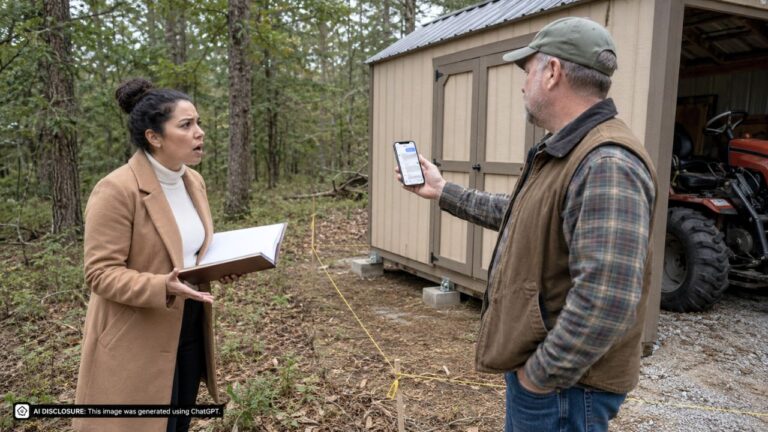
Photo credit: AI-generated image created using ChatGPT. Illustrative only.
It started the way a lot of property-line disputes do: a casual comment from next door that keeps coming back around. A new homeowner in West Virginia said their neighbor had been talking for nearly a year about taking down three big sassafras trees along the fence row—trees the homeowner considered a huge part of why they bought the place in the first place.
Then one morning, on the way out the door, they saw the thing you never want to see when you’re not prepared: a tree crew on-site, looking up, measuring, and talking “removal.” The homeowner laid out the full story in the original post, asking what to do if someone shows up to cut the trees down—and what happens if it all goes down while they’re away.
The fence-row trees weren’t just “nice to have”
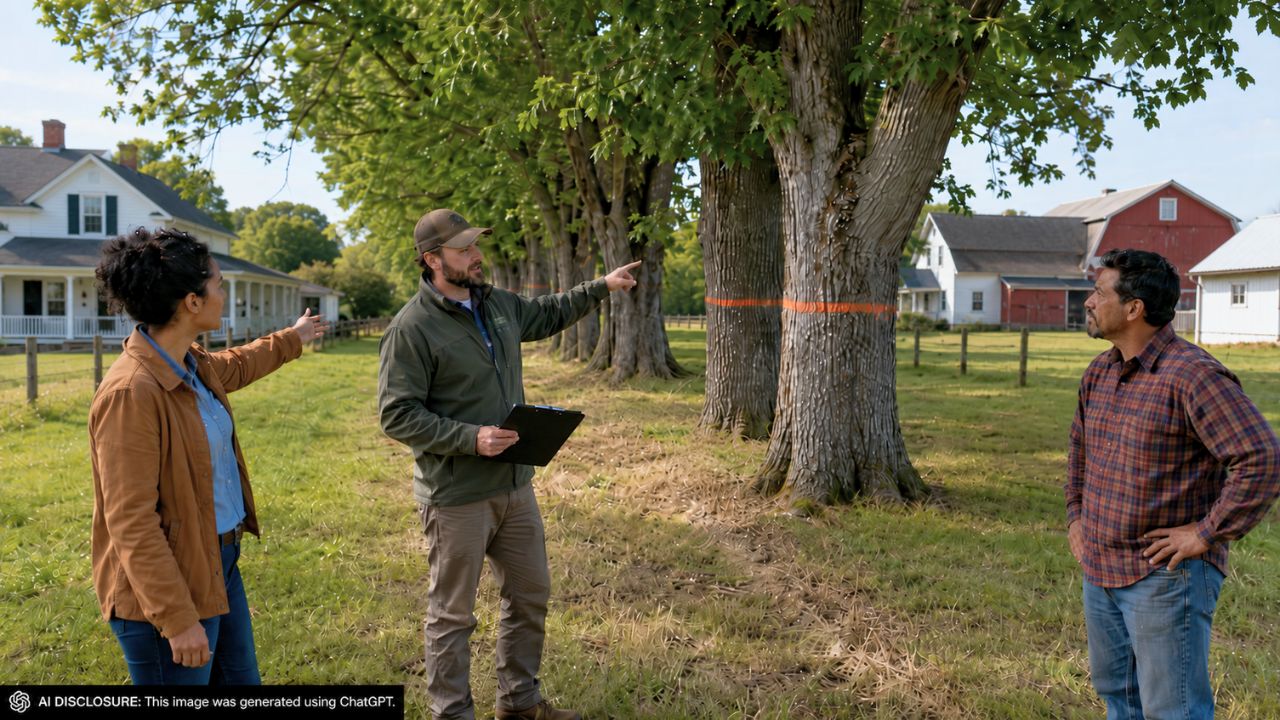
These weren’t saplings or scraggly volunteers. The homeowner described them as “three very large sassafras trees” that provide privacy and shade in town. In other words: they do real work. They block sight lines, cool the house and yard, and make a smaller lot feel bigger and more secluded.
They also carry emotional weight for a new landowner. The poster said trees were a “big selling point” when they bought the property, and losing them would “greatly devalue it” in their eyes. That’s the part people who don’t care about trees tend to miss—sometimes the trees are the backyard.
The neighbor kept circling back to removal
The neighbor’s position sounded simple: he wanted the trees gone. Over the last year, he brought it up multiple times, and each time the homeowner pushed back with the same boundary—those trees are on the property line, and they don’t consent to removal.
Trying not to escalate, the homeowner even offered a compromise that would cost them money: they said they’d pay for trimming the entire trees when they had other trees trimmed in the fall. That offer matters because it shows the homeowner wasn’t trying to be stubborn for sport; they were trying to keep the trees while addressing whatever annoyance the neighbor felt—limbs, debris, shade, the “mess,” or just a desire for a cleaner edge.
But the neighbor didn’t stop asking. And eventually, he didn’t just ask.
The moment it turned real: a tree service showed up
The homeowner noticed a tree company at the trees while leaving the house and could hear the crew discussing removal. That’s when the conflict stopped being hypothetical. It wasn’t “someday I might do this.” It looked like, “I’m doing it now.”
The homeowner’s immediate worry wasn’t only the trees themselves—it was logistics. What do you do if a crew shows up ready to cut and you’re the only one home? What if you’re not home at all? They didn’t want a feud, but they also didn’t want to come back to stumps and a suddenly exposed yard.
In the post, the homeowner also flagged what many people believe (and often is true depending on state law): boundary-line trees generally can’t be removed without both owners agreeing. Their question was the one that drives a lot of these disputes: does it matter if the trunks are “more on my neighbor’s side” as long as they’re still on the line?
An arborist-sized pause button: “We can’t cut without your permission”
The most important development came after the homeowner spoke directly with the tree company owner—who was there for a different estimate. The homeowner said the owner came out to quote taking down a Bradford pear, and before the homeowner even raised the fence-row issue, the owner mentioned the sassafras trees.
He told the homeowner he wanted to give them a heads-up that the neighbor was trying to have the trees removed. That alone is a big deal in the real world of contractors and neighbors: it’s often the professional on site who can either smooth things over or help a bad idea happen quickly.
When the homeowner showed the owner that the trees sat on the property line, the owner acknowledged it and changed course. The homeowner wrote that the owner said, “yeah they are, I didn’t realize that, we will put the breaks on this and let him know we can’t cut them without your permission.”
That’s the kind of sentence that prevents a months-long mess. It also hints at a second truth: sometimes the fastest “fix” isn’t legal action—it’s getting the right professional to refuse the job once they understand what they’re being asked to do.
Where commenters tend to land: proof first, drama later
Even without a full comment thread included in the source, this type of post reliably draws a certain kind of practical, homestead-adjacent advice: document everything and establish the line beyond argument. When a fence row is involved, people usually want a survey or some kind of clear marker—because a neighbor who’s “determined” today may stay determined next month when a different crew is willing to take the work.
Homeowners in these disputes also tend to think in layers: stopping the cut is step one, but preventing the next attempt is step two. That often means getting things in writing, keeping records of conversations, and being ready to show a crew, quickly, that the boundary is disputed and permission is not granted.
And while nobody wants to turn a quiet street into a cold war, fence-row tree conflicts have a way of escalating when one side treats “I don’t want them removed” as a suggestion instead of a decision.
The tension that doesn’t go away just because the saws leave
The homeowner’s update was good news, but it wasn’t the end of the story so much as a reprieve. The neighbor had already progressed from talking to scheduling. That’s a sign the trees will come up again—maybe framed as “maintenance,” maybe as “they’re on my side,” maybe as a complaint about risk, roots, mess, or shade.
And that’s what makes fence-row trees so uniquely stressful for new landowners. You can do everything right—be polite, offer to pay for trimming, keep communication open—and still find out that the other person’s plan is to act first and hope you don’t respond fast enough.
For now, the homeowner still has their shade and privacy, and the tree company’s refusal to proceed bought them time. But the line between “neighbor disagreement” and “permanent change to the property” can be as thin as a property pin—and it only takes one crew, one morning, and a couple of cuts to change a backyard for good.
Like Fix It Homestead’s content? Be sure to follow us.
- Man Says He Found Out the Fence He Paid For Wasn’t Actually on His Property
- Woman Says Her Neighbor Started Taking Mulch From Her Delivery Pile Before She Could Even Spread It
- I made Joanna Gaines’s Friendsgiving casserole and here is what I would keep
- What Caliber Works Best for Groundhogs, Armadillos, and Other Digging Pests?