New Landowner Finds Signs of Encroachment Across a Freshly Purchased Twenty Acres — Then the Longtime Neighbor Says the Land “Has Always Been Used That Way”
Photo credit: AI-generated image created using ChatGPT. Illustrative only.
The land looked like the kind of place you daydream about: twenty acres in Georgia, mostly timber, with one open field that could be the heart of a future homestead. But before the new owner has even closed, the field is already acting like it belongs to somebody else.
In the original post, the buyer explained they’re acquiring a large tract from an owner who rarely set foot on it. That absence created a familiar rural problem: neighbors filled the vacuum with “easements,” trails, and habits that hardened into expectations—right down to cattle grazing and a fence that wasn’t cheap.
The first sign was easy to brush off
When land sits unattended, little intrusions can feel almost normal. A trail cut through the woods. A neighbor using an access route because “it’s always been that way.” In this case, the buyer said they weren’t too worried about informal use and the odd path across the timber.
Then they got to the field. It wasn’t just being walked on or crossed. It had been plowed, fenced, and actively used for livestock—real, physical occupation of the most usable part of the property.
That detail matters because on a mostly wooded twenty acres, the open field is the crown jewel. It’s where you might build, garden, run animals, or simply enjoy a clear view. Losing control of that one spot changes how the entire purchase feels.
Fence, cows, and a field that suddenly isn’t “yours”
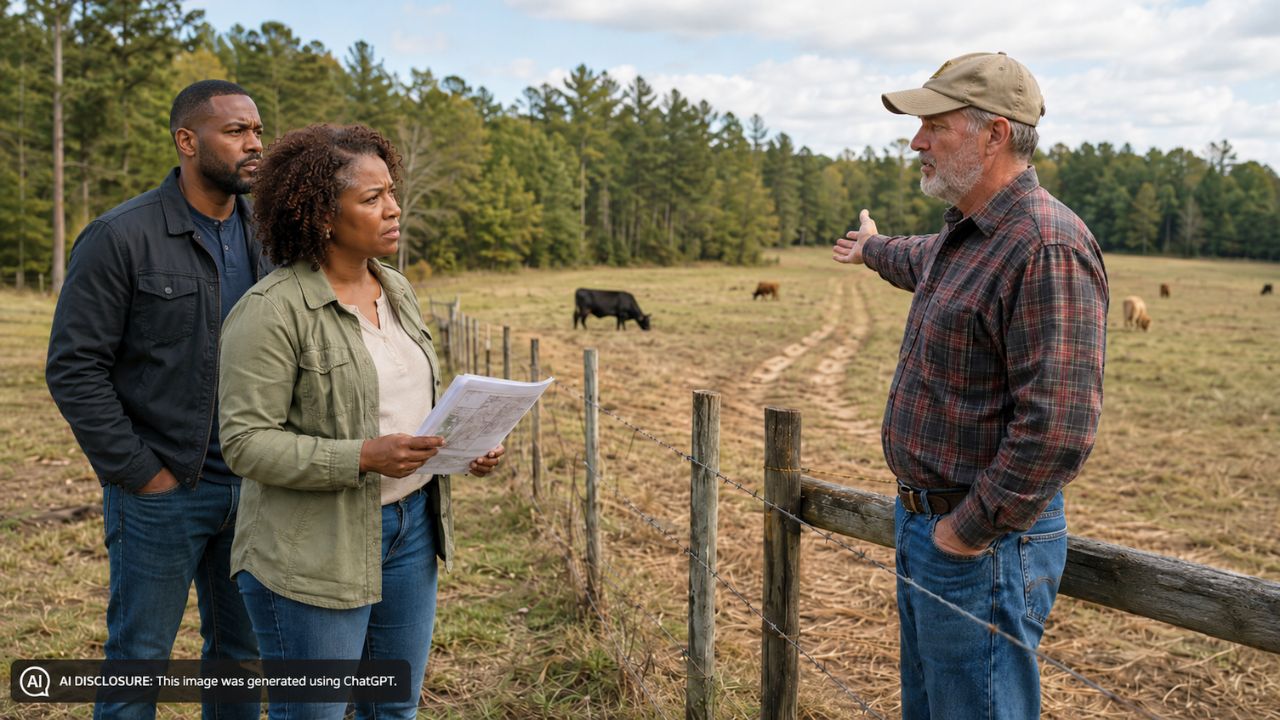
The buyer described seeing the neighbor’s cattle grazing on the land. The adjacent neighbor had installed an “very expensive fence,” and the field had been replanted with millet—another sign this wasn’t a casual, one-time trespass. Someone was treating the space like a working extension of their own operation.
There’s also the psychological whiplash of it: you’re in the process of buying your place, imagining living there, and meanwhile someone else’s animals are already settled in. It puts a new owner in a defensive posture before they’ve even moved a shovel of dirt or hung a gate.
And because the fence is expensive, it raises the stakes. Removing it or demanding changes isn’t just a neighborly chat—it’s potentially asking someone to swallow a major cost, which is where people get stubborn fast.
Then a tree came down for a watering hole
The post describes a moment where the line between “annoying” and “dangerous headache” gets crossed. The neighbor knocked down a tree to create a watering hole for the cows. That’s not just use—it’s alteration.
The buyer is worried the watering hole could impede other people’s water. Whether that means drainage patterns, downstream flow, or some existing water rights, the key point is simple: water changes are rarely contained. Once someone reshapes land to hold water, it can affect more than one property, and it can be hard to undo cleanly.
It also introduces a different kind of liability fear. You don’t want your first months on new land to involve disputes over flooding, erosion, or water access—especially when the change was made without your permission, but on ground you’re about to own.
The local power dynamic: “old family” problems
This isn’t framed as a random trespasser. The cow owner is described as “an old family in town,” with neighbors warning they can be cavalier and do what they want. That’s the kind of detail that makes a newcomer pause, even if they’re in the right.
The buyer doesn’t want to arrive as “the hothead” who starts a feud on day one. And in rural communities, relationships matter—who sells hay, who knows the county workers, who’s friends with whose cousin. Even when nobody is officially “in charge,” social gravity is real.
At the same time, the buyer’s line is just as clear: they didn’t buy land so somebody else’s cows would have a place to lounge. And because 95% is trees, the field is the one piece that feels especially personal, especially visible, and especially hard to ignore.
The absentee seller’s surprise doesn’t fix the boundary
The current owner reportedly said he was shocked when told about the field use, but the buyer also noted there’s been no resolution. That’s a scary limbo for anyone under contract.
When a seller has been absent, problems like this can grow for years without anyone pushing back. The neighbor builds habits. The land’s “normal” shifts. Then a new buyer shows up and suddenly they’re the bad guy for asking for basic boundaries.
This is also where the practical consequences start stacking up. If the deal goes through without clearing the issue, the buyer becomes the person who has to confront the cattle owner, demand changes to an expensive fence, and address a watering hole that may already be affecting water flow. That’s not a fun first project on a new place.
What people urged: don’t start with a shouting match—start with proof
The buyer said the neighbor has texted to “talk,” but they haven’t replied because they feel over their head and don’t know what’s customary. That’s the moment a lot of rural property owners recognize: the pressure to be friendly, paired with the fear that one wrong conversation turns into a permanent local feud.
Even without a pile of pasted comments, the direction this kind of story usually goes is predictable: people push for documentation before emotions. Not because it’s about “winning,” but because fences, trails, and altered water features aren’t solved with vibes.
In situations like this, the calm approach is often to slow everything down—figure out exactly where lines are, what was permitted (if anything), and what’s been changed—before stepping into an informal talk that could accidentally validate the neighbor’s version of events. The buyer’s hesitation makes sense: once you respond, you’re “in it.”
What makes the purchase decision feel so heavy is that it’s not just about today’s cattle. It’s about the kind of neighbor relationship you’re buying along with the trees and the field. The buyer asked the question many people quietly ask when a dream property comes with an active boundary problem: do you still close, or do you walk away before the headaches are legally yours?
For now, the field is still the only open patch on twenty acres of timber—and it’s already the center of gravity. If the buyer proceeds, they’ll be stepping onto their land for the first time not as a relaxed new owner, but as the person who has to reclaim it.
Like Fix It Homestead’s content? Be sure to follow us.