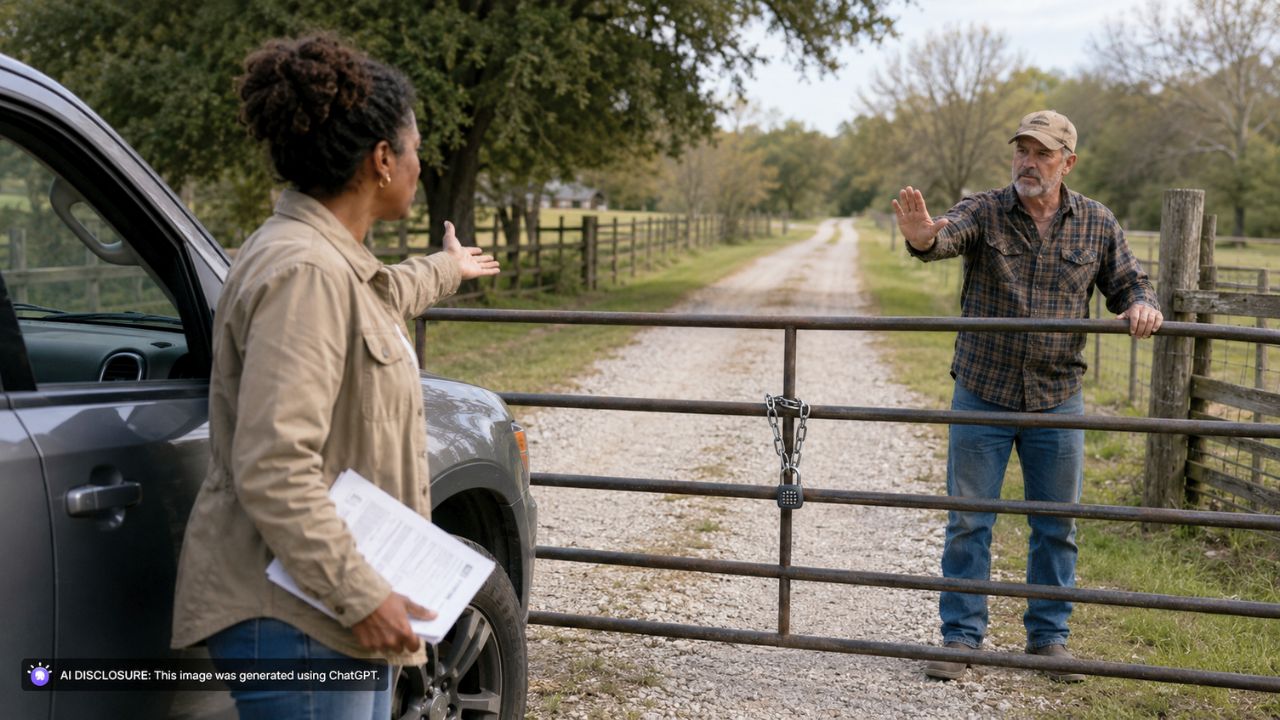
New Landowner Finds the Neighbor Installed a Combination Lock on the Gate Across the Recorded Ingress Easement — Then the Neighbor Says the Easement Language Only Covers Foot Traffic and Does Not Permit Motor Vehicles
Photo credit: AI-generated image created using ChatGPT. Illustrative only.
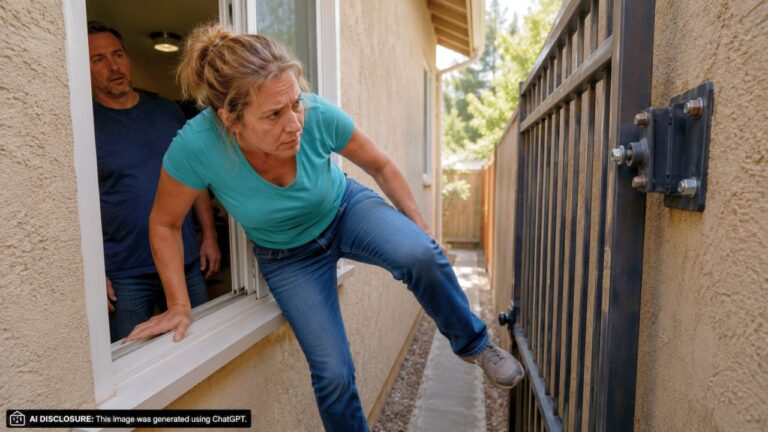
The new owner thought they were doing everything right: building a home, coordinating contractors, and using the recorded access route that was supposed to get them from the public road to their land. Then one day the routine broke. The gate across the access road had a lock on it, and the people who showed up to work couldn’t get through.
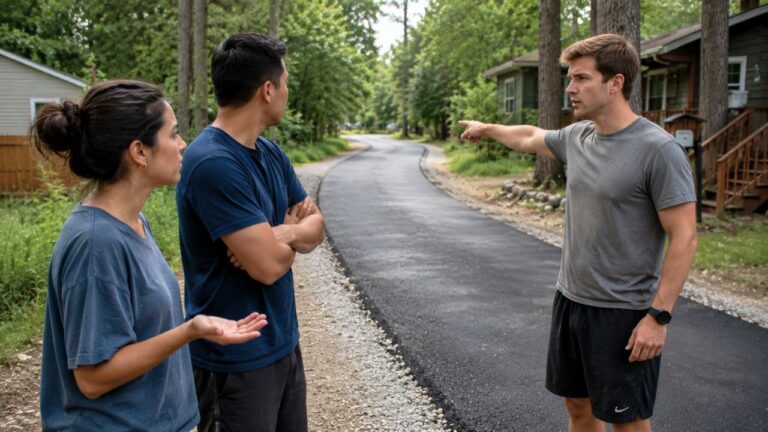
In the source post, the landowner describes an easement that crosses a neighbor’s property. The neighbor had been “constantly” complaining about wanting the gate closed, and the landowner says they complied. But the neighbor escalated from “please close it” to locking it and taking the key—leaving contractors blocked from reaching an active build site.
The first time it felt like a small request
Gate disputes have a way of starting out like no big deal. Someone wants livestock protected, wants to keep random traffic out, or just doesn’t like seeing an open entrance. In this case, the neighbor’s main refrain was simple: keep the gate closed.
The builder-landowner says they did. They were already trying to keep things calm while they worked on the home, which is often the most vulnerable phase of owning property—materials arrive, strangers come and go, schedules slip, and every delay costs money.
But “close it behind you” and “you no longer have access” are two different things. When the gate was locked and the key removed, the easement stopped functioning in real time, even if it still existed on paper.
When the lock showed up, the build schedule took the hit
A combination lock on a rural gate can look ordinary—almost like standard practice—until you realize you’re the one standing on the wrong side of it. For a property under construction, that moment is more than an inconvenience. Contractors get turned around, deliveries fail, and you get charged for wasted trips.
The landowner explains that the neighbor’s justification was that the gate had been left unlocked. So the neighbor locked it and took the key. That’s the kind of move that turns a neighborly gripe into a leverage play, because now access depends on the neighbor’s availability and mood.
And it’s not just about today’s crew. If emergency access is ever needed—medical, fire, or even a utility issue—an unexpected lock can become a safety problem fast. Construction sites are also full of tempting targets, which means reliable access control matters, but not if it blocks the lawful user of the easement.
The argument shifts from “close it” to “you can’t drive here”
Once a lock enters the story, the next move is often a paperwork argument. Instead of debating manners—who left what open—the fight becomes: what does the easement actually allow?
That’s where the headline angle hits: the neighbor claims the easement language only covers foot travel and doesn’t permit vehicles. Even without the full deed language quoted in the post, it’s a familiar tactic in rural property disputes: narrow the interpretation to choke off practical use.
It’s also where things get expensive, because “foot traffic only” is basically a way of saying, “Sure, you can access your land… just not in a way that allows building a home.” A house build requires trucks, tools, inspections, concrete, lumber, and people who aren’t hiking in with nail bags. If vehicle access is suddenly “not allowed,” the easement becomes almost useless for anything beyond walking the boundary line.
For the landowner, the immediate problem wasn’t an abstract legal definition. It was workers physically locked out of the route they’d been using to reach the build.
People fixate on the same detail: an easement isn’t a favor
When these stories get discussed online, practical voices tend to come out first. They’ll say: an easement is a property right, not a neighbor doing you a kindness. If you have a recorded ingress easement to access your land, access can’t be made conditional on someone else holding the only key.
They also tend to focus on documentation and patterns. If the neighbor has been “constantly” complaining and now has physically interfered with entry, that’s not just a misunderstanding—it’s a timeline. People encourage keeping notes: when the lock appeared, who was blocked, what work was delayed, what messages were exchanged about closing the gate.
Another common refrain in these gate disputes: resolve it in writing, not at the hinge. A calm message that says, in plain terms, “We will keep the gate closed as requested, but the easement must remain passable and we need an agreed method of access for our contractors,” is very different from an argument at the property line.
Why this kind of access fight escalates so quickly
It’s easy to underestimate how personal an access road feels to the land it crosses. The neighbor sees tire tracks, dust, unfamiliar vehicles, and the fear that “their” quiet property is becoming a thoroughfare. The landowner sees the only practical lifeline to their own land.
That mismatch creates a problem where each side believes they’re protecting something basic. The neighbor believes they’re protecting control and security. The landowner believes they’re protecting the ability to reach their own home site.
The lock, though, isn’t neutral. It changes the balance of power immediately. It forces the easement holder to negotiate under pressure—while contractors wait, while the build timeline slips, while the landowner feels trapped in a dependence they didn’t agree to.
And once the argument gets framed as “foot traffic only,” it stops being about whether the gate stays closed and becomes a fight over whether the land can actually be used the way it’s intended to be used.
The uneasy reality: you still have to live next to each other
Even when the paperwork is on one side, the day-to-day reality is that neighbors remain neighbors after the lock comes off. That’s what makes these disputes so stressful. The landowner doesn’t just need a “right” in theory—they need predictable access every day, without wondering if the next crew will be stranded at the gate.
The neighbor, meanwhile, has already shown they’re willing to act unilaterally by locking the gate and taking the key. That leaves the landowner in an awkward position: push too hard and risk retaliation or hostility; do nothing and risk the build becoming hostage to a gate.
Stories like this rarely end with a satisfying, movie-style resolution. More often, they end with a compromise everyone can tolerate: a lock with shared access, clear written ground rules for contractors, and an understanding—formal or informal—of what “ingress” really means in the real world when a home is being built. Until then, every morning’s work starts with the same question: will the gate open?