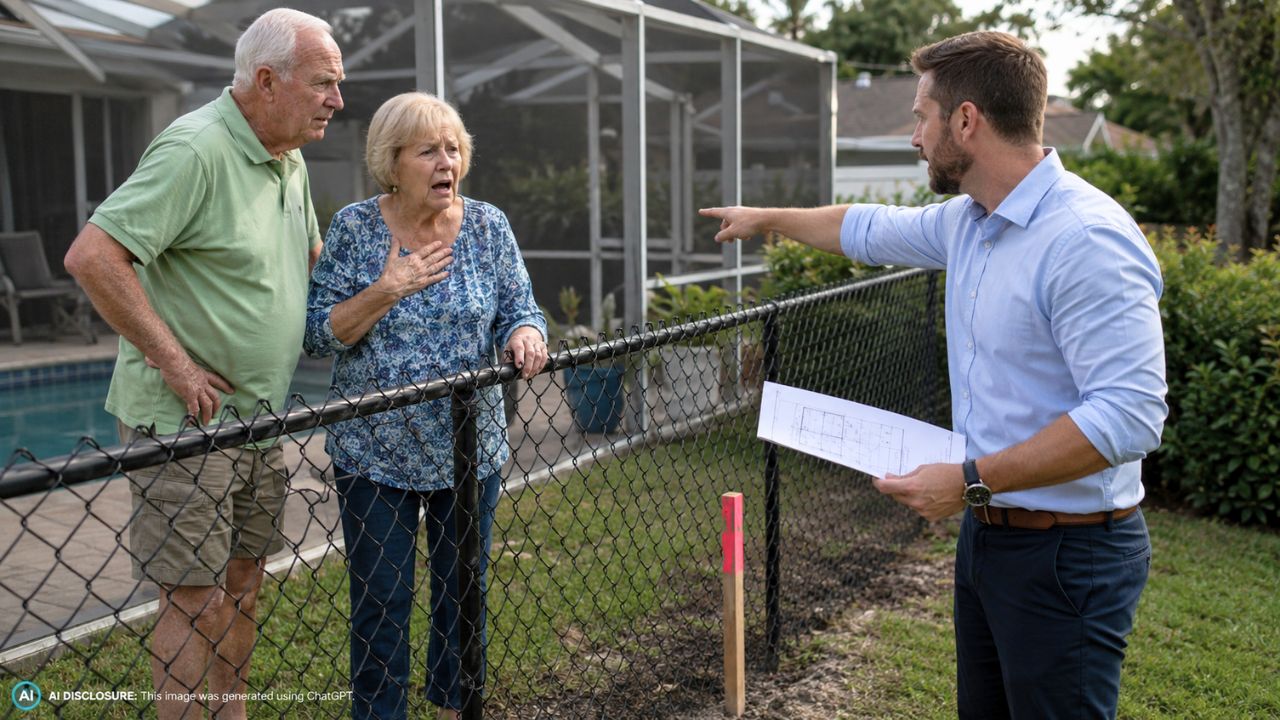
New Lot Owner’s Survey Claims Part of an Elderly Couple’s Lanai and Pool Sit on His Land — Then He and His Title Rep Threaten to Bulldoze the Fence to Build a New House
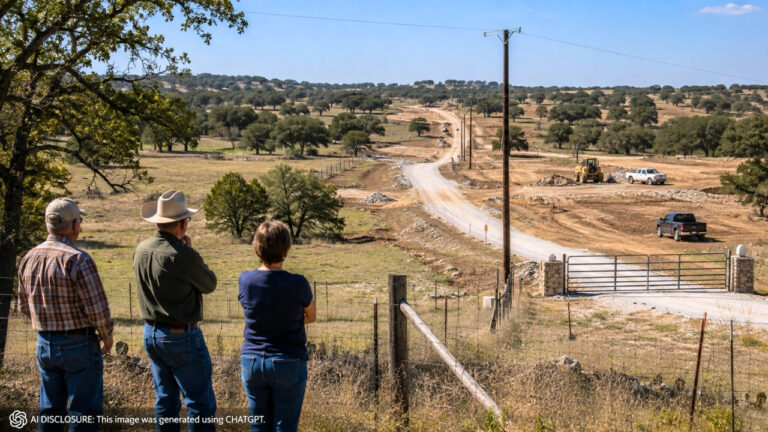
Photo credit: AI-generated image created using ChatGPT. Illustrative only.
When you’ve lived somewhere for more than two decades, the edges of your home start to feel permanent. The fence is where it’s always been. The backyard is the backyard. And the pool and screened lanai are the parts of the house where you expect peace—especially when you’re in your 70s.
That’s why one Florida family says they were blindsided when a newly involved owner of the vacant lot next door showed up with a survey and a claim that a big chunk of their backyard actually belongs to him. The account, shared in the source post, describes an argument that quickly turned into threats: take down part of a fence and even part of a lanai to make room for a new house.
A fence line that never got questioned—until now
The grandmother at the center of the story has owned her house for over 23 years. According to the family, the fence was already there when she bought the place. She was told at purchase that her yard ran from the end of the driveway to the fence line, plus about a foot beyond it.
For more than two decades, that understanding was basically treated as fact. It wasn’t just a casual assumption, either. The yard was lived in and maintained like any other: a boundary you don’t think about until someone forces you to.
Next door wasn’t even a “neighbor” in the usual sense. The adjacent property was an empty lot for the entire time she lived there, and the family says it attracted ongoing problems—drug activity and people camping out—creating stress without any of the normal guardrails that come with a lived-in home next door.
The vacant lot changed hands, and the tone changed fast
Eventually, the original owner of the vacant lot died, and a family member inherited it. With Florida prices up, the inheriting owner wanted a quick sale. That’s when the survey happened—and that’s when the line in the sand moved.
The new lot owner’s survey, the family says, claims more than half of their backyard is actually part of his parcel. Not just a strip of grass along the fence, either. They were told the claim reaches into the area where their fence sits and even into part of the lanai and pool area.
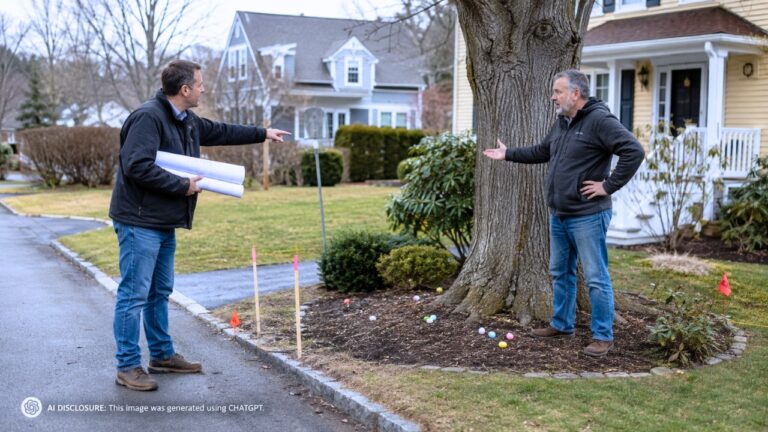
In a lot of property-line disputes, the first fight is quiet: letters, emails, maybe a tense conversation over the hedge. This one wasn’t quiet. The family describes the lot owner arriving with a representative from his title company and confronting them face-to-face.
“We’ll bulldoze it”: the threats that turned a boundary dispute into a safety fear
The confrontation described in the post wasn’t framed as a polite request to review documents. It was described as aggressive, unprofessional, and threatening. The family says they were told the lot owner would bulldoze part of their fence and lanai to build a new house.
That’s the moment this stopped being about lines on paper and started feeling like an immediate threat to the physical structure of the home. A fence can be replaced, but a lanai and pool are expensive, permanent improvements that don’t move without destruction.
And for an elderly couple, the stress isn’t just financial. It’s the fear of someone showing up with equipment, or workers, or a crew, and starting demolition while you’re trying to figure out what’s true. The poster said they were worried the neighbor might do something to the house when no one is home.
Even the location of the fight matters. A backyard isn’t a public-facing space. People often don’t have cameras pointed that direction, and a lot of homeowners don’t expect to need them. If someone is threatening to tear down a fence in back, it can feel like you’re exposed.
Maintenance, long timelines, and the messy reality of “who used it”
The family also mentioned something that’s common with long-vacant lots: they helped maintain part of the neighboring property, including mowing it. People do that for practical reasons—pests, snakes, rodents, ticks, fire risk, general neighborhood quality of life. You don’t want a jungle next to your pool screen.
But years of informal maintenance can turn into a confusing argument later. One side sees it as being a good neighbor and protecting their own property. The other side may later frame it as “you knew it wasn’t yours.”
On the flip side, long-term use of a space—especially when a boundary fence has been treated as the line for decades—often makes homeowners feel like the yard is part of the home itself. That’s why these disputes get so personal so quickly. It’s not just “land,” it’s where the family stood grilling, where kids swam, where someone sat outside during hard years.
The post doesn’t say what county the home is in or what the recorded legal descriptions show. But it does make clear the stakes are not theoretical: the claim involves built structures, not just turf.
What people urged: slow it down, document everything, and get representation
The poster said the family was going to an attorney that day. That’s where nearly every practical reaction tends to land when a dispute shifts from “I think the fence is wrong” to “I’m going to knock it down.” Once threats enter the picture, homeowners don’t have the luxury of waiting to see what happens.
In disputes like this, the immediate priority isn’t winning an argument in the yard—it’s slowing everything down so nothing irreversible happens while the paperwork gets sorted. People in similar homeowner conflicts often push for a few practical steps: keep communication in writing, avoid face-to-face confrontations that escalate, and preserve proof of what’s been in place for years.
And when someone is threatening to enter your property or destroy part of it, the emotional advice tends to be the same, too: don’t try to out-yell them. Bring in professionals—legal help, surveyors if needed, and whatever documentation exists from the original purchase.
Even without knowing the final legal outcome, the family’s fear is easy to understand. A title-company representative showing up in the yard and joining a heated confrontation doesn’t feel like a normal process. It feels like pressure.
The part that hits homeowners hardest: you can’t “un-build” a pool
The reason this story sticks is because it taps into a nightmare scenario for anyone who owns a home with improvements near a boundary. A fence dispute is one thing. A claim that a lanai and pool sit over the line is another.
Pool decks, screens, enclosures, and patios aren’t casual weekend projects. They’re permitted improvements in many places, and they’re tightly tied to the home’s value and day-to-day livability. The thought of someone threatening to bulldoze that space isn’t just a financial shock—it’s an attack on the heart of the home.
For now, the family’s next step is professional help, because that’s the only move that matches the seriousness of what they’re describing. And until the boundary is clarified and the threats stop, the backyard isn’t a place to relax. It’s the front line.
Like Fix It Homestead’s content? Be sure to follow us.