Oregon Homeowner Pays $400 to Remove an Old Retaining Wall After a Survey Confirms the Line — Then the Neighbor Shovels Gravel Into the Gap and Claims It as Their Own
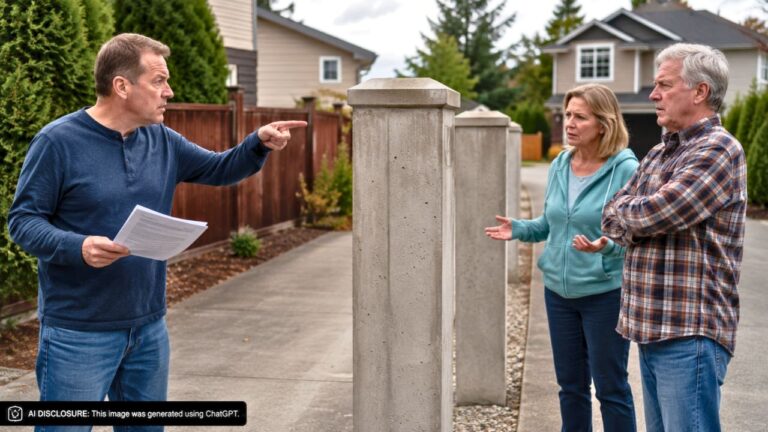
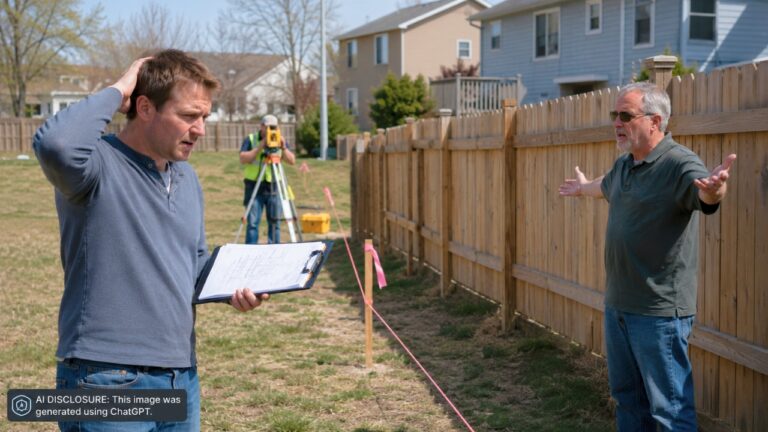
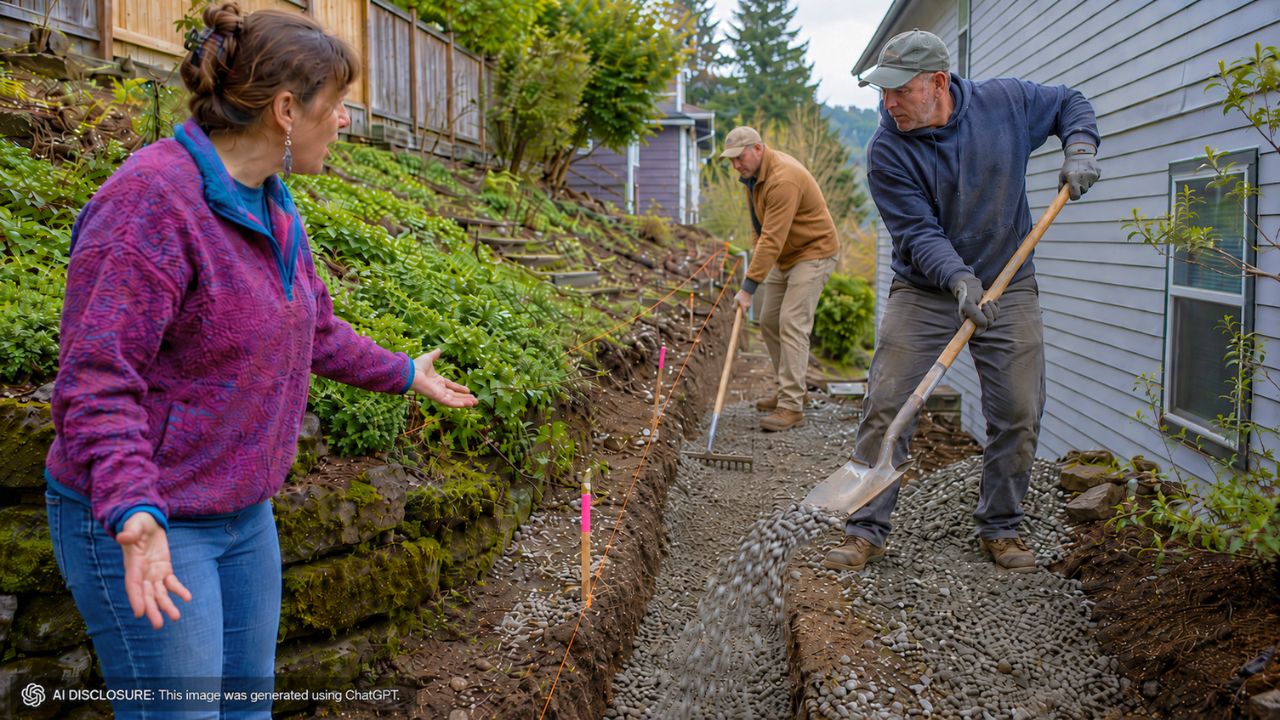
Photo credit: AI-generated image created using ChatGPT. Illustrative only.
It started with a leaning retaining wall—one of those slow, ordinary problems homeowners put off until they can’t. In Oregon, one homeowner decided to do it the “right” way: get a survey, confirm the property line, and rebuild the wall before it failed.
But the moment the old wall came down, the neighbor treated the open strip like an invitation. In the source post, the homeowner describes paying $400 to have the wall removed, only to watch the neighbor shovel gravel into the gap and claim the space as their own—despite the survey saying otherwise.
The wall came down, and the boundary “moved” overnight
The homeowner says the original retaining wall had been installed about 20 years earlier, along with a row of arborvitae. Over time the wall began leaning, and replacement felt like a straightforward maintenance project—until the property line became the battlefield.
Before rebuilding, the homeowner hired a surveyor to make sure the new wall would be placed correctly. That survey was meant to prevent exactly this kind of dispute. Instead, the space left behind by the removed wall became a sudden land grab: gravel was shoveled in, and the neighbor immediately started acting like the newly exposed strip belonged to her.
It’s a specific kind of homeowner stress: you spend money to fix a structural feature, and the “fix” creates a window for someone else to change the story. A leaning wall is visible. A missing wall is an opportunity.
Tree trimming turned it personal
The homeowner also describes damage to the arborvitae along the line. According to the post, the neighbor had been reaching over the property line and trimming the trees “all the way back to the trunk,” permanently damaging them.
That detail matters because it shifts the issue from a passive disagreement (“I think the line is here”) to active interference. Arborvitae don’t bounce back the way some shrubs do; cut too far, and you’re left with dead gaps and brown wood that never fills in. For a lot of people, those trees aren’t just landscaping—they’re privacy, sound buffering, and a living fence.
The homeowner called police after the gravel was placed and the trimming continued. Officers reportedly said the homeowner still had the right to install a new wall and suggested adding a fence on top, a practical idea when someone keeps reaching into your yard.
Two police visits, two very different outcomes
The story takes a hard turn when the contractor finally had availability. After waiting weeks to rebuild the wall and add the fence, the homeowner says the neighbor came out on build day and physically blocked the contractor from continuing.
Police were called again. This time, the homeowner says officers refused to speak with them first and insisted they stand far away while police spoke privately with the neighbor. The homeowner overheard the neighbor claiming the homeowner had attacked her and that she felt threatened.
Then came the line that would make most homeowners’ stomach drop: the officer allegedly told the homeowner that the two feet of property where construction was planned was “no longer” theirs and that the neighbor could do whatever she wanted with it. The officer reportedly refused to look at survey documents or even survey marks, and warned the homeowner they would be cited for trespassing if they entered the area they believed they owned.
For anyone who’s dealt with property boundaries, it’s hard to miss how fast the rules seem to flip. One visit: you can build your wall. Next visit: stay off your own land, and the other person can build on it.
“Contested” became the magic word
After the second police response, the homeowner called to speak with a sergeant. The homeowner says the sergeant explained that because the neighbor contests the land, the homeowner can’t build anything there—but the neighbor can.
When the homeowner pushed back on how that could be equal, they say the sergeant began yelling over the phone, told them to stop talking, and eventually hung up. The homeowner also describes raising the possibility of racial bias, noting they are a person of color; they say the sergeant later called back, said he reviewed body camera footage, and accused the homeowner of making false accusations of bias. The homeowner says the call escalated again and ended with another hang-up.
Meanwhile, the homeowner says they provided multiple copies of the survey to both the neighbor and police. The neighbor’s position, as described, was simply that she didn’t agree—while also refusing to get her own survey. Police reportedly said they don’t know how to read land surveys, and told the homeowner they needed to hire a lawyer if they wanted the property “back.”
The practical result is brutal: the homeowner feels barred from installing a retaining wall and fence where the survey says it belongs, while the neighbor keeps using that strip as if possession is proof.
Homeowners in the comments focused on proof, paper trails, and cameras
Even without seeing a courtroom, property disputes tend to become documentation contests. The homeowner already has the big ticket item—an official survey—but the post shows how quickly “having proof” can still turn into “proving it again” when enforcement gets messy.
Readers reacting to stories like this usually zero in on the same playbook: document everything, avoid face-to-face escalation, and make sure any future confrontation is recorded and time-stamped. In a boundary dispute, photos of survey stakes, video of interference, and written notes about dates and actions can matter almost as much as the survey itself.
Several homeowners also tend to point out a basic reality: police typically don’t adjudicate property lines on-site. They respond to immediate safety issues. That can leave owners stuck in a weird middle zone where they’re told to “keep the peace,” but the peace is defined by whoever is most willing to occupy the space in the meantime.
The real cost wasn’t the $400—it was the delay
The $400 removal bill is the clean, simple number in the story. But the bigger cost is what happens when a normal repair gets frozen: contractors rescheduled, materials delayed, and an exposed edge that can erode or slump while neighbors argue.
Retaining walls aren’t just decorative. They hold back soil, manage grade changes, and can affect drainage. Leaving a gap filled with loose gravel—placed by someone trying to stake a claim, not solve engineering—can create runoff issues or undermine nearby ground over time. And while the homeowner is stuck waiting, the arborvitae remain damaged, with privacy reduced and the line more visible than ever.
By the end of the post, the homeowner is where many people end up in these disputes: knowing a lawyer is likely necessary, but frustrated that it takes legal spending to enforce something a survey already established. They weren’t trying to start a fight. They were trying to replace a failing wall before it became a bigger problem.
Instead, the repair turned into a standoff—one where a missing retaining wall became a missing sense of security. And for now, the homeowner is left holding paperwork in one hand, and watching the edge of their yard get treated like it’s up for grabs.
Like Fix It Homestead’s content? Be sure to follow us.