New Montana Landowner Finds a Note Zip-Tied to the Gate on Fifty Freshly Purchased Acres — Then the Neighbor Claims “I Have Leased This Land Since 1990… All of the Gates and Fences Are Mine”
Photo credit: AI-generated image created using ChatGPT. Illustrative only.
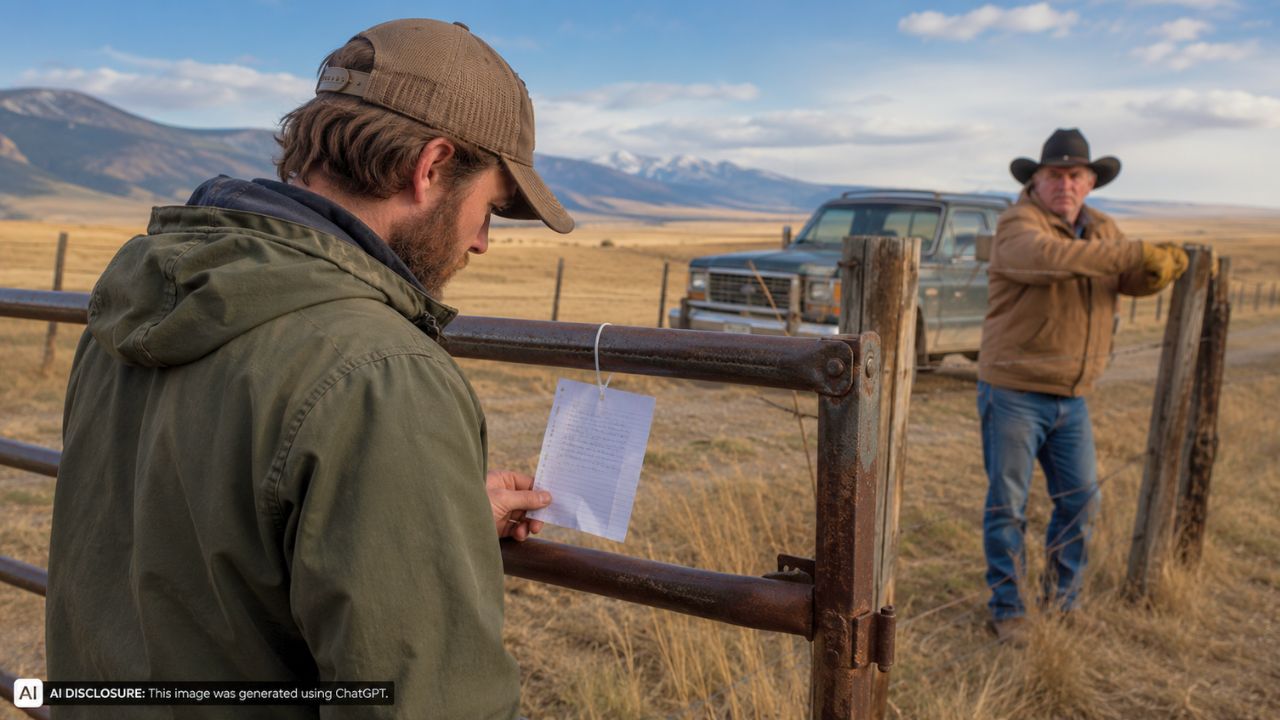
The land was supposed to be the simple part: 50 acres of undeveloped Montana ground, purchased outright with cash, ready for whatever comes next. Then, on a routine visit, the new owner found a note zip-tied to the only gate—like a little flag planted right at the entrance.
In the source post, the buyer describes a message from the closest neighbor that didn’t read like a friendly introduction. It read like a claim of ownership: “I have leased this land since 1990 and I have the paperwork. All of the gates and fences are MINE!”
A zip-tied note turned a quiet purchase into a boundary fight
Rural property has its own rhythm. Gates stay closed, fences do their job, and neighbors often keep to themselves—until they don’t. A note on a gate isn’t unusual in the countryside, but the wording matters, and this one wasn’t asking for a chat.
The buyer had been working with the previous owner since March, and during that whole process, no lease was ever mentioned. The only related story the buyer had heard was that the county once called the prior owner about cows that were grazing and got loose, and the impression was that the owner “had never given anyone permission.”
So when the neighbor’s note claimed a lease going back to 1990, it didn’t just create paperwork questions. It raised the immediate, practical question: who’s using the land right now, and under what authority?
The gate and fence suddenly weren’t just hardware
Before this, the buyer assumed the basics: land purchase includes what’s on it. Fences, gates, posts—those are part of the place, and on raw acreage they’re not decoration. They control access, keep animals in or out, and signal where “your place” starts.
The neighbor’s note went straight at that assumption. Not only did he claim he’d leased the land for decades, he also claimed “all of the gates and fences” were his. That’s a different kind of dispute than a casual grazing arrangement. It suggests the neighbor believes the infrastructure belongs to him, even though it’s sitting on someone else’s deeded property.
The buyer wasn’t looking for a fight over a pipe gate. They even said they’d be willing to hand it back if it came down to it—pointing out it’s about a $120 value and it’s small enough that their horse trailer “barely fits through it.” That detail says a lot: they’re thinking about day-to-day use and access, not scoring points.
The lease claim hits where rural living is most vulnerable: access
Undeveloped land can be surprisingly fragile when it comes to control. If someone else thinks they have rights to be there, you’re suddenly dealing with vehicles, livestock, and gates being opened and shut on someone else’s schedule. It’s not just annoying—it’s how accidents happen.
A property with a “sole gate” is especially exposed. That gate is the choke point for everything: your access, your contractors’ access, emergency access, and control over who belongs there. When a stranger—or even a neighbor—asserts rights at that one entrance, it turns the gate into a pressure point.
And if the neighbor has actually been running cows or otherwise using the acreage, there’s a bigger mess than missing paperwork. There are questions about liability if animals get loose again, damage to fencing, ruts in access paths, and the basic safety problem of not knowing when someone else might show up.
The buyer’s next move was the most human part of all: “I’m just trying to prepare myself before I knock on the neighbor’s door to discuss this.” Because out there, you can’t pretend you’ll never see each other again. This isn’t a city block where you can shrug and move on. Fifty acres next to someone is a long-term relationship, whether you like it or not.
Why the paperwork matters more than the personality
This is where rural property drama gets tricky. A neighbor can be friendly, gruff, or downright territorial, but none of that answers the core question: does a valid lease exist, and does it survive a sale?
The buyer knows what they were told and what they weren’t told: the seller never mentioned a lease during months of talks. That doesn’t automatically mean a lease doesn’t exist, but it does mean the buyer is now forced into detective mode. If there really is “paperwork,” it matters what it says, who signed it, what land it covers, and whether it was still in effect when the property changed hands.
And then there’s the fence claim. Even if a neighbor built a fence, that doesn’t automatically make it his if it’s on land he doesn’t own. But moving or removing fencing can also escalate things fast—especially if livestock are involved. On acreage, a fence isn’t just a line. It’s containment, and containment failures turn into real-world problems in minutes.
The buyer’s post reads like someone trying to avoid stepping on a legal landmine while also not letting a stranger dictate terms with a zip tie and a Sharpie.
Most reactions pushed “document first, talk second”
When homeowners describe disputes like this online, the loudest practical theme tends to be the same: don’t start with a handshake and hope. Start with documentation. A note on a gate is a form of documentation, sure—but it’s the neighbor documenting his claim, not the buyer documenting reality.
People typically urge new landowners in a standoff like this to treat it like a property boundary problem, not a personality problem. That means keeping records of what was found (the note), what was said by the seller (no lease mentioned), and what’s physically present (fences, gates, signs of grazing). It also means being careful about immediate changes—because ripping out a gate or chaining it shut can inflame the issue if the neighbor truly believes he has rights.
Another common reaction in property disputes is to avoid a doorstep confrontation as the first move. Not because talking is bad, but because walking up unprepared can turn into an argument where nobody listens and everybody “remembers” different versions later.
A quiet piece of land doesn’t stay quiet once someone claims it
That’s the part that makes this kind of story so stressful: it’s not like a broken appliance where you can just pay for a fix. This is access, control, and the uneasy feeling that someone else thinks your new purchase includes them.
The buyer went into this imagining they were inheriting land with its basic improvements—fencing, a gate, the usual rural setup. Instead, they inherited a dispute nobody disclosed, delivered in a message that reads like a warning.
Maybe the neighbor is bluffing. Maybe he’s confusing parcels. Maybe there’s an old handshake deal he believes still counts. Or maybe there’s real paperwork that should have surfaced long before closing. Either way, the new owner isn’t just planning their future on those 50 acres anymore—they’re planning their first move, and trying not to make the second move even harder.
Like Fix It Homestead’s content? Be sure to follow us.