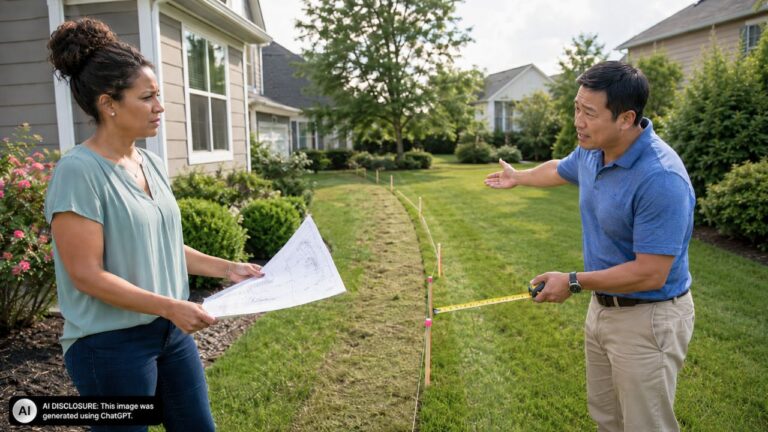
Rental Property Owner Learns a New Neighbor Wants a Long-Standing Fence Moved Six Feet — Then Threatens to Sue Over a Line the Previous Owner Never Contested
Photo credit: AI-generated image created using ChatGPT. Illustrative only.
Owning a rental means you rarely get the luxury of ignoring neighbor drama. One property owner thought they were doing the responsible thing—replacing an aging fence with a brand-new one along the exact same line it had always sat. Then a new neighbor moved in next door and claimed that “same line” was a problem.
In the original post, the owner says the neighbor came through the property manager with a survey and a threat: the fence is allegedly six feet over the line, and if it isn’t moved, a lawsuit is coming. The kicker? The prior neighbor never objected, even when the fence was replaced.
A “normal” fence replacement turned into a boundary fight
The owner had held the property for a few years and rents it out, so the fence wasn’t a new project meant to pick a fight. It was maintenance. The old fence line existed when they bought the place, and when it came time to replace it, they rebuilt right where it had always been.
That’s the kind of decision plenty of landlords make: keep the footprint the same, avoid changing the yard layout, don’t give tenants a surprise. But fence lines aren’t just visual. They can quietly become the thing everyone assumes is the legal boundary—until someone insists it isn’t.
The neighbor who owns the adjacent property now is new to the area, at least new to that parcel. And with a new owner came a new set of expectations about whose land is whose.
The new neighbor brought a survey and a threat
According to the owner, the neighbor’s first visible move wasn’t a polite introduction. It was putting a “rusted junky car” in the backyard—an eyesore that immediately changed how the shared view felt from the rental side.
Not long after, the neighbor reached out to the property manager—not directly to the owner—with paperwork. The owner says the neighbor provided a survey showing the fence is positioned about six feet over the neighbor’s property line.
The message wasn’t framed as a friendly heads-up. It was basically: move it, or get sued. And because the house is a rental, the owner is suddenly managing a property-line dispute through a third party while trying to keep the tenant’s yard usable and the property from looking like it’s in conflict with the block.
Then the owner found their own survey… and it matched
At first, the owner’s main hope seemed to be that the neighbor’s survey was wrong or exaggerated. That’s often the first question in a fence fight: “Whose paperwork is real?”
But the owner updated their post with an unpleasant twist. They found a copy of a survey done by their title company, and it matched the neighbor’s survey “unfortunately.”
That one detail changes the whole temperature. It’s no longer just a pushy new neighbor with a piece of paper. It’s two surveys pointing to the same conclusion: the fence may be built in the wrong place, and the “historic” fence line may have been wrong for a long time.
The owner also referenced a quick sketch: a solid line for the fence and a dotted line for where the survey places the true boundary—six feet away. Even without the drawing, it’s easy to picture how big that is. Six feet isn’t a couple inches of slop from an old corner pin. It’s a meaningful strip of yard.
The expensive question: who pays when the fence is in the wrong spot?
The owner asked two things that come up in almost every property-line dispute: do they have any recourse or defense, and if not, are they responsible for the cost of moving the fence?
Their argument, in plain language, is understandable. The fence was already there when they bought the property. They replaced it like-for-like. The previous neighbor didn’t object at the time, which can feel like silent approval—especially if the fence line had been treated as “the line” for years.
But a new neighbor often doesn’t care what the old neighbor tolerated. If the new owner believes they purchased land that’s being occupied by a fence six feet over, they may see it as an immediate problem to correct, not an inherited handshake agreement.
On the owner’s side, moving a fence isn’t just popping a panel off and shifting it over. It can mean tearing out posts, dealing with concrete footings, regrading, adjusting gates, repairing landscaping, and coordinating access—possibly with a tenant living there who needs the yard secured.
And because the contact came through the property manager, there’s also a practical layer: the owner has to keep the management company in the loop, keep the tenant calm, and prevent the dispute from turning into day-to-day harassment across the yard.
Commenters pushed “proof and paperwork” before any more digging
Even without seeing the full comment thread here, the owner’s own edits show the direction this kind of discussion usually goes: confirm the survey, confirm the boundary, and don’t assume that “nobody complained before” will protect you now.
Once the owner confirmed their title-company survey matched the neighbor’s, the conversation shifts from “is this real?” to “what’s the least painful way to deal with it?” In these moments, people tend to focus on documentation, timelines, and keeping communication formal—because boundary disputes can spiral fast when they turn personal.
A neighbor who leads with “move it or I’ll sue” is signaling that they’re willing to escalate. That doesn’t automatically mean they’re right about every detail, but it does mean the owner can’t treat it like a casual disagreement over where to put a garden bed.
The owner is also dealing with the optics of the neighbor’s backyard car—something that might make the whole interaction feel hostile. But the fence and the car are separate problems. The fence is tied to property rights. The car is tied to taste, and possibly local rules, but it doesn’t change where the line is.
A quiet strip of land can become the whole backyard story
The toughest part of this mess is that it’s happening on a rental, not the owner’s primary home. The fence isn’t just a boundary; it’s security for the tenant, a selling point for the property, and part of the property’s “normal” layout that now might need to be reworked.
There’s also a bitter irony in the timing. The owner didn’t move the fence onto someone else’s land as a land-grab. They tried to be responsible by replacing an old fence in the same place it had always been. But by improving it—making it new and obvious—they may have made it easier for a new neighbor to notice, document, and challenge.
Now the owner is staring at a choice no landlord wants: pay to relocate a perfectly good fence, or risk getting pulled into an expensive legal fight over six feet of dirt that everyone used to ignore. And with two surveys matching, the “maybe it’s not true” door appears to be closing fast.
Like Fix It Homestead’s content? Be sure to follow us.